
 English

Views: 0 Author: Site Editor Publish Time: 2026-04-13 Origin: Site


Walk into a busy automotive repair workshop on a good day, and you can usually tell within a few minutes whether tool management is under control or not. The signs are everywhere. If technicians know exactly where to reach, if commonly used tools are easy to access, if workbenches stay relatively clear, and if people are not wasting time looking for missing items, the workshop tends to run with a certain rhythm. Jobs move. Communication is smoother. Even the place feels more professional.
Now look at the opposite situation. Tools are scattered across benches, drawers are overloaded, sockets get mixed with measuring tools, larger equipment ends up parked wherever there is space, and nobody is completely sure which item belongs where. At that point, the problem is no longer just “a bit of mess.” It starts affecting speed, accuracy, accountability, and in some cases even safety.
This kind of chaos is more common in automotive repair workshops than many people would like to admit. And to be fair, it does not usually happen because people do not care. It happens because workshops are fast-moving environments. Technicians are focused on getting vehicles diagnosed, repaired, tested, and back out the door. When the workload increases, organization is often the first thing that slips. One tool left out becomes three. One overloaded drawer turns into a whole cabinet that no longer makes sense. Before long, the workshop is spending more time reacting to disorder than preventing it.
The good news is that tool management problems can be fixed. Usually, the answer is not one dramatic change. It is a set of practical strategies that improve how tools are stored, used, returned, and controlled over time. And once those systems are in place, the benefits show up quickly: less wasted motion, fewer missing tools, better workflow, cleaner work areas, and a more efficient team overall.
Below are five effective strategies to solve tool management chaos in automotive repair workshops, especially for operations that want something more sustainable than simply telling staff to “keep things tidy.”
One of the biggest reasons tool management breaks down is that the storage system does not match the way technicians actually work.
This is a very common problem. A workshop may have enough storage in theory, but the layout is wrong in practice. Frequently used hand tools may be stored too far from where they are needed. Diagnostic items may be mixed into general drawers. Heavy tools may be placed in upper drawers that are awkward to access. Large equipment may have no clearly assigned home at all. So even when cabinets and storage units are available, people still end up placing tools wherever is easiest in the moment.
In an automotive workshop, efficiency is built on repetition. Technicians perform many of the same motions again and again during the day: reaching, selecting, returning, repositioning, and switching between tools. If the storage layout supports those motions, the workshop gains time without anyone needing to rush. If the layout works against them, people lose time in small amounts all day long.
That is why tool storage should be arranged around workflow, not just around available floor space.
Start by grouping tools according to how they are used in real repair work. Daily-use hand tools should be closest and easiest to access. Specialty tools can be stored separately but clearly labeled. Heavier items should go into lower, stronger drawers. Small parts and precision tools should have designated spaces so they are not buried under general workshop clutter.
It also helps to think in zones. For example, one area can support general mechanical work, another can focus on diagnostics, and another can support tire or brake service. That way, technicians are not constantly crossing the workshop just to find basic items.
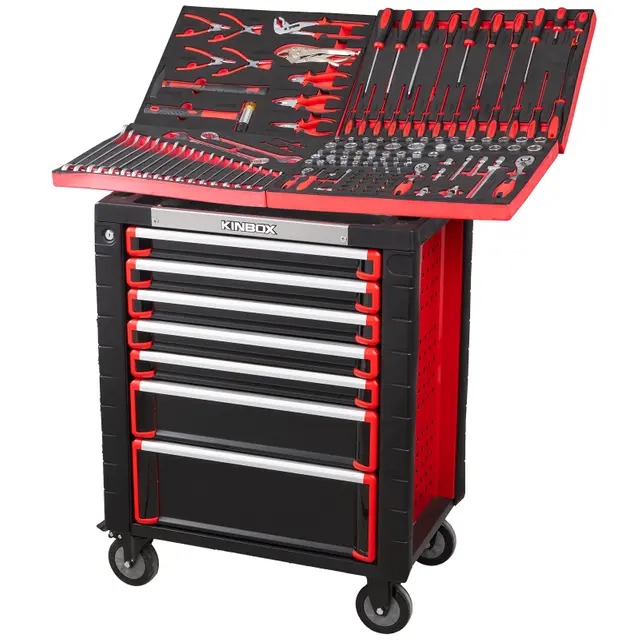
A well-planned Tool Cabinet system becomes much more effective when it is part of a broader workflow layout rather than just a row of drawers against a wall.
If a workshop is trying to solve tool chaos with random storage furniture collected over time, things usually stay chaotic no matter how often people clean up.
This is where standardization makes a real difference. Automotive workshops work better when storage is intentional. Instead of using whatever happens to be available, it is far more effective to choose a clear storage structure built around the actual types of tools and equipment in use.
When every cabinet is different, every drawer is arranged differently, and every technician has their own unofficial storage habits, consistency disappears. People stop knowing where shared tools should go. New staff take longer to adapt. Items get misplaced because there is no common logic across the workshop.
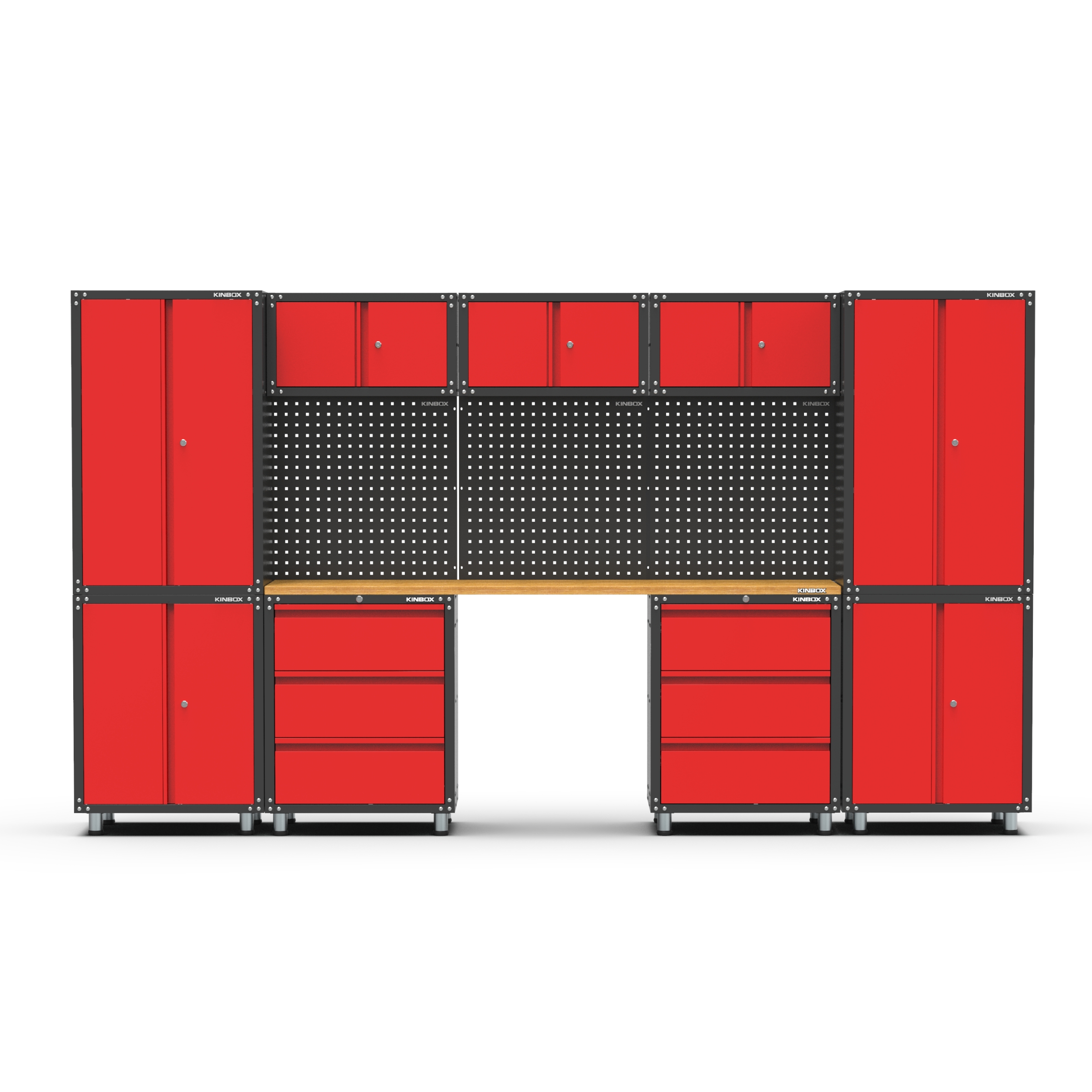
That is why workshops benefit from using a more coordinated combination of Tool Cabinet units and Garage Storage Cabinet systems.
A Tool Cabinet is ideal for frequently used hand tools, sockets, repair instruments, and mobile day-to-day working needs. It keeps tools close, organized, and accessible, especially when drawers are configured properly and the unit can move with the technician if needed.
A Garage Storage Cabinet, on the other hand, is better suited for larger items, less frequently used equipment, bulk supplies, boxed parts, containers, and tools that should be stored more securely in fixed locations. It helps reduce bench clutter because it gives larger workshop items a defined storage area instead of leaving them on floors, shelves, or corners of the room.
Used together, these systems create a much clearer structure. Daily-use tools stay close to the point of work, while larger and less frequently used items are kept organized in dedicated storage zones. That combination makes the workshop feel less crowded and much easier to manage.
This sounds basic, but it is probably one of the most important strategies on the list.
Tool chaos usually begins the moment tools no longer have a clearly defined home. Once that happens, “temporary” placement becomes normal. A ratchet left on a bench stays there for half a day. A torque wrench gets put into the wrong drawer because the correct one is crowded. Diagnostic leads end up hanging wherever there is space. Then someone else needs the same tool and the search begins.
Workshops cannot run efficiently on memory alone. Even experienced staff cannot reliably keep track of dozens or hundreds of tools if the system depends too much on individual habit. The moment work gets busy, memory-based organization breaks down.
That is why fixed storage locations matter. Every tool should have an assigned place, and that place should be clear enough that anyone in the workshop can understand it, not just the person who usually uses that tool.
There are several practical ways to do it. Drawer labeling helps. Tool outlines or designated compartments help even more for commonly used sets. Cabinets can be organized by category, function, or service process. Shared storage areas should be marked clearly, and tools that belong to specific bays or technicians should be separated from common-use inventory.
Just as importantly, return rules need to be treated seriously. Not in an overcomplicated way, but in a consistent one. A tool taken out should go back after use. Not later in the day. Not after the next task. Not when somebody remembers. The longer tools stay “temporarily” out of place, the more disorder spreads.
This is one of those situations where discipline actually makes life easier. Once the habit is established, people spend less time searching and less energy dealing with unnecessary mess.
A lot of workshop disorder happens because too many things are stored too close to the immediate work area.
This is easy to understand. If a workshop has limited space, the natural tendency is to keep everything nearby just in case it is needed. But in practice, that usually creates the opposite effect. The more items packed around the workstation, the harder it becomes to keep anything organized.
Not every tool needs to be within arm’s reach. In fact, storing rarely used items in prime workspace areas often makes day-to-day work less efficient. It crowds out the tools technicians actually use every few minutes and fills drawers or top surfaces with items that do not belong there.
That is where better storage separation can transform the workshop.
Daily-use tools should stay in accessible Tool Cabinet drawers or mobile units. Backup stock, spare tools, bulky supplies, and specialty equipment should move into a dedicated Garage Storage Cabinet area or other fixed storage solution. This keeps the working zone cleaner and makes it easier to spot when something is out of place.
It also improves inventory visibility. When bulk items and backup equipment are stored separately, workshops can control them more effectively instead of letting them blend into general tool clutter. That is especially useful in automotive environments where one workshop may need to manage hand tools, power tools, fluid service items, electrical diagnostic equipment, lifting accessories, and parts-related storage all at once.
In short, a cleaner workstation usually starts with less stuff at the workstation. That sounds obvious, but it is one of the most overlooked tool-management improvements workshops can make.
This may be the most important long-term strategy of all, because without it, even good storage systems tend to slide backward over time.
Many workshops try to fix tool chaos with occasional cleanup efforts. Everyone stops for an hour, reorganizes drawers, clears surfaces, puts things back, and the place looks much better for a while. Then a busy week hits, and little by little the disorder returns. That happens because cleanup is being treated as an event instead of a routine standard.
Tool management works best when it becomes part of how the workshop operates every day. It should be tied to accountability, efficiency, and professionalism, not treated as a side issue. When staff see organized storage as part of doing the job well, it becomes much easier to maintain.
That does not mean turning the workshop into a rigid environment where every minor mistake becomes a problem. It simply means making organization normal and expected. People should know where tools belong, why that matters, and what good tool control looks like in practice.
Leads and managers set the tone here. If supervisors ignore disorder, the team usually will too. But if workshop leaders regularly reinforce storage rules, check cabinet organization, and make tool return part of the daily routine, standards become more stable.
It also helps to build short reset moments into the workday. A few minutes at shift end to return tools properly, clear top surfaces, and reset cabinets can prevent far more disorder than a much bigger cleanup later. Some workshops also find it useful to review missing or mislocated tools regularly instead of waiting until the problem gets serious.
Once organization becomes part of workshop culture, the whole system starts holding itself together more naturally. People waste less time, storage stays more consistent, and the workshop feels far more controlled without anyone needing to overmanage every detail.
Each of these strategies can improve tool management on its own, but the real results usually come when they are used together.
A smart storage layout helps tools stay close to the work. Standardized Tool Cabinet and Garage Storage Cabinet systems create consistency. Fixed storage locations reduce searching. Separating active tools from bulk or backup stock cuts clutter. And a stronger workshop culture helps everything stay in place long after the initial reorganization is done.
That combination matters because tool chaos is rarely caused by one issue alone. It is usually the result of several small weaknesses happening at the same time: poor layout, unclear storage rules, overcrowded work areas, inconsistent equipment, and weak follow-through. Once those areas improve together, the workshop often changes faster than expected.
It is worth saying this clearly: solving tool chaos is not just about making the workshop look cleaner. It directly affects labor efficiency, job turnaround, technician frustration, equipment accountability, and even how customers perceive the business. A well-organized automotive repair workshop feels more professional because it usually is more professional.
When technicians do not have to hunt for tools, workbench space stays usable, shared equipment remains easier to track, and daily movement becomes more efficient. Those are real operational benefits, not just cosmetic improvements.
Tool management chaos in automotive repair workshops does not disappear just because someone asks the team to be more organized. It improves when the workshop creates a system that supports organized behavior every day. That means designing storage around workflow, using the right combination of Tool Cabinet and Garage Storage Cabinet solutions, assigning fixed locations, separating active tools from bulk inventory, and making tool control part of the workshop’s daily culture.
For workshops, distributors, and buyers looking for practical storage solutions, it also helps to work with a manufacturer that understands how real working environments function. Ningbo Kinbox Tools Technology Co., Ltd., specializes in iron and sheet metal products including tool trolleys, tool cabinets, tool carts, garage storage systems, and workbenches. With a modern production base in Cixi, Ningbo, and extensive experience in metal storage manufacturing, Kinbox focuses on durable construction, flexible storage design, and practical workstation organization. For customers who want more than just a cabinet—customers who want better long-term workshop efficiency—that kind of manufacturing background can make a meaningful difference.
The main cause is usually not one single issue but a combination of poor storage layout, inconsistent tool return habits, overcrowded work areas, and a lack of standardized organization across the workshop.
A well-organized Tool Cabinet keeps frequently used tools easy to access, reduces time wasted searching for items, and helps technicians work more smoothly throughout the day.
A Tool Cabinet is typically better for frequently used hand tools and mobile access, while a Garage Storage Cabinet is more suitable for larger equipment, bulk supplies, and less frequently used workshop items.
Yes. Giving every tool a fixed home makes it much easier to return items properly, track missing tools, and maintain a more organized workshop over time.
The most effective way is to make tool management part of daily workshop culture by combining smart storage systems, clear return rules, regular reset habits, and consistent supervision.



