
 English

Views: 0 Author: Site Editor Publish Time: 2026-06-22 Origin: Site


A tool cabinet often looks better before anyone starts using it.
In a sample photo, the drawers sit neatly. The red, black, or grey finish looks clean. The wheels are polished. The worktop, if there is one, gives the product a solid workshop look. On a quotation sheet, the cabinet is even easier to compare: size, drawer count, packaging volume, loading quantity, unit price.
Then the cabinet reaches a real garage or repair shop.
The top drawer fills up with sockets and spanners. The lower drawer gets power tools, clamps, spare parts, and whatever the mechanic does not want lying on the floor. Someone pushes the cabinet across a rough concrete surface. Another person locks it at the end of the day without checking whether every drawer is fully closed. After a few weeks, the buyer starts to know the cabinet in a different way.
This is why choosing a Tool Cabinet is not only a matter of price or appearance. For distributors, tool brands, garage storage retailers, and workshop equipment buyers, the cabinet has to survive normal use, not just pass a quick visual check.
Most purchasing mistakes happen in the gap between how a cabinet looks when it is empty and how it behaves when it becomes part of a working space.
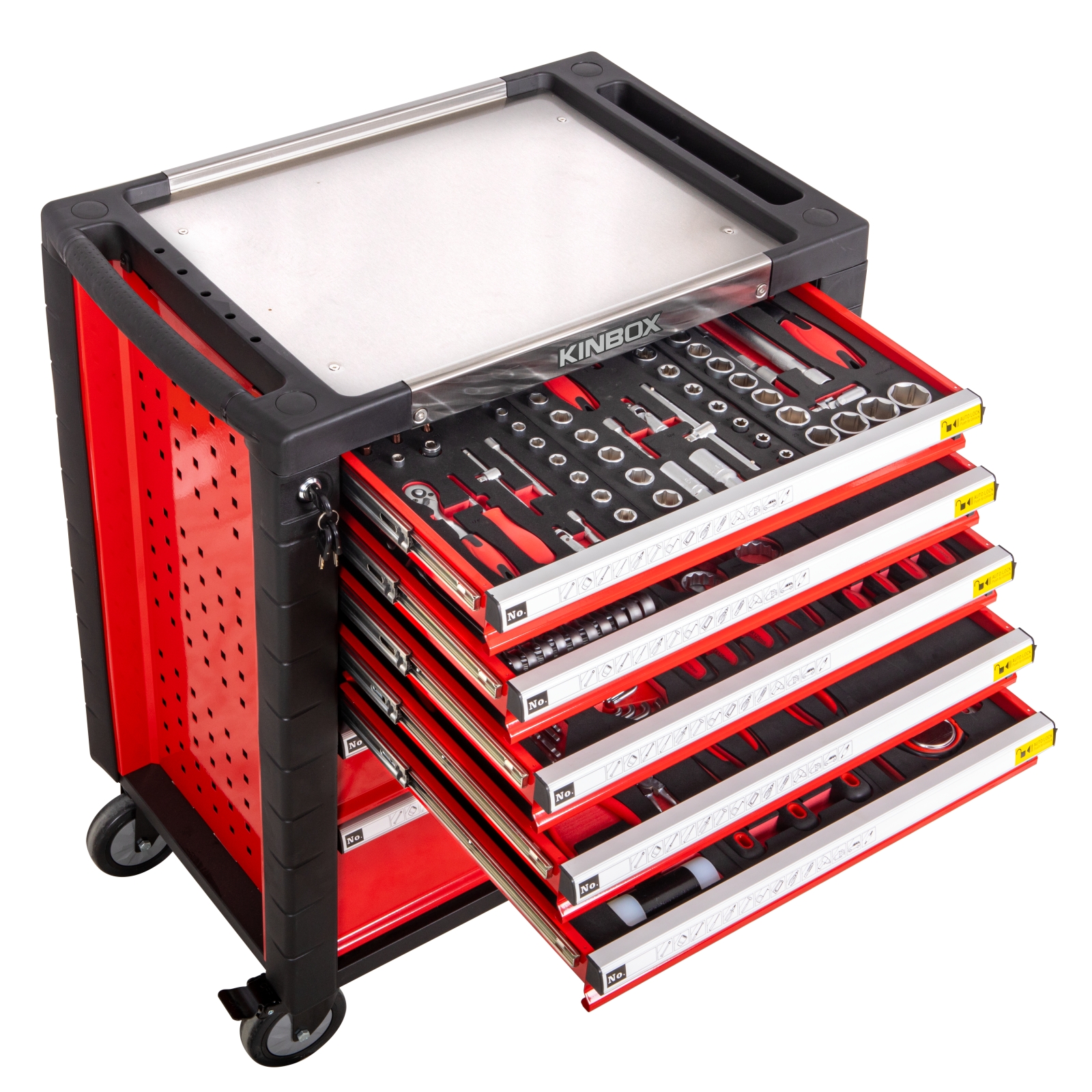
A new tool cabinet can be deceptive. Empty drawers slide more smoothly. Casters feel easier to control. Locks engage without resistance. The cabinet body looks straight because no weight is testing the frame yet.
A real cabinet does not stay empty.
Once loaded, everything changes. A wide drawer with heavy hand tools will test the slide system. A deep lower drawer packed with metal parts will test the frame. A mobile cabinet pushed across the floor will test the casters, side handle, drawer latch, and overall balance. A cabinet used by several people during the day will test whether the design is forgiving enough for rough hands and hurried movement.
A common mistake is approving a cabinet after checking only the look and basic movement of an empty sample. That may be enough for a light-duty household storage product, but it is not enough for workshop tool storage.
There is no need to make the first inspection complicated. Load the drawers with realistic weight. Pull them out fully. Push them back with one hand. Move the cabinet if it has wheels. Lock it after the drawers are loaded. Check whether the gaps remain even. Listen for rattling. Watch whether the frame twists slightly when the cabinet is turned.
These small tests reveal more than a polished product photo.
A Tool Cabinet that is meant for automotive repair, maintenance work, garage storage, or industrial use should still feel controlled when it is under load. If it only feels good empty, the cabinet has not really been tested.
Drawer count is one of the easiest numbers to sell. A seven-drawer cabinet sounds more useful than a five-drawer cabinet. A ten-drawer model sounds more complete than a compact one. For online listings and catalogs, more drawers often look like more value.
In actual tool storage, it is not that simple.
A cabinet with too many shallow drawers may not have enough space for power tools, larger parts, or tool cases. A cabinet with several deep drawers may waste space if the user mainly stores small hand tools. A very wide drawer may look attractive, but it needs stronger slides and better frame accuracy. If those parts are weak, the large drawer becomes the first place where the cabinet feels cheap.
The better question is not how many drawers the cabinet has. It is what each drawer is expected to hold.
Sockets, screwdrivers, pliers, wrenches, measuring tools, fasteners, and cordless tool accessories do not belong in the same type of drawer. Good storage starts with the real tool mix.
For a cabinet sold with hand tool sets, the drawer layout needs to match the tool tray from the beginning. Kinbox Tools offers tool cabinets, tool carts, and tool storage products with foam tray options such as EVA, EPS, BMC, and blow molding trays. That detail matters because a foam tray is not only packaging decoration. It decides how tools sit inside the drawer, how quickly the user can find them, and whether missing tools can be noticed at a glance.
If a buyer confirms the cabinet first and thinks about the foam tray later, the result may look acceptable but feel poorly planned. The tray may be forced into a drawer that is too shallow, too deep, or not fully accessible. For OEM projects, this is one of the easiest ways to make a product feel less professional than intended.
Drawer slides deserve more attention than they usually receive.
Most end users will not mention slide structure in a product review. They will say the drawer feels rough, heavy, loose, or unstable. They will say the cabinet feels cheaper than expected. In many cases, the drawer slide is the part causing that impression.
Ball bearing slides are commonly used in better workshop cabinets because they support smoother movement and repeated opening. Full-extension drawers are also valuable because they allow the user to reach tools at the back without digging through the drawer. Several Kinbox rolling cabinet and tool storage products highlight ball bearing slides and full-extension or fully extractable drawers, which are practical details for real tool access.
A drawer that opens halfway may still look fine in a photo. In a workshop, it makes the back of the drawer less useful.
The slide system cannot be judged properly without weight. A drawer that runs smoothly empty may dip at the front when loaded. It may shake side to side. It may become harder to close. In a mobile cabinet, the drawer may also rattle during movement if the slide and latch system do not work well together.
A professional Tool Cabinet should allow the user to open and close loaded drawers without thinking about the mechanism. The movement does not have to feel luxurious. It has to feel stable, predictable, and strong enough for daily work.
For a distributor, that feeling is commercial. Customers may forget a small difference in steel thickness, but they will notice a drawer that annoys them every morning.
Many buyers ask about steel thickness first. It is a useful specification, but it can create a false sense of certainty. A cabinet made with thicker steel can still perform poorly if the structure is badly formed or assembled.
A tool cabinet is a sheet metal product before it is a storage product. Cutting, bending, punching, welding, coating, and assembly all influence the way the final cabinet feels. If the body is not square, the drawer slides cannot sit correctly. If the mounting holes are inconsistent, drawers may not align. If the cabinet twists under load, the lock system may become difficult to use.
Kinbox Tools positions itself around iron and sheet metal processing, with products including tool cabinets, tool trolleys, tool carts, garage storage systems, storage units, and workbenches. For B2B sourcing, that manufacturing background is more meaningful than a long list of surface features.
A cabinet does not need to collapse to become a bad product. Sometimes the problem is smaller and more irritating.
One drawer closes harder than the others.
The drawer gap is wider on one side.
The lock works only when every drawer is pushed in firmly.
The cabinet rattles when moved.
The side panel flexes when a loaded drawer is pulled open.
These are the kinds of problems that appear after normal use. They also create the type of customer feedback that is hard to defend: “It works, but it does not feel good.”
That is why frame accuracy, not only steel thickness, should be part of the purchase decision.

Color sells. A red and black cabinet fits many automotive environments. Matte black feels modern. Grey works well in garage storage systems. Custom colors help brands create their own visual line.
Still, color is not the same as finish quality.
A workshop cabinet faces dust, oil, hand marks, scratches, moisture, and occasional impact. The surface around handles, drawer fronts, corners, and edges receives the most abuse. If coating quality is weak in those areas, the cabinet may start looking old even while the structure is still usable.
Powder coating and epoxy powder coating are commonly used for steel storage products because they can provide a cleaner and more durable finish. But the term itself is not enough. What matters is preparation, coating consistency, curing quality, and protection during packing.
For distributors and online sellers, packaging can damage the product before the end user touches it. Cabinet corners, drawer fronts, side panels, worktops, handles, and casters all need protection during transport.
A cabinet that leaves the factory looking clean can arrive with rubbed edges or dented corners if packaging is weak. The customer will not separate packaging quality from product quality. To them, it is simply a damaged cabinet.
This is one reason sample approval should include packaging review, not only product review. Hardware needs to be packed clearly. Painted panels need protection. Assembly parts need to be easy to identify. If the product uses a knock-down structure, the assembly experience has to feel reasonable for the target buyer.
Casters are easy to underestimate because they sit at the bottom of the cabinet. In a fixed garage storage cabinet, that may not matter much. In a rolling Tool Cabinet, it matters immediately.
A mobile cabinet must carry weight, turn safely, stop securely, and remain stable on imperfect floors. Once the drawers are loaded, weak casters make the whole cabinet feel nervous. The user feels it when turning. The cabinet may not track smoothly. The brake may not hold well. The wheels may catch on floor joints or small debris.
A rolling cabinet should not be judged by how it moves empty on a smooth factory floor. It should be judged under load.
When a cabinet moves, the drawers, slides, latch system, frame, and handles are all being tested. If the drawers rattle or shift, users lose confidence. If the side handle feels weak, the cabinet feels unsafe. If the cabinet leans during turning, it may be unsuitable for a busy repair shop.
Kinbox product lines include tool trolleys, roller cabinets, and tool carts, where caster quality and drawer security are part of the practical user experience. For buyers sourcing mobile tool storage, casters should be discussed with the same seriousness as drawer slides or steel structure.
A lockable cabinet is not automatically a secure cabinet.
The lock has to work with the drawer structure. If the frame is not aligned, the locking bar may feel stiff. If the drawers do not close evenly, the lock may require extra force. If the cabinet moves during use, the drawer latch system has to help prevent unwanted opening.
In workshops, people do not always close drawers gently. At the end of a shift, someone may push several drawers quickly and lock the cabinet without checking every detail. A good lock system needs to handle normal human behavior.
A lock protects valuable tools, but it also supports discipline in a shared workspace. When tools are stored in fixed positions and access is controlled, missing items are easier to notice. This is especially useful when a cabinet is sold with fitted foam trays or complete hand tool sets.
For OEM buyers, the lock type should match the market level. A basic garage cabinet may only need simple secure storage. A professional workshop cabinet may require a more reliable central locking system, better drawer control, and stronger hardware.
The mistake is treating all locks as the same because they look similar from the front.
Some buyers choose a cabinet as if it were an isolated product. In reality, tool storage usually belongs to a larger workspace.
A cabinet may sit under a workbench, beside a garage storage cabinet, near wall-mounted units, or inside a full garage storage system. If the cabinet does not match the surrounding layout, the workspace may still feel messy even after the purchase.
A home garage user may need a clean combination of tall cabinets, base cabinets, wall cabinets, tool storage, and a work surface. A mechanic may care more about mobility and fast tool access. A warehouse maintenance area may need lockable storage, labeling, and durable surfaces more than a decorative finish.
The best cabinet is not always the biggest one. It is the cabinet placed and configured in the right way.
Tools used every day should not be stored far from the work area. Heavy items should not be placed high. Consumables should not drift into random drawers. Work surfaces should not become overflow storage because the cabinet layout is inconvenient.
For brands and distributors, this creates an opportunity. A Tool Cabinet can be sold as part of a wider storage family: tool cart, workbench, garage storage cabinet, wall unit, tall cabinet, and modular storage unit. Kinbox’s broader range supports this kind of product planning, especially for buyers developing garage and workshop storage lines.
Many custom projects begin with a logo and a color code. That is understandable, but it is too late in the process to think only about appearance.
Useful OEM customization goes deeper. It can include drawer layout, slide specification, foam tray design, caster selection, lock type, cabinet size, worktop material, packaging method, and accessory configuration. These decisions affect how the cabinet works, not just how it looks.
Kinbox Tools supports OEM orders, customized logos, and featured designs. For tool brands and wholesale buyers, the value of that support depends on how clearly the product is planned before production.
A cabinet for DIY garage users may need simple assembly, clean styling, and practical general storage. A cabinet for automotive repair shops may need stronger slides, heavier-duty casters, safer locking, and drawers that suit professional hand tools. A cabinet sold with tool sets may need precise foam tray planning.
If the target user is vague, customization becomes decoration. The cabinet may look different from a standard model, but it will not sell as a better product.
Before confirming an OEM Tool Cabinet, the buyer should know the sales channel, retail price range, tool load, packaging requirements, expected user, and after-sales risk. Those details guide the specification more effectively than color alone.
Low price has its place. Not every market needs a premium cabinet. A light-duty garage user and a professional mechanic should not be sold the same specification. Cost control is part of good sourcing.
The mistake is choosing the lowest price without understanding where the savings come from.
A cheaper cabinet may use weaker slides, lighter casters, thinner packaging, less consistent coating, simpler locks, or less accurate assembly. Some of those choices may be acceptable for the right market. Others may create complaints that cost more than the original saving.
A buyer may win the first order with price and lose the second order with quality.
If the cabinet is sold as a basic garage organizer, it should be simple, clean, and dependable for light use. If it is sold as a heavy-duty workshop cabinet, it needs to feel strong in the drawers, frame, casters, finish, and lock. If it is sold under a private label, the quality must be consistent enough to protect the brand.
A Tool Cabinet does not need to be overbuilt. It needs to be honestly matched to the work it is expected to do.
Most mistakes in tool cabinet purchasing come from paying attention to what is easy to compare and missing what is easy to feel later.
Drawer count is easy to compare. Drawer behavior under load is easier to feel later.
Color is easy to approve. Finish durability is tested after handling and shipping.
Steel thickness is easy to ask for. Frame accuracy shows up when the drawers start moving.
A low price is easy to accept. Customer complaints are harder to absorb.
A well-chosen Tool Cabinet should not create daily friction. It should keep tools visible, drawers smooth, movement controlled, locks dependable, and the workspace easier to manage. For OEM buyers, it should also support brand positioning, packaging efficiency, repeat orders, and realistic after-sales expectations.
Kinbox Tools fits naturally into this purchasing discussion because its product range covers tool cabinets, tool trolleys, tool carts, garage storage cabinets, garage storage systems, workbenches, and related custom storage solutions. The value for buyers is not only in selecting a cabinet from a product page, but in matching structure, materials, drawer layout, finish, packaging, and customization to the market they actually serve.
A tool cabinet is not proved by how it looks on the first day. It is proved after the drawers have been opened hundreds of times, after the cabinet has been pushed across the floor, after the tools have been returned and removed again and again, and after the customer decides whether the same cabinet is worth buying twice.



