
 English

Views: 0 Author: Site Editor Publish Time: 2026-04-10 Origin: Site


An industrial Tool Cabinet is built to work hard, but that does not mean it can be ignored. In many workshops, garages, maintenance rooms, and production environments, tool cabinets are used every single day. Drawers are opened repeatedly, tools are dropped back in quickly, wheels roll over rough floors, and cabinet surfaces are constantly exposed to dust, oil, moisture, and general wear. Under those conditions, even a well-made cabinet will start showing problems if basic maintenance is overlooked for too long.
The interesting thing is that most cabinet problems do not start as major failures. They usually begin as small signs that are easy to dismiss. A drawer stops sliding as smoothly as before. A lock feels a little stiff. Dust and metal debris collect in corners. A caster starts making more noise. The cabinet surface begins to lose its clean finish because grease and workshop residue are left on it day after day. None of those issues looks urgent by itself, which is exactly why they often get ignored.
But over time, those small issues become the reason a cabinet feels old before it should. The drawers become harder to use, the structure feels less dependable, the finish looks worn, and the overall storage system starts working against the user instead of helping. That is when maintenance stops being a minor housekeeping task and starts becoming an operational issue.
The good news is that daily care for an industrial Tool Cabinet does not need to be complicated. In fact, the most effective maintenance habits are usually simple, practical, and easy to repeat. A few minutes of regular attention can help protect drawer performance, improve cleanliness, reduce avoidable wear, and extend the useful life of the cabinet far more than many users expect.
This checklist is designed for industrial users who want their tool cabinets to stay cleaner, perform better, and last longer. Whether the cabinet is used in an automotive workshop, manufacturing plant, service area, warehouse maintenance room, or technical repair station, the same basic principle applies: a cabinet that is cared for consistently will almost always outperform one that is only fixed after problems appear.
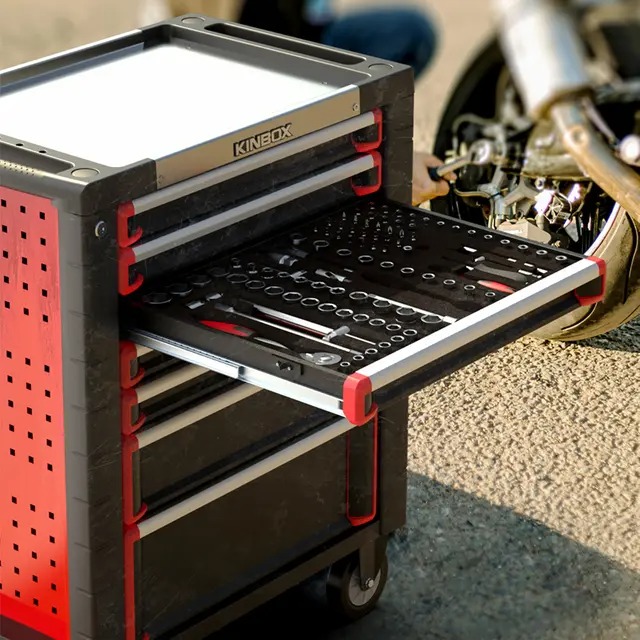
Daily maintenance does not begin with cleaning products or tools. It begins with attention.
One of the easiest ways to prevent cabinet problems from building up is to do a quick visual inspection at the start of the workday. This does not need to become a long routine. In most cases, one or two minutes is enough. The goal is simply to notice early signs of trouble before they become bigger issues.
Look at the cabinet body, drawer fronts, handles, top surface, base, and if applicable, the wheels and brakes. Check whether any drawer is left slightly open, sitting unevenly, or showing signs of overload. See whether loose tools, fasteners, or metal debris have collected around the cabinet. If the unit is mobile, check whether it is sitting level and whether the wheels appear to be rolling normally.
This kind of check is easy to underestimate, but it matters. Most cabinet problems become obvious visually before they become serious mechanically. A small misalignment today may be a drawer slide issue tomorrow. A wheel that looks slightly off may become harder to control later in the week. Catching those details early usually saves more time than it costs.
It is very common for cabinet maintenance to focus only on the drawers and moving parts, while the outer surfaces get ignored. In industrial environments, that is a mistake.
The outside of a Tool Cabinet is exposed to constant contact. Hands transfer oil and grime. Airborne dust settles everywhere. Workshop residue collects on top surfaces, corners, and drawer fronts. In some environments, metal filings, grease, or chemical traces can sit on the cabinet for long periods if nobody wipes them away.
Daily wiping is not just about keeping the cabinet looking presentable, although appearance does matter. It also helps protect the finish and prevents buildup that can become harder to remove over time. Once dirt, oil, and residue are allowed to sit for too long, the cabinet surface tends to age faster and look worn much earlier than it should.
A soft cloth with an appropriate mild cleaner is usually enough for routine care. The goal is not aggressive cleaning. It is consistent cleaning. Pay special attention to handles, drawer pulls, top work surfaces, side panels, and areas that collect dust in corners or edges.
When this habit becomes part of the daily routine, the cabinet stays cleaner, the finish lasts longer, and users are more likely to notice any scratches, dents, or changes that need attention.
For many users, the inside of the drawers is where cabinet condition begins to decline.
Industrial drawers tend to accumulate more than tools. Dust, loose fasteners, packaging scraps, metal particles, damaged small parts, and general workshop debris often end up in the bottom of drawers almost without anyone noticing. Once that happens, the drawer interior becomes harder to keep organized, and the cabinet slowly becomes less efficient to use.
A messy drawer is not only harder to work with. It can also increase wear. Loose debris can scratch surfaces, interfere with organization, and make it more difficult to return tools properly. Overloaded or overcrowded drawers also create more strain on the slides and make daily use less smooth.
As part of a daily care routine, users should remove any obvious debris from drawers, return tools to their correct positions, and make sure that nothing unnecessary is being stored there. This is especially important for shared cabinets, where disorder spreads faster because multiple people are using the same storage space.
A clean drawer is not just nicer to look at. It is faster to use, easier to maintain, and much less likely to hide problems.
One of the fastest ways to tell whether a Tool Cabinet is being cared for properly is to pay attention to how the drawers move.
Smooth drawer action is something people tend to take for granted until it starts changing. At first, the difference may be small. A drawer feels slightly heavier. It does not close as cleanly. One side seems to drag more than the other. These changes are easy to ignore when work is busy, but they are often the earliest warning signs that the cabinet needs attention.
Open and close drawers normally and pay attention to whether they still feel balanced and consistent. If one drawer suddenly becomes rough, noisy, or difficult to move, do not just force it and move on. Check whether it is overloaded, whether tools have shifted inside, or whether dirt has built up around the slide area.
Daily awareness matters here because drawer issues usually get worse if ignored. Users often adapt by pulling harder, slamming the drawer, or avoiding that section of the cabinet altogether. That only adds more stress and increases long-term wear.
Keeping drawer movement under observation does not require technical servicing every day. It simply requires users to notice when the normal feel of the cabinet changes.
This may seem like a small point, but it has a surprisingly big impact on cabinet condition and workshop discipline.
In many industrial settings, the top of a Tool Cabinet becomes a temporary landing zone. A wrench is left there during a busy repair. A measuring tool stays out after a quick check. A tray of fasteners sits on top for convenience. One item becomes several, and before long the cabinet top is acting more like an overflow bench than a storage unit.
Leaving tools on the top surface increases clutter, makes cleaning harder, and raises the chance of items falling, being damaged, or being forgotten. It also encourages a broader habit of incomplete tool return, which is one of the main reasons cabinet organization breaks down over time.
As part of daily maintenance, the top surface should be cleared at the end of each shift or work cycle. Tools should go back into their assigned places. Loose parts should be removed. Wiping the top clean after that only takes a moment, but it changes the overall standard of care significantly.
A cabinet that starts each day clear and reset is much easier to keep under control than one that begins with yesterday’s unfinished clutter still sitting on top.
Cabinet hardware does not always get much attention until it stops working properly. That is unfortunate, because locks, handles, and latches are touched constantly and wear down faster than many users realize.
These parts do not need complicated maintenance every day, but they should be checked routinely as part of normal cabinet care. A handle that feels loose, a latch that no longer catches properly, or a lock that has started becoming stiff should not be ignored for weeks.
Small hardware issues tend to grow quietly. A stiff lock becomes a frustrating lock. A loose handle becomes a damaged handle. A latch that does not hold properly may lead to drawers staying slightly open or closing less securely than expected. In mobile cabinets, this becomes even more important because insecure drawers can create movement problems during transport.
Daily or near-daily awareness is enough in most cases. Users do not need to disassemble anything as part of routine care. They simply need to notice whether the hardware still feels secure and works the way it should.
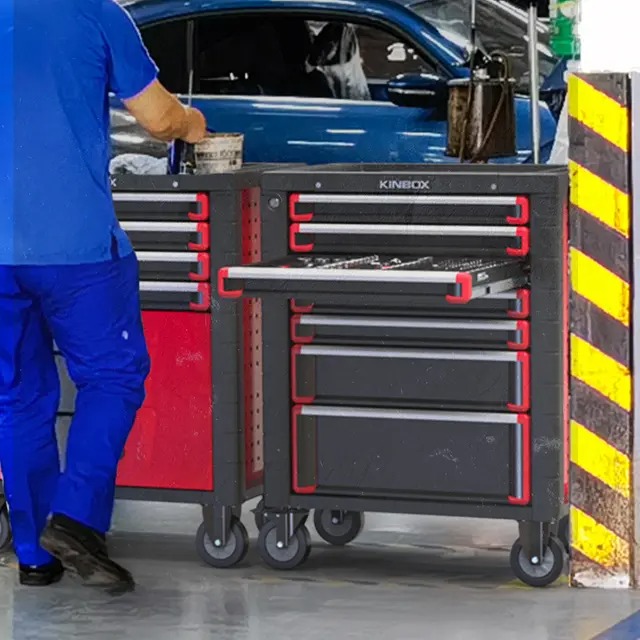
If the Tool Cabinet is mobile, wheel and base-area care becomes a major part of daily maintenance.
Casters collect dust, hair, thread, metal particles, wrapping material, and workshop debris more easily than many people expect. Once buildup starts collecting around the wheels, the cabinet may become harder to move, less stable, or noisier during movement. Over time, this puts extra stress on the entire unit.
The base of the cabinet is out of normal sight, so it is easy to forget. But this is exactly where a lot of damaging debris gathers. Workshops with dirt, metal shavings, cardboard scraps, or oily dust are especially likely to see this problem.
A daily or routine check of the wheel area helps prevent that buildup from becoming severe. If the cabinet is moved often, users should also make sure the brakes still engage properly and the unit rolls without unusual resistance. Mobility problems rarely improve on their own, so catching them early makes a real difference.
Not every cabinet issue comes from poor cleaning. Some come from the way tools are stored.
Industrial tool cabinets are made for serious use, but that does not mean every drawer should be packed as full as possible. Overloading is one of the easiest ways to shorten the life of a cabinet without realizing it. The damage may not be immediate, but the strain builds up in the drawer slides, drawer bottoms, frame, and mobile base if there is one.
Look for drawers that are noticeably harder to open, sagging slightly, or filled beyond a comfortable working level. If tools are stacked on top of one another with no clear organization, that drawer is probably carrying more than it should or at least using its space badly. Users should also pay attention to whether heavy items are being stored in the most appropriate positions, especially in lower drawers where weight is easier to manage safely.
Daily maintenance is not only about cleaning what exists. It is also about correcting storage habits that create wear over time.
In industrial environments, cabinets do not just collect dust. They are often exposed to oils, coolants, lubricants, solvents, moisture, and other shop-related substances. If those materials sit too long on cabinet surfaces or inside drawers, they can affect both cleanliness and long-term finish quality.
A light layer of dust can usually wait until the end of the shift. Oil, moisture, and chemical residue should not. The longer these materials remain on the cabinet, the more likely they are to stain surfaces, attract more dirt, or create a slippery, unpleasant working area. In some cases, residue can also affect tools stored inside the cabinet if it spreads onto drawer liners or interior surfaces.
The best habit is simple: if a spill or leak reaches the cabinet, clean it promptly instead of leaving it for a later deep-cleaning session. Quick response usually prevents much bigger maintenance work later.
If there is one habit that ties all daily cabinet maintenance together, it is the end-of-day reset.
A cabinet that is left messy at the end of the day almost always becomes messier the next day. Drawers stay disorganized, top surfaces stay cluttered, and small maintenance issues go unnoticed because the cabinet never really returns to a baseline condition. That makes long-term care much harder than it needs to be.
At the end of the shift, tools should be returned to their assigned places, top surfaces cleared, visible dirt removed, spills wiped up, and any obvious cabinet issue noted before the next workday begins. This does not need to be a long formal process. In many cases, five minutes is enough.
The real value of the reset is consistency. When cabinets are reset daily, they stay more organized, last longer, and remain easier to inspect and maintain. It also creates a stronger sense of accountability in shared work environments because the condition of the cabinet is no longer left entirely to chance.
Some users hear the phrase “daily maintenance” and immediately imagine something too detailed, too time-consuming, or unrealistic for a busy workshop. But in practice, daily cabinet care is not about adding unnecessary work. It is about preventing unnecessary problems.
A few minutes of routine attention can help preserve smooth drawer function, reduce clutter, protect finishes, improve cleanliness, and prevent small issues from turning into repairs or replacements. Just as importantly, a well-maintained Tool Cabinet supports better working habits. It is easier to use, easier to trust, and easier to keep organized over time.
In other words, cabinet maintenance is not really about the cabinet alone. It is about supporting the quality of the workspace around it.
A good industrial Tool Cabinet is designed to handle demanding daily use, but even the best cabinet performs better and lasts longer when it is cared for consistently. Simple habits like checking drawer movement, clearing debris, wiping surfaces, monitoring wheels, removing residue, and resetting the cabinet at the end of the day can make a bigger difference than many users expect. Daily maintenance is not complicated, but it does require consistency, and that consistency is often what separates cabinets that stay dependable from cabinets that wear out too early.
For buyers and workshop operators who want cabinets that are easier to maintain in the first place, product quality matters just as much as daily care. Ningbo Kinbox Tools Technology Co., Ltd., established in 2013, specializes in iron and sheet metal products including tool trolleys, tool cabinets, tool carts, garage storage systems, and workbenches. With a modern production base in Cixi, Ningbo and extensive experience in practical metal storage solutions, Kinbox focuses on durable construction, efficient workstation organization, and reliable long-term usability. For customers looking for tool storage that supports both daily performance and easier maintenance, that kind of manufacturing background offers clear value.
Basic cleaning should be done daily, especially for exterior surfaces, top panels, and visible dirt or residue. A more detailed inspection and deeper cleaning can be done on a regular scheduled basis depending on the work environment.
The most important task is usually a daily reset that includes returning tools properly, clearing the top surface, removing visible debris, and noticing any early signs of drawer, wheel, or hardware problems.
This can happen because of overloading, poor organization, dirt buildup, shifted tools, or wear caused by repeated forceful use. Daily attention to drawer movement helps catch these issues early.
Yes. Oil, moisture, and chemical residue should be cleaned promptly because they can damage the finish, attract more dirt, and make the cabinet less pleasant and less safe to use.
Daily maintenance reduces unnecessary wear, protects cabinet surfaces, keeps drawers and wheels working more smoothly, improves organization, and helps identify small problems before they turn into expensive repairs or early replacement.



