
 English

Views: 0 Author: Site Editor Publish Time: 2026-06-18 Origin: Site


A garage can look organized after one cabinet is installed. That does not always mean the garage is actually easier to use.
This is where many buyers get stuck. They add a cabinet near the wall, then another cabinet beside it, then maybe a small tool chest, a workbench, a tall unit, and a few wall shelves. Each product may be useful on its own. But after a few months, the garage still feels awkward. Tools are in one corner, car care products in another, seasonal boxes are sitting too close to the workbench, and the floor is still doing more storage work than it should.
That is the real difference between a complete Garage Storage System and a group of individual cabinets.
One is planned as a working layout. The other is often a collection of separate fixes.
Of course, individual cabinets are not wrong. In some garages, one strong cabinet is exactly enough. In other spaces, especially for users with tools, equipment, cleaning products, sports gear, and seasonal items, a full storage system makes more sense. The decision depends less on garage size and more on how the garage is used every week.
A single cabinet can be a good choice when the storage problem is clear and limited.
For example, a homeowner may only need a place for car cleaning products, small household tools, and a few repair supplies. A closed Garage Storage Cabinet can handle that well. It keeps bottles upright, hides clutter, and frees up the floor. If the garage is not used as a workshop, a complete system may be more than necessary.
A small repair corner may also work with one cabinet and a compact workbench. Not every garage needs tall cabinets, wall cabinets, base units, mobile carts, and a full modular layout. Sometimes too much storage makes the space feel heavier than it needs to be.
The risk comes when the cabinet is expected to solve too many unrelated problems.
One cabinet can hold a lot, but it cannot organize everything well.
If hand tools, power tools, cleaning supplies, seasonal items, extension cords, screws, sports gear, and car care products all go into the same storage unit, the cabinet becomes a closed version of the old mess. The outside looks cleaner. Inside, the user still has to search.
This is especially common with deep garage cabinets. At first, the space feels generous. Later, the front section blocks the back section, small items disappear behind larger boxes, and the cabinet becomes harder to use than expected.
A single cabinet works best when it has one main role. Car care. Household tools. Outdoor supplies. Seasonal storage. If the role is vague, the cabinet fills up quickly and loses its value.
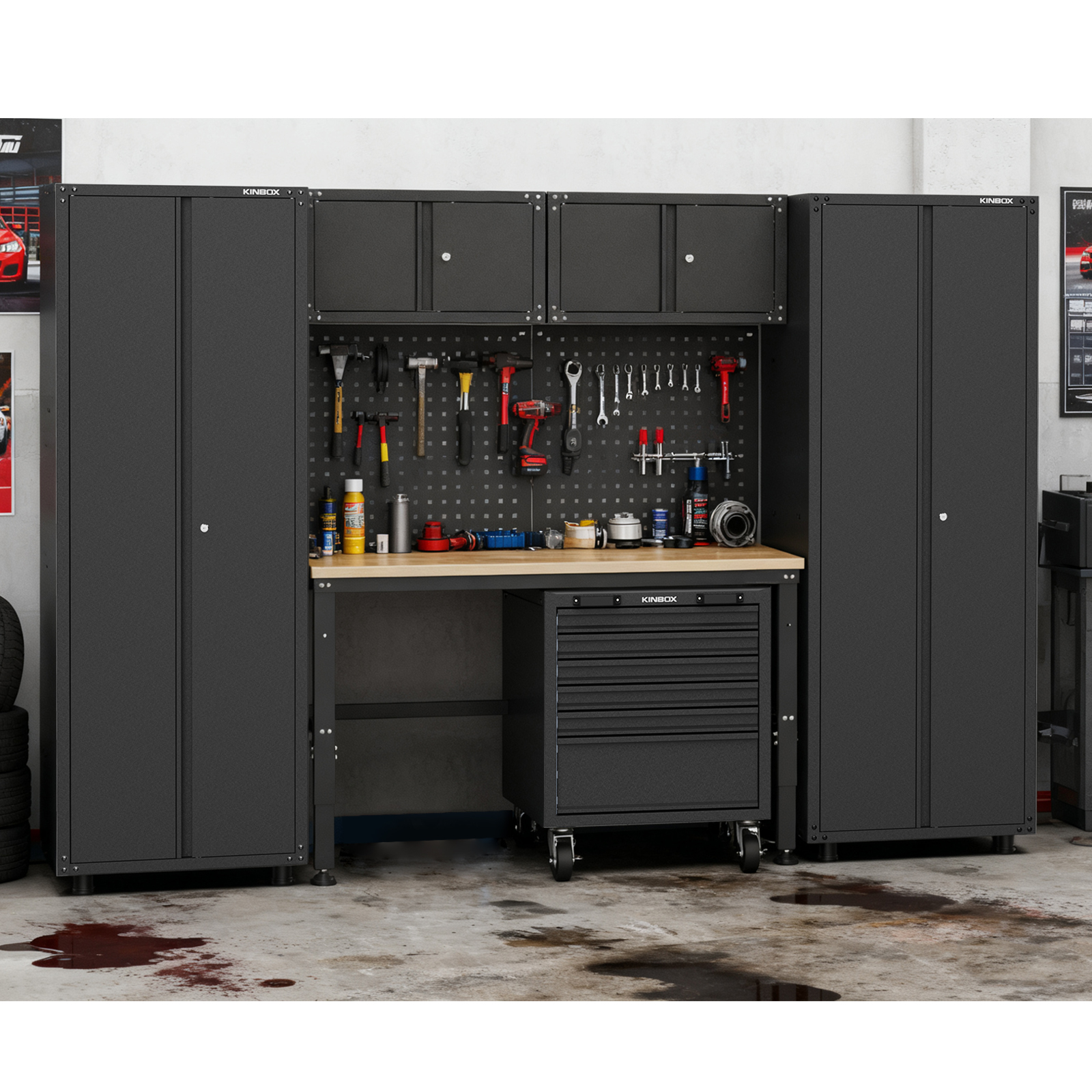
A Garage Storage System is not simply “more cabinets.” It is a layout where different storage units do different jobs.
Wall cabinets handle lighter supplies. Base cabinets carry heavier items. Tall cabinets hold larger categories. A Tool Cabinet organizes hand tools in drawers. A workbench provides the active surface. A garage storage unit can handle specific equipment, seasonal items, or bulky storage. Mobile tool carts bring frequently used tools closer to the job.
In practice, the system works because it separates categories before the garage becomes messy again.
A good system makes the user’s path more natural. The tools used at the bench stay near the bench. Cleaning supplies do not mix with precision tools. Heavy boxes sit low. Seasonal items move away from the daily work area. Small hardware has bins or drawers instead of one mystery box.
The most useful garage layouts are not always the most expensive ones. They are the ones where each storage area has a reason to exist.
A wall cabinet above the bench may hold light supplies, gloves, tape, or smaller boxes. A base cabinet below the worktop may hold power tools and larger accessories. A tall cabinet at the edge may handle car care products, outdoor items, or seasonal boxes. A Tool Cabinet beside the workbench may hold sockets, wrenches, screwdrivers, pliers, and measuring tools.
This kind of arrangement is harder to achieve with random individual cabinets. The garage may have enough storage volume, but the storage may not follow the work.
A garage without a workbench can often get by with individual cabinets.
A garage with a workbench usually needs more careful planning.
The reason is simple: a workbench attracts clutter. Chargers, fasteners, gloves, drill bits, small bottles, rags, tape measures, and half-finished jobs all end up on the top. If the storage around the bench is not planned well, the bench becomes a shelf instead of a working surface.
A Garage Storage System can protect the workbench by placing the right storage nearby. Drawer storage for hand tools. A cabinet for bottles and supplies. A lower unit for power tools. A wall cabinet for light items. A tall unit for less-used storage.
Well, this is where individual cabinets often start to show their limits. A single cabinet may hide the mess, but it may not support the way the workbench is used.
This point matters.
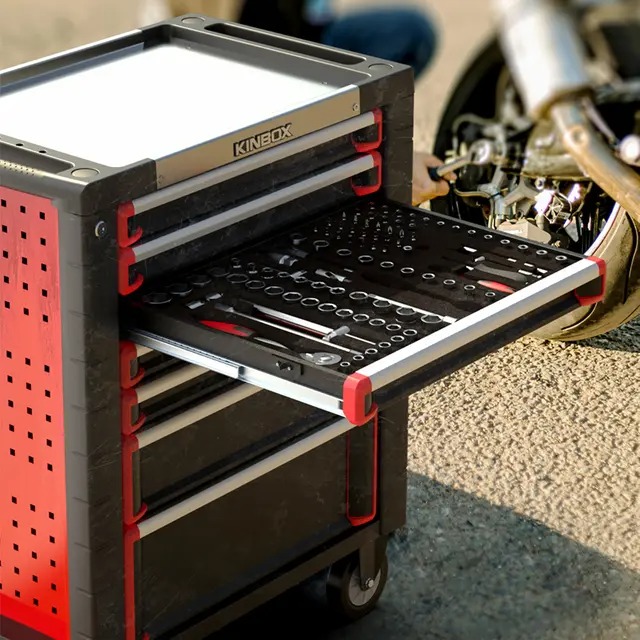
A Garage Storage Cabinet with shelves is good for boxes, bottles, towels, car care products, and larger supplies. A Tool Cabinet is better for hand tools because drawers separate small items more effectively. Sockets, screwdrivers, pliers, wrenches, and measuring tools do not belong in one deep shelf.
If the garage includes serious repair work, a tool cabinet is usually not optional. It becomes the detailed storage part of the larger garage storage system.
For brands and distributors, this also affects product planning. A garage storage line that includes both cabinets and tool cabinets is easier to position than a line built only around general-purpose storage units.
Individual cabinets have one clear advantage: they are easy to add.
A buyer can start with one cabinet, test the space, and add more later. This works well for users who are not ready to install a complete system. It also helps when the garage layout may change, or when the buyer has a limited budget.
The problem is that separate cabinets may not match in height, color, handle style, depth, or function. A garage can end up with several useful products that do not feel like one space. The user may not mind at first, but over time the layout can become visually and functionally uneven.
One cabinet is taller. Another is too deep. A third has different handles. The workbench does not align with the base cabinets. A tool chest sits awkwardly beside a storage unit because it was bought later.
That is not a disaster. It is just not a system.
When cabinets are added one by one, categories often shift around.
Car care products move from one cabinet to another. Tools are split between a tool chest and a wall cabinet. Seasonal items take over the lower shelf because it was empty. A small garage storage unit becomes a catch-all because no one remembers its original purpose.
A complete Garage Storage System reduces this problem because the layout starts with category planning. The system gives the user a stronger storage logic from the beginning.
A complete garage storage system usually costs more than one or two individual cabinets. That is obvious. But price alone does not tell the whole story.
A random cabinet may be cheaper, yet still waste wall space, floor space, or interior space. A cabinet may be too tall for the items stored inside. A shelf may be too deep for small parts. A workbench may be crowded because the nearby cabinet does not hold the right categories. The garage may still need another unit later because the first cabinet did not solve the real problem.
A system can reduce that kind of waste by planning the space as a whole.
Base cabinets, wall cabinets, tall cabinets, tool cabinets, and workbenches can be arranged to use the wall more efficiently. Heavy storage can stay low. Light storage can move up. Frequently used items can stay closer to the work zone. Less-used items can move to the edges.
A garage used only for parking and light household storage may not need a full system.
A garage used for car maintenance, DIY projects, tool storage, sports equipment, and seasonal storage may benefit from a planned system very quickly. The more roles the garage has, the more important layout becomes.
For professional workshops or serious home garages, a complete system also creates a more controlled working environment. Tools are easier to return. Equipment has a safer place. The floor is clearer. The workbench is easier to reset.
That is value, even if it does not appear as a single line on the quotation.
Whether buyers choose individual cabinets or a complete Garage Storage System, the structure matters.
A garage cabinet has to deal with weight, humidity, dust, surface contact, and daily handling. A tool cabinet has to support loaded drawers. A mobile unit has to handle movement. A workbench has to tolerate tools, parts, and occasional impact.
Steel structure, powder coating, drawer slides, hinges, locks, casters, worktops, packaging, and assembly quality all affect how the product performs after installation.
Kinbox Tools focuses on tool cabinets, garage storage cabinets, garage storage systems, garage storage units, workbenches, tool carts, and related storage products. Its product range also includes OEM customization, logo options, foam tray solutions, and sheet metal processing experience. For B2B buyers, these details matter because storage products are not judged only by appearance. They are judged after shipping, assembly, loading, and repeated use.
A Garage Storage System makes more sense when the garage has multiple storage problems at once.
Tools need organization. Equipment needs floor space. Seasonal items need a less active area. Car care products need separation. Sports gear needs bins or tall storage. The workbench needs protection from clutter. The user needs a clear path through the garage.
At that point, adding one cabinet may not change enough. The garage needs a layout.
A system does not have to cover every wall. It does not have to look like a showroom. It just needs to divide the space in a way that matches how the garage is used.
The real test is not how the garage looks after installation. It is how quickly the garage can return to order after use.
With individual cabinets, that can work if each cabinet has a clear purpose. With a Garage Storage System, it can work even better if the whole layout supports daily habits. Tools return to drawers. Bottles return to shelves. Seasonal items stay away from the bench. Heavy equipment stays low. Sports gear has bins. The worktop clears quickly. The floor stays open.
That is what storage is supposed to do.
If the garage has one clear problem, choose the right individual cabinet. If the garage has several connected problems, plan a system. The best choice is not the larger one or the cheaper one. It is the one that helps the user keep using the garage without fighting the storage every week.



