
 English

Views: 0 Author: Site Editor Publish Time: 2026-07-24 Origin: Site


A garage rarely stays the same for long. A space that begins as a simple parking area may gradually become a home workshop, a tool storage room, a vehicle maintenance zone, or even a place for woodworking and DIY projects. As the work changes, the storage requirements change with it.
This is where modular garage storage cabinets become particularly useful. Instead of forcing every tool and piece of equipment into one fixed cabinet layout, a modular system allows the workspace to grow, shift, and adapt over time.
The real advantage is not simply having more storage. It is being able to organize that storage around the way the space is actually used.
In garage organization, flexibility means more than moving a cabinet from one wall to another. It means being able to select, arrange, expand, or replace individual storage units according to changing needs.
A modular garage cabinet system may include:
Tall storage cabinets
Base cabinets
Drawer cabinets
Wall-mounted cabinets
Workbenches and worktops
Pegboards or tool panels
Mobile tool cabinets
Shelving units
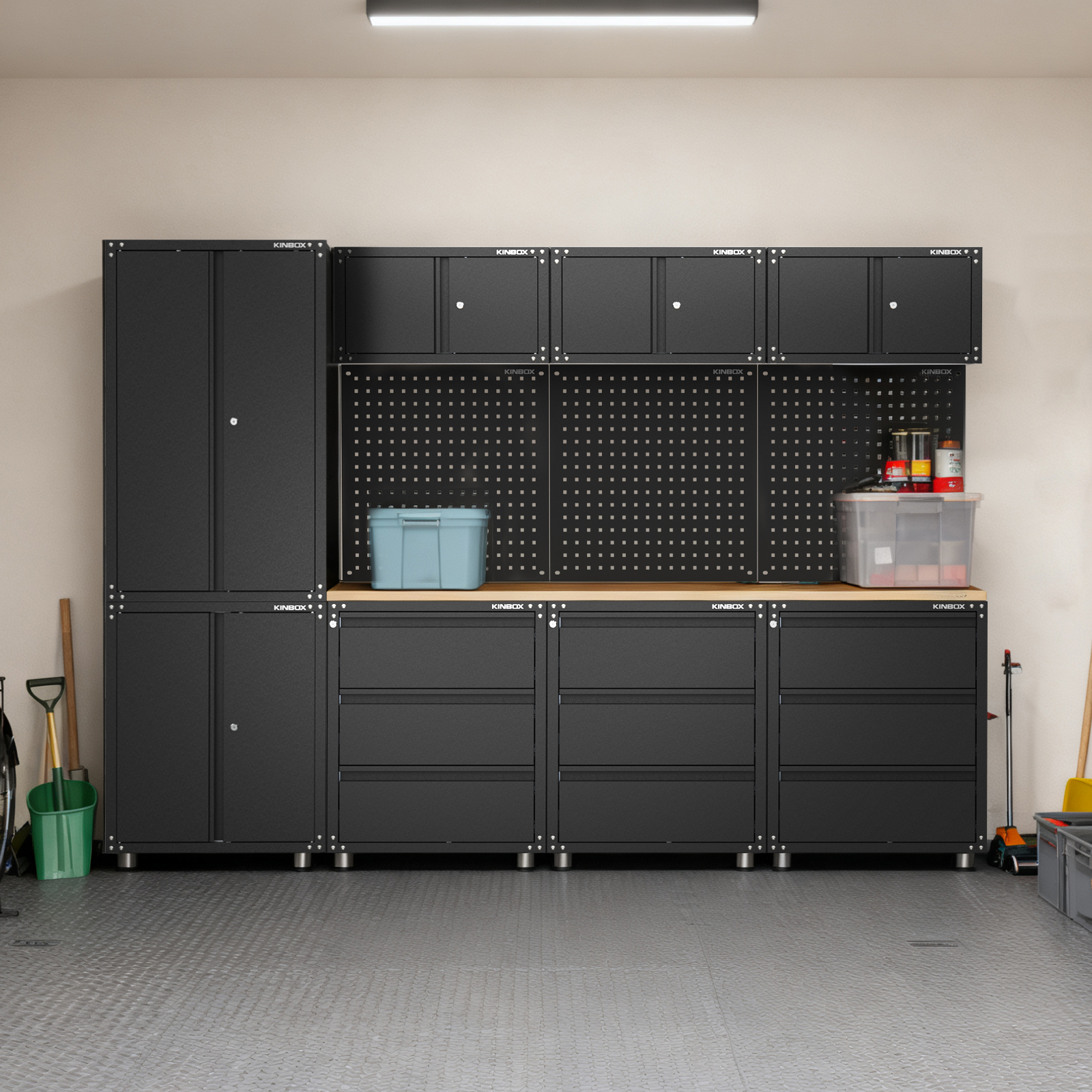
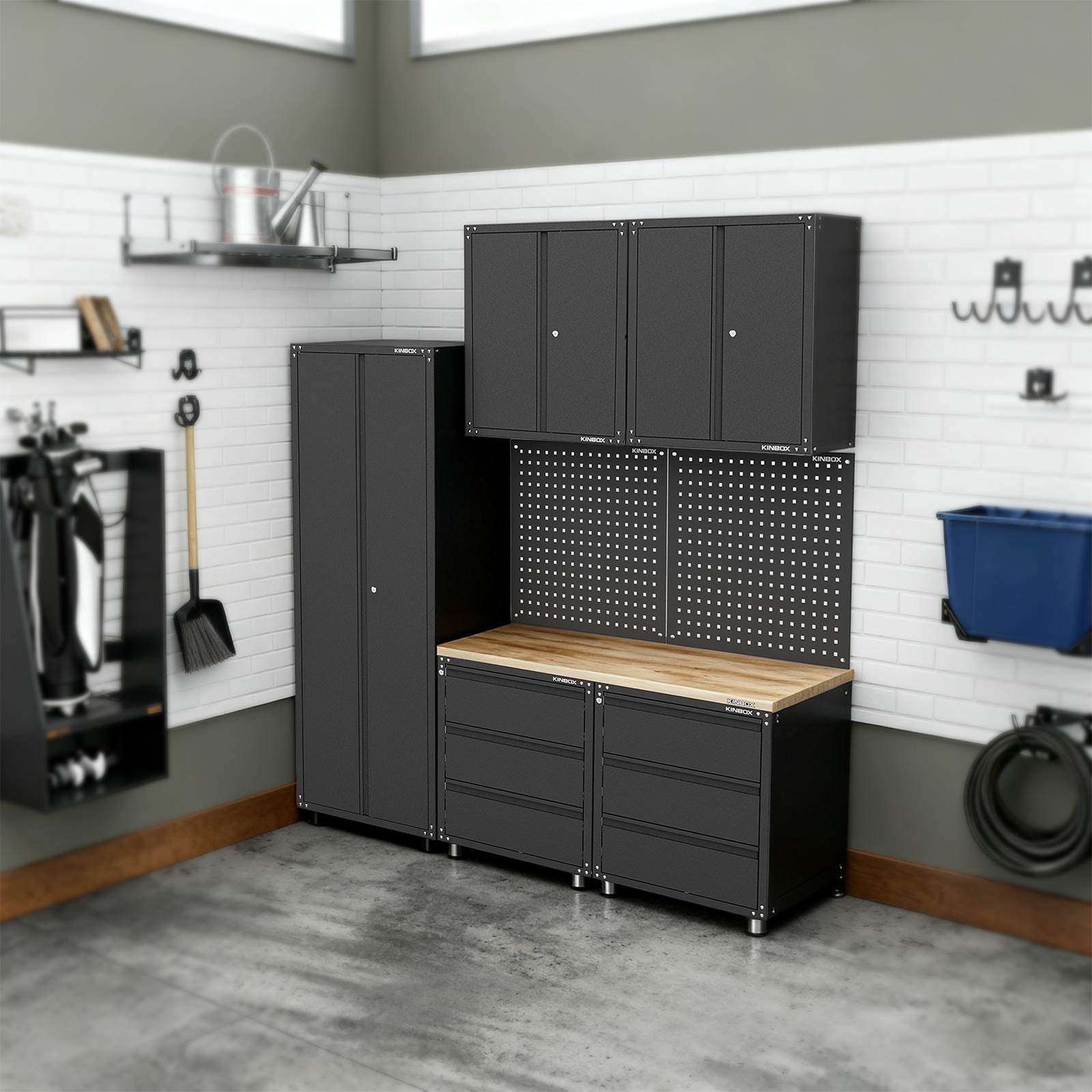
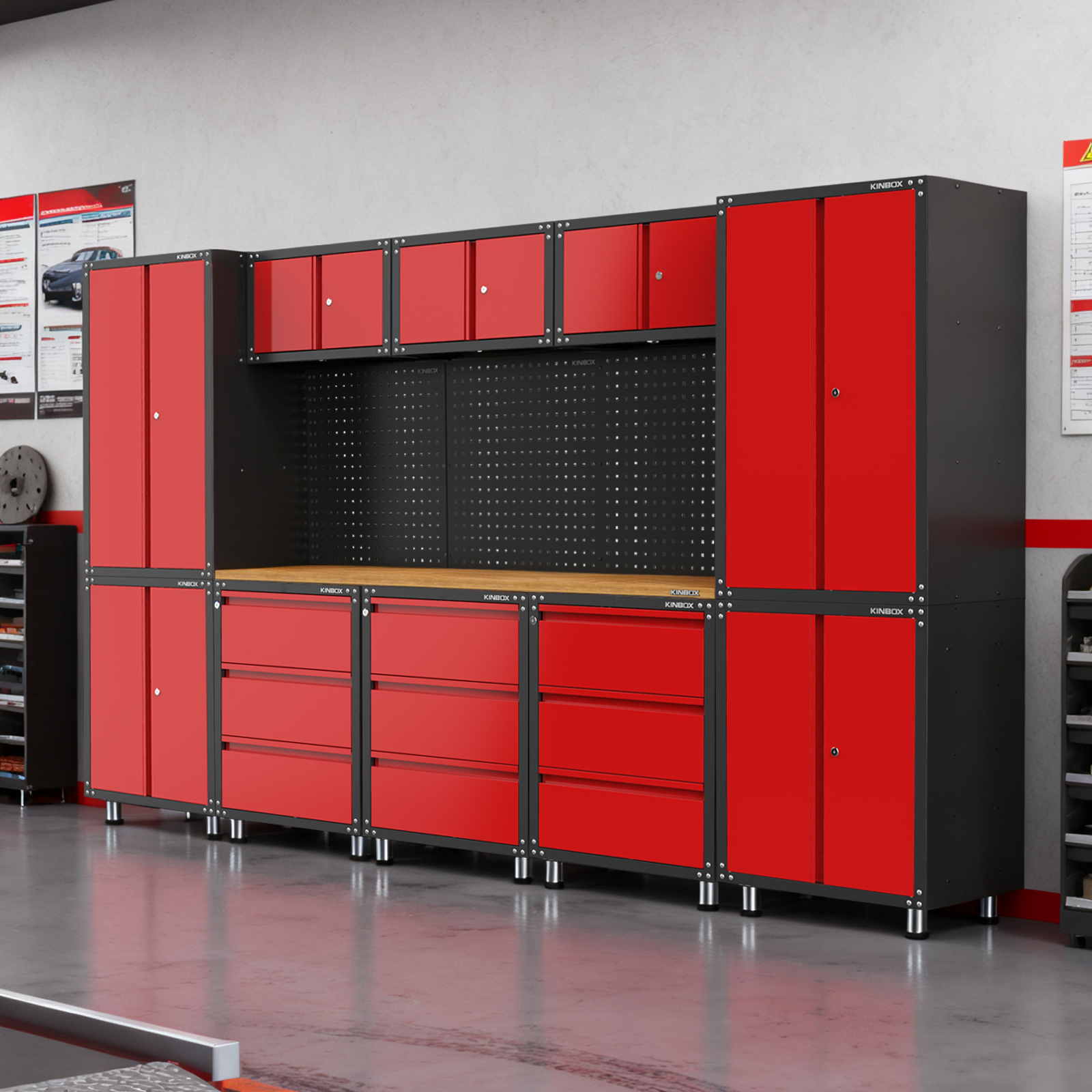
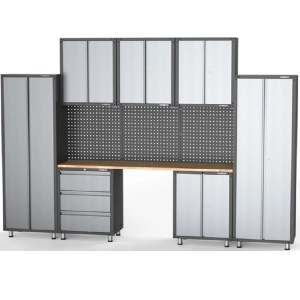
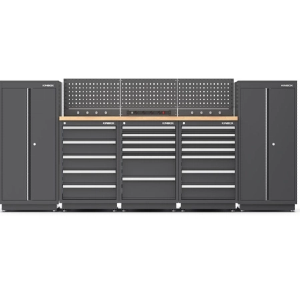
Each module has a different purpose. Tall cabinets are suitable for larger equipment and long tools, while drawer cabinets help organize sockets, wrenches, measuring tools, and smaller parts. Wall cabinets make use of vertical space, and base cabinets can support a continuous worktop.
Because these components can be combined in different ways, users are not limited to one standard configuration.
 |  |  |
Not every garage has a long, empty wall that can accommodate a complete storage system. Doors, windows, support columns, electrical panels, water pipes, and vehicle access can all affect how cabinets are positioned.
A fixed cabinet arrangement may leave awkward gaps or block an important part of the workspace. Modular garage storage cabinets provide more freedom because individual units can be arranged around these existing features.
For example, a narrow garage may use a straight-line arrangement along one wall. A larger workshop may benefit from an L-shaped configuration, while a shared garage could divide the cabinets into separate work and household storage areas.
Individual modules can also be placed in different parts of the garage instead of being installed as one continuous unit. A drawer cabinet may sit beside the main workbench, while a tall cabinet is positioned closer to the entrance for storing larger tools or cleaning equipment.
This makes it easier to use the available space without forcing the room to fit a predetermined cabinet design.
A garage can contain plenty of storage and still be inconvenient to work in. The problem is often not the amount of space available, but where the tools are stored.
When tools are placed far from the area where they are used, even a simple job involves repeated walking, searching, opening, and closing. Over time, these small interruptions make the workspace feel less efficient.
A modular garage storage system allows users to create storage zones around specific tasks.
For an automotive work area, frequently used hand tools can be stored in drawers beside the workbench. Larger diagnostic equipment, power tools, and spare components can be placed in a nearby tall cabinet.
In a woodworking area, measuring tools and small accessories may be stored in shallow drawers, while sanding supplies, clamps, and larger equipment are assigned to separate cabinets.
A household storage zone can be kept away from the main workbench, preventing gardening tools, sports equipment, and seasonal items from becoming mixed with professional tools.
This type of zoning makes the garage easier to understand. People know where items belong, and returning tools after use becomes much more straightforward.
Storage requirements often look permanent when a garage is first planned. In practice, they are not.
A homeowner may purchase new power tools. A mechanic may add diagnostic equipment. A workshop may begin handling a different type of repair. A hobby area may eventually need room for a bench grinder, drill press, bicycle stand, or small fabrication machine.
With a fixed built-in system, making space for new equipment can require removing an entire section of cabinetry. A modular system provides more options.
One base cabinet can be replaced by a drawer unit. A wall cabinet can be added above an existing worktop. A tall cabinet can be moved to another wall. Additional tool panels or shelving can be installed when frequently used items need to remain visible.
The entire workspace does not need to be rebuilt simply because one part of the operation has changed.
This is especially valuable for professional garages and repair shops, where equipment, staffing, and daily workflows may change more frequently than they do in a residential garage.
Building a complete garage storage system at once is not always necessary. In many cases, the user may not yet know exactly how much storage will be required.
A modular approach makes it possible to begin with the most important units, such as a workbench, a drawer cabinet, and one tall storage cabinet. Additional wall cabinets, shelving, or base cabinets can then be added later.
This staged approach has two practical benefits.
First, it allows the user to spread the investment over time rather than purchasing a complete system immediately. Second, it gives the user an opportunity to understand how the workspace functions before deciding where additional storage should be placed.
However, expansion should be considered before the first cabinets are selected. Cabinet dimensions, worktop heights, connection methods, colors, and module compatibility should remain consistent. Otherwise, adding new units later may create alignment or installation problems.
A well-designed modular garage cabinet system should make future expansion feel like a planned extension rather than an improvised addition.
 |  |  |
Floor space is often the most limited part of a garage. Vehicles, machinery, work tables, and walking paths all compete for the same area.
Wall-mounted garage cabinets help move storage away from the floor. They can hold smaller tools, consumables, manuals, cleaning supplies, and less frequently used items without reducing the main working area.
Tall cabinets also make use of vertical space by providing several storage levels within a relatively small footprint.
This is particularly helpful in smaller residential garages, where the room may still need to accommodate one or two vehicles. By using the walls effectively, the garage can provide useful storage without becoming too crowded to park or work in.
Vertical storage should still be planned carefully. Heavy equipment is generally easier and safer to handle when stored at a lower level, while lighter and less frequently used items can be placed higher up.
A flexible cabinet layout allows storage positions to be based on how often an item is used.
Frequently used hand tools can be placed in drawers between waist and chest height. Heavier power tools can be stored in lower cabinets. Less frequently used supplies can go into upper cabinets or the higher sections of a tall unit.
This simple arrangement reduces unnecessary bending, reaching, and searching.
Drawer dividers, foam inlays, labels, and tool panels can make the system even more practical. When each tool has a defined position, missing items are easier to notice and the workspace is less likely to become disorganized at the end of the day.
For a shared workshop, clear storage positions also reduce confusion between users. Team members do not need to rely on one person’s memory to locate a particular tool or component.
Many home garages serve several purposes at the same time. They may be used for parking, home maintenance, vehicle repair, sports equipment storage, gardening, and weekend projects.
Without defined storage, these activities quickly overlap. Household items end up on the workbench, tools are left on the floor, and bulky equipment blocks access to cabinets.
Modular garage storage cabinets help divide the room into more manageable sections. A tall cabinet can hold household supplies, while a drawer unit and workbench form the main tool area. Wall cabinets can store lighter items above the bench without interfering with vehicle space.
If the garage later takes on a new purpose, individual modules can be moved or added instead of replacing the entire system.
The same principle applies to professional environments. Automotive repair shops, maintenance departments, manufacturing facilities, and service workshops can configure storage around individual workstations, shared tools, or specific repair processes.
Cabinets in a working garage do not always experience the same level of use. A drawer unit beside the main workbench may be opened hundreds of times, while an upper cabinet may only be used occasionally.
In a modular system, a heavily used or damaged unit can often be repaired, replaced, or upgraded without disturbing the rest of the cabinet arrangement.
The same applies when the workspace needs a different function. A door cabinet can be replaced by drawers, or a storage unit can be removed to make room for new equipment.
This is a practical long-term advantage. The garage storage system can be updated one section at a time instead of being treated as a single permanent installation.
Modular cabinets are highly adaptable, but they are not automatically the right answer for every garage.
A fully built-in cabinet system may be suitable when the room has an unusual shape and the layout is unlikely to change. Custom built-in storage can also provide a very precise wall-to-wall appearance.
Modular garage storage cabinets are generally more practical when expansion, relocation, product replacement, or changing work requirements are expected. They offer a balance between customization and standardization, allowing users to create a tailored layout without committing to a completely permanent structure.
The better choice depends on how the garage will be used, not simply on which system looks more impressive in a showroom.
Modular garage storage cabinets improve workspace flexibility by allowing storage to follow the needs of the user. Cabinets can be arranged around different floor plans, divided into task-specific zones, expanded in stages, and updated when tools or working methods change. They also make it easier to combine drawers, tall cabinets, wall storage, worktops, and mobile tool cabinets in one coordinated workspace.
KINBOX specializes in tool cabinets, garage storage cabinets, tool carts, workbenches, and modular garage storage systems for residential, commercial, and professional applications. With customizable cabinet combinations, durable steel construction, practical storage layouts, and OEM and ODM support, KINBOX helps distributors, brands, workshop operators, and project buyers develop garage storage solutions suited to their markets and working requirements. Contact KINBOX to discuss cabinet configurations, colors, dimensions, packaging, branding, and other customization options for your next garage storage project.



