
 English

Views: 0 Author: Site Editor Publish Time: 2026-06-03 Origin: Site


Walk into any high-precision metalworking facility or heavy manufacturing plant, and you will instantly hear the hum of CNC machining centers cutting through solid steel and titanium. These multi-million dollar machines are the lifeblood of modern production lines, turning out complex components with micron-level accuracy. But here is the thing that many plant managers miss: a CNC machine is only as fast and accurate as the tooling it uses, and those tools are incredibly sensitive, surprisingly delicate, and ridiculously expensive. When you have operators mishandling high-value carbide end mills, heavy CAT40 or BT50 tool holders, and precise boring bars, your production efficiency takes a massive hit.
In a heavy manufacturing setup, setting up your tool storage is not just about keeping the floor looking neat. It is a fundamental part of your quality control and machine uptime strategies. If an operator has to wander across a massive factory floor or rummage through a cluttered, sagging drawer to find a specific indexable insert or a preset tool holder, that expensive CNC machine is sitting idle. And in this business, idle spindle time is pure lost revenue. Selecting a professional tool cabinet specifically rated for industrial tooling storage is a high-stakes decision. These units serve as the frontline defense against tool damage, cutting edge chipping, and expensive setup delays, making them the quiet backbone of a profitable shop floor.
To understand why a cheap, standard storage chest will fail instantly near a CNC machine, you have to look at the brutal environment of a heavy manufacturing facility. CNC setups are constantly surrounded by flying metal chips, fine abrasive dust, and a non-stop mist of water-soluble cutting fluids or straight cutting oils. This ambient moisture and chemical residue settle on everything. If your shop furniture uses low-grade paint or lacks proper sealing, it will rust out and seize up before the year is over.
Weight is another massive issue. A single high-performance CNC tool holder, complete with the retention knob, collet, and cutting tool, can easily weigh anywhere from 5 to 15 pounds. When you load a single drawer with twenty or thirty of these assemblies, you are asking a piece of sheet metal furniture to hold hundreds of pounds of solid steel. Under that kind of crushing static load, consumer-grade drawers will warp, their tracks will drop bearings, and the entire cabinet frame will twist until the doors no longer shut.
Furthermore, CNC tools are fragile where it matters most: the cutting edge. Carbide and ceramic inserts are incredibly hard but highly brittle. If they are tossed loosely into a drawer where they can knock against each other every time it slams shut, the microscopic cutting edges will chip. A chipped edge means poor surface finishes on your machined parts, out-of-tolerance dimensions, and premature tool failure that burns through your tooling budget. A dedicated industrial tool cabinet fixes this entire problem by providing a stable, isolated, and incredibly rugged environment that protects your technical assets from both physical impacts and chemical corrosion.
When you are tasking a piece of furniture with safeguarding tens of thousands of dollars in high-precision CNC tooling, you have to look deep into the manufacturing specifications of the cabinet itself. The structural design needs to be incredibly rigid to prevent any flexing or sagging when the unit is packed to absolute maximum capacity.
The foundational element of an industrial-grade cabinet is the gauge of the cold-rolled steel used in its chassis. Heavy manufacturing environments require a frame built from 16-gauge or 14-gauge steel, with reinforced internal pillars and gussets. A double-wall steel construction is a non-negotiable feature here. This dual-layer architecture ensures that if a forklift bumps the side of the unit or a heavy workpiece knocks against it, the outer skin absorbs the impact while the inner wall remains perfectly square. This keeps the drawer tracks aligned so everything continues to open effortlessly.
Because CNC coolants and cutting oils are highly aggressive, a standard liquid spray-painted finish will quickly soften, blister, and peel away. Once the bare steel is exposed to the humid, oily environment of a machine shop, rust takes over immediately. Professional units must feature a high-performance, electrostatically applied and heat-cured powder coating. This creates a thick, non-porous chemical barrier that completely resists scratches, prevents oil absorption, and allows operators to wipe away sharp metal chips and greasy residues without marring the surface.
The absolute heart of any tooling cabinet is its drawer system. In a high-volume manufacturing plant, operators open and close these drawers hundreds of times per shift, often with oily hands and a bit of force. The mechanics behind the drawer slides dictate whether your cabinet is an asset or a daily source of frustration.
Friction slides or lightweight drawer rollers will instantly fail under the weight of solid metal tooling. Industrial machining cabinets must be equipped with heavy-duty, precision ball-bearing drawer slides. For standard insert boxes and small hand tools, a slide rating of 100 to 150 pounds is fine. However, for drawers holding heavy CAT50 tool holders or large boring bars, you need to look for double-slide configurations that offer a certified load capacity of 200 to 400 pounds per drawer. The slides must feature full-extension capabilities, allowing the drawer to pull out completely past the frame so operators can safely lift heavy tool holders from the very back without straining or bumping the tools above.
Safety and weight distribution are massive concerns when dealing with heavy steel gear. If an operator opens three or four fully loaded drawers simultaneously, the center of gravity shifts forward instantly, creating a catastrophic tip-over hazard. Premium industrial cabinets feature a mandatory one-drawer-at-a-time interlocking safety mechanism that physically locks all other drawers closed the moment one is extended. Additionally, the drawers should incorporate a positive latching system or an internal compression detent that prevents them from rolling open on their own if the factory floor has a slight slope or experiences heavy vibrations from nearby stamping presses.
A raw, empty steel drawer is actually a hazard for precision CNC tools. If you drop expensive taper holders onto a bare metal surface, you risk scratching the precision-ground surfaces, which ruins the tool’s runout accuracy when mounted inside the machine spindle. High-volume plants must utilize specialized internal organization systems.
To keep your cutting edges pristine, the internal drawers of a tool cabinet should be fitted with oil-resistant, high-density EVA or EPS custom foam trays. These inserts feature exact, pre-routed cutouts that cradle each tool holder, collet, and turning tool securely. The foam prevents metal-on-metal contact, dampens shop vibrations, and keeps tools perfectly organized. More importantly, it creates an instant visual inventory; if an operator finishes a setup and sees an empty slot in the foam tray, they know immediately that a tool was left inside the machine enclosure, preventing a catastrophic crash during the next cycle.
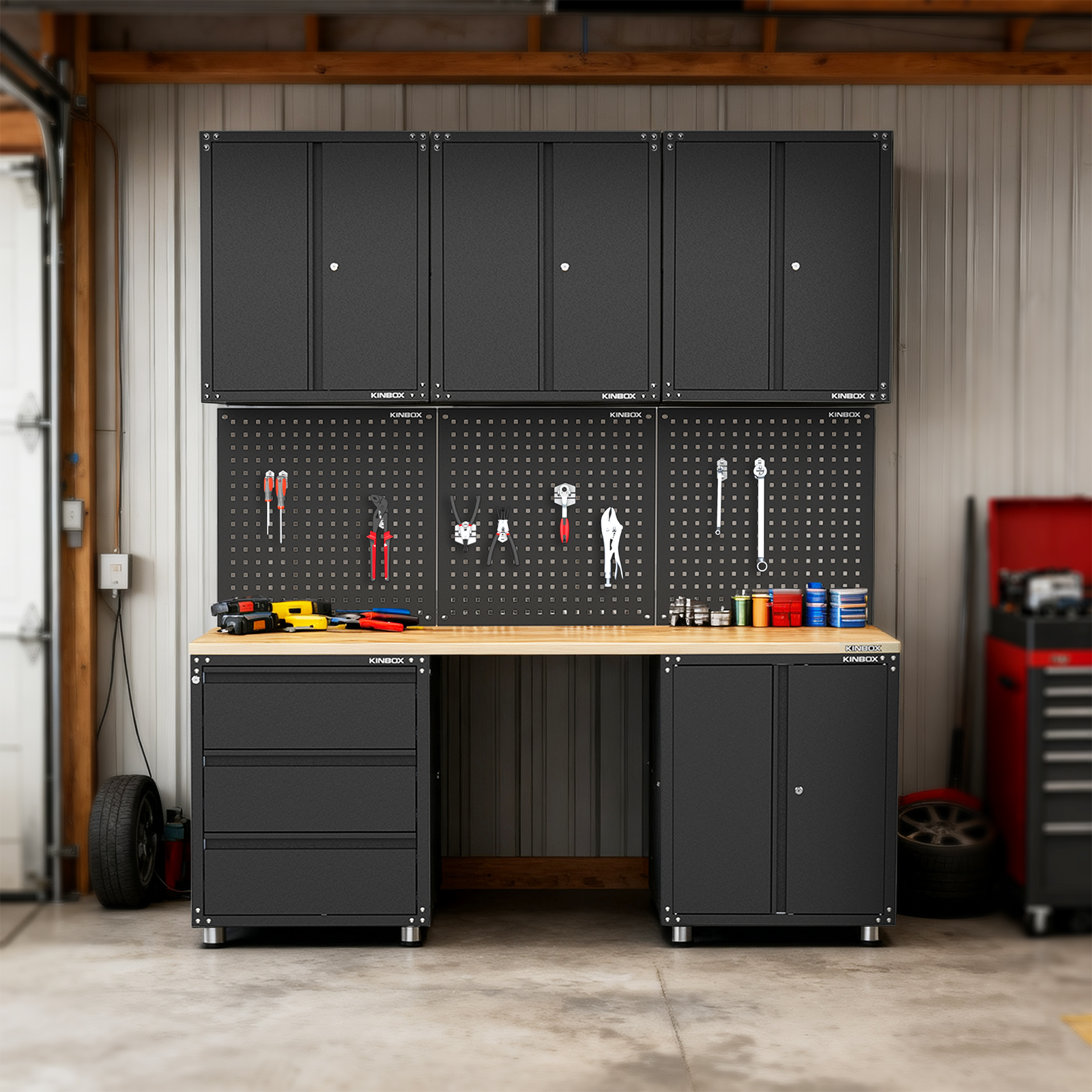
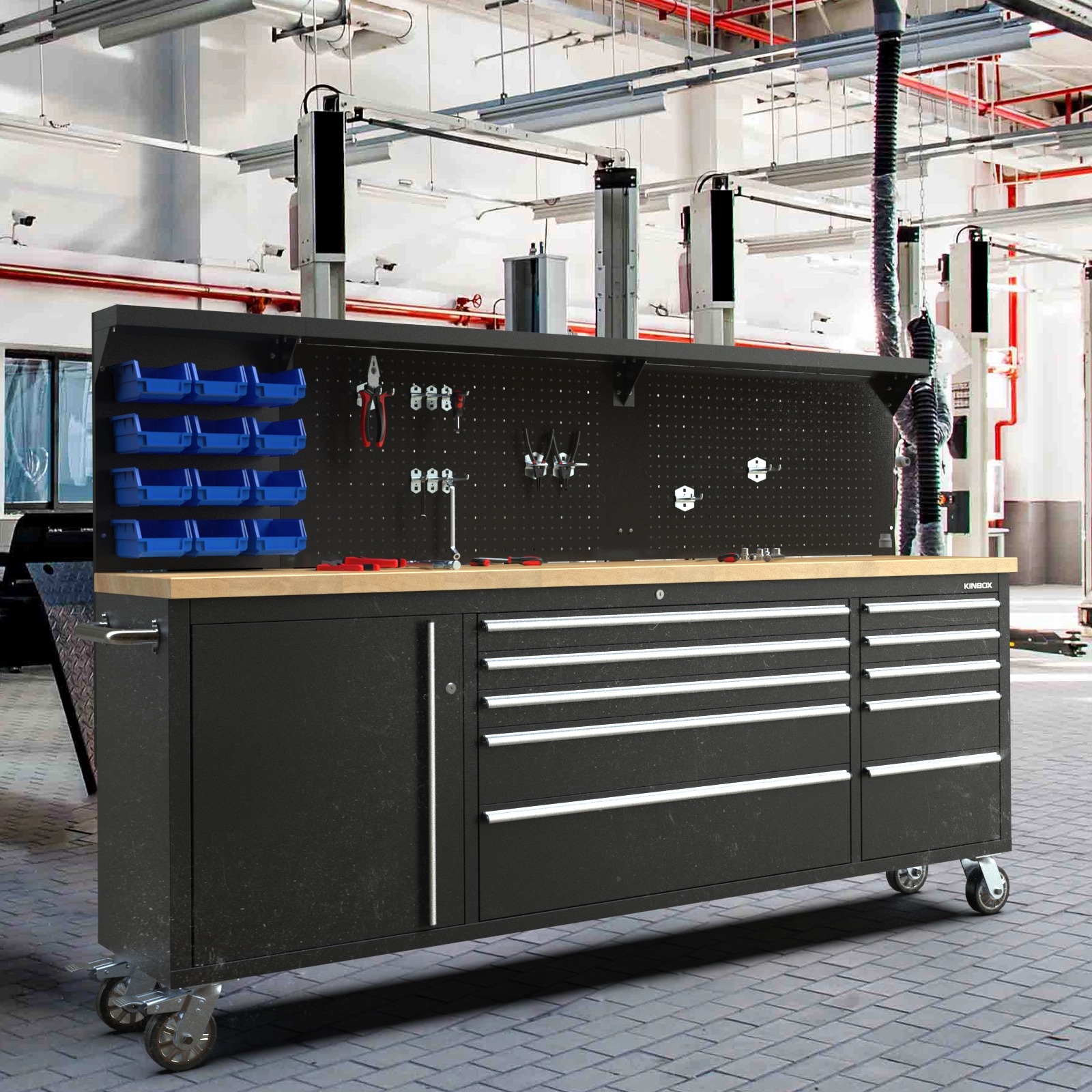
For maximum efficiency, many plants structure their storage into a tiered setup, combining active and bulk locations. Right next to the machine enclosure, operators use a mobile tool cabinet on heavy polyurethane wheels to hold the active tools for the current production run. Meanwhile, just a few feet away, a comprehensive garage storage cabinet system is installed against the perimeter wall to handle the bulk tooling inventory, spare carbide inserts, master gauges, and clean maintenance supplies. This smart combination keeps the immediate work zone free of clutter while ensuring that the backup supplies are kept perfectly safe from flying coolant and metal debris inside the surrounding garage storage cabinet units.
In a modern manufacturing facility, loose tools represent a massive financial vulnerability. A single specialized indexable boring bar or a custom diamond-tipped end mill can cost thousands of dollars. Managing this inventory and preventing tool loss or unauthorized access is a primary goal for any plant manager.
Professional industrial cabinets must provide high-security locking mechanisms to control access across different shifts. Centralized cylinder locks that secure all drawers simultaneously are the standard baseline. However, many advanced plants are transitioning to digital electronic keypad locks or proximity card readers. This allows management to track exactly who opened a specific tool cabinet and when, creating a clear line of accountability that drastically reduces tool loss and discourages operators from "hoarding" rare inserts in their personal work areas.
Manufacturing floors are dynamic environments, often reconfigured to support lean manufacturing and changing product lines. If your tooling cabinets need to move between different machining cells, the wheels must be engineered to handle extreme stress. Flimsy plastic wheels will flat-spot or crack under industrial weight. Look for large-diameter polyurethane casters with cast iron cores, equipped with dual-pedal brakes that lock both the wheel roll and the swivel pivot. This ensures that when the cabinet is parked next to a CNC machine, it remains as rock-solid and stable as a stationary workbench.
Eliminating setup delays and protecting delicate CNC assets requires sourcing your shop furniture from a manufacturer that understands the absolute extremes of industrial-grade durability. Ningbo Kinbox Tools Technology Co., Ltd. is a premier global manufacturing partner specializing in advanced sheet metal processing and professional workshop optimization systems. Established in 2013 and operating out of a world-class 50,000 square meter production facility in Ningbo, China, Kinbox designs and builds heavy-duty storage products explicitly engineered to handle the relentless punishment of high-precision manufacturing environments.
Instead of offering generic, light-duty boxes, Kinbox delivers a comprehensive industrial ecosystem. Our product line includes ultra-rugged tool cabinet units, heavy-duty mobile tool trolleys, and fully integrated modular garage storage cabinet setups. By combining automated laser cutting and CNC bending technologies with meticulous load-cycle testing and advanced powder coating, Kinbox ensures that every drawer slide, safety latch, and lock delivers smooth, reliable performance under thousands of pounds of solid steel tooling weight. We excel at deep OEM/ODM customization, allowing plant managers and industrial distributors to configure custom drawer depths, secure locking mechanisms, and high-density EVA/EPS custom foam trays tailored to precise taper specifications like CAT, BT, or HSK. Partnering with Kinbox means choosing world-class production capacity and reliable supply chain expertise, providing your machining facility with the unyielding structural foundation needed to minimize idle spindle time, protect high-value tooling investments, and maximize your plant's operational profitability.
For a professional CNC environment, always look for a tool cabinet built with a frame thickness of 14-gauge to 16-gauge cold-rolled steel. The individual drawer bodies should utilize at least 18-gauge steel. Thin consumer boxes made from 22-gauge or 24-gauge metal will quickly buckle and warp under the extreme weight of solid steel tool assemblies.
Full-extension slides allow the drawer to open completely past the front frame of the cabinet. This ensures that operators can easily and safely lift heavy CAT50 or BT40 tool holders from the very back of the drawer without hitting the drawer above it, preventing hand injuries and accidental tool damage.
A modular garage storage cabinet network serves as your high-capacity bulk depot against the wall for spare inserts, coolants, and low-frequency fixtures. This allows you to keep your rolling mobile tool cabinet light, agile, and focused strictly on the active tools needed for the current machining job right next to the CNC enclosure.
An anti-tip interlocking system is an internal mechanical safety guard that allows only one drawer to be opened at a time. Because a single drawer of CNC tools can weigh over 150 pounds, pulling out multiple drawers simultaneously shifts the cabinet's center of gravity forward, creating a dangerous tip-over hazard for the operator.
Industrial powder coating involves electrostatically applying a dry powder that is baked under intense heat to create a thick, completely non-porous skin over the steel frame. This specialized finish is highly resistant to impact chipping and will not degrade, blister, or peel when constantly exposed to harsh water-soluble cutting fluids and oils.



