
 English

Views: 0 Author: Site Editor Publish Time: 2026-04-29 Origin: Site


When people look at an industrial Tool Cabinet, what they usually notice first is the outside. They notice the color, the number of drawers, the size, maybe the overall style. If the cabinet looks clean and sturdy, that already creates a good impression. But anyone who has spent real time in a workshop, a maintenance department, or a factory knows that appearance only tells part of the story. A high-quality industrial tool cabinet is not defined by looks alone. What really matters is how it is made, what kind of materials go into it, how the structure is formed, how the drawers perform under repeated use, and whether the cabinet can hold up in a demanding environment where tools are heavy and daily use is anything but gentle.
That is why manufacturing matters so much. A cabinet may look solid in a photo, but quality is built during production, not during marketing. The difference between a cabinet that lasts for years and one that starts showing problems too early often comes down to details in the manufacturing process. The choice of steel, the precision of sheet metal cutting, the quality of bending and welding, the surface treatment, the assembly accuracy, and the inspection standards all shape the final result. In other words, a reliable Tool Cabinet is really a sum of many production decisions made correctly.
For buyers, this is worth understanding. Even if you are not the one manufacturing the cabinet yourself, knowing how a high-quality industrial tool cabinet is produced helps you judge products more accurately. It helps you look beyond surface features and focus on what creates long-term value: strength, durability, smooth use, storage stability, and consistent performance over time. That matters whether the cabinet is being used in a factory, a service station, a mechanical workshop, a maintenance bay, or a large garage storage environment.
This article takes a closer look at how high-quality industrial Tool Cabinets are manufactured, from raw material selection to sheet metal processing, assembly, finishing, and final quality control. The goal is simple: to show what separates a serious storage product from one that only looks the part.
Industrial storage products are expected to do much more than stand still and look organized. In real working environments, a Tool Cabinet is opened and closed many times a day, loaded with heavy tools, moved around work areas, cleaned repeatedly, and expected to stay reliable through all of it. That kind of use quickly exposes weak manufacturing. If the frame is not formed accurately, the cabinet may lose alignment. If the drawer structure is weak, performance can decline under load. If the finish is poor, corrosion and wear can start showing much sooner than expected.
That is why manufacturing quality matters so much. It affects how smoothly the cabinet works, how strong it feels in everyday use, and how well it holds up after months or years in a demanding environment. A good cabinet should not only look professional when it arrives. It should continue to perform when it is filled with tools and used every day by people who are busy and not trying to be delicate with it.
There is also a practical side to this. A high-quality cabinet supports workflow better. Drawers open cleanly, tools stay organized, and the whole unit feels more dependable. When manufacturing quality is poor, even small flaws become daily frustrations. Drawers stick, structures feel loose, storage becomes harder to trust, and people start working around the cabinet instead of with it. That is never a good sign.
So when we talk about manufacturing, we are not talking about a background detail. We are talking about the real foundation of industrial storage quality.
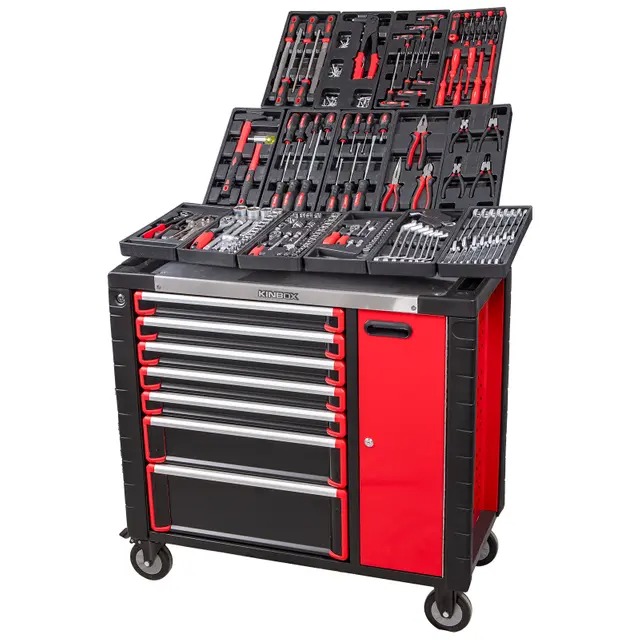
Every good industrial Tool Cabinet starts with raw materials, and in most cases, that means sheet metal. This stage is more important than many buyers realize, because the quality of the steel has a direct effect on strength, formability, durability, and long-term reliability. Even excellent processing cannot fully compensate for material that is inconsistent, too weak, or poorly suited to the product’s intended use.
For industrial cabinets, manufacturers typically need sheet metal that can be processed accurately while still providing sufficient structural strength. The cabinet body, drawer components, support sections, and reinforcements all depend on this balance. If the material is too thin or inconsistent, the finished cabinet may feel weak under load. If the material quality is unstable, that can also affect bending accuracy, surface treatment, and overall product consistency.
Material selection is also linked to usage expectations. A cabinet intended for light-duty storage does not face the same demands as one used in industrial workshops or maintenance environments where drawers may hold dense metal tools, heavy accessories, or repair components. In that sense, choosing the right raw material is really the first quality decision in the whole production process.
Experienced manufacturers understand this well. They do not simply buy metal for appearance. They select materials based on performance, processing compatibility, and the intended working environment of the finished Tool Cabinet.
Once the raw materials are selected, the next major stage is sheet metal processing. This is where the cabinet begins to take shape physically, and it is one of the most important parts of the manufacturing journey. High-quality industrial tool cabinets are usually built through a sequence of cutting, punching, forming, and shaping operations that require both good equipment and careful process control.
The accuracy of this stage matters a lot. A cabinet may look simple from the outside, but its performance depends on how precisely the parts are produced. Side panels, drawer frames, support sections, back panels, and other structural components all need to fit together properly. If tolerances are inconsistent, the final assembly may suffer. Drawers may not align cleanly, gaps may become uneven, and the cabinet may lose the solid, balanced feel expected from industrial-grade storage.
Advanced sheet metal working technology helps reduce these problems by improving precision and repeatability. This is one reason why strong processing capability matters when choosing a storage manufacturer. A manufacturer with established experience in sheet metal handling is usually better positioned to produce a Tool Cabinet that is not just visually neat, but structurally dependable.
It is worth saying plainly: good cabinets are not made by accident. They are made through controlled processing where every major panel and structural piece is shaped to support accurate final assembly.
The first physical transformation of the sheet metal often begins with cutting or blanking. At this stage, large sheets are processed into the individual parts that will later become cabinet panels, drawer elements, reinforcements, or accessory sections. This sounds straightforward, but in reality, it sets the tone for much of the quality that follows.
If cutting accuracy is poor, mistakes carry forward into later steps. Mis-sized parts can lead to poor fit, uneven geometry, and assembly difficulty. In industrial storage products, where repeated use demands structural consistency, that can become a real issue. A Tool Cabinet that feels slightly off in shape or drawer fit often reflects problems that started much earlier in production.
High-quality manufacturing therefore relies on precise and repeatable cutting processes. The goal is not just to create parts of roughly the right shape. It is to create parts that will work together smoothly in later forming and assembly stages. Clean, consistent part preparation also helps improve the efficiency of downstream operations such as bending, joining, and finishing.
After cutting comes one of the most critical stages in cabinet production: bending and forming. This is where flat metal parts begin to gain the rigidity and geometry needed for actual cabinet construction. For a high-quality industrial Tool Cabinet, bending is not just about shape. It is about strength.
Proper bends increase structural performance by creating edges, channels, supports, and profiles that make the cabinet body and drawers more stable. When done accurately, bending improves load-bearing behavior and contributes to a stronger finished product. When done poorly, it can create misalignment, weak connections, poor drawer movement, or an unstable frame.
This stage requires both suitable equipment and experienced process control. Metal does not always behave the same way across every run, so good manufacturers monitor consistency carefully. They understand how forming affects final fit, visual quality, and cabinet performance. In a demanding product like an industrial tool cabinet, even minor deviations can become noticeable during daily use.
In practical terms, this means a well-formed cabinet feels more solid, more balanced, and more reliable. That feeling usually traces back to what happened during forming, long before the finished cabinet ever reached packaging.
Once individual parts have been processed, they need to be joined into a stable cabinet body. Depending on the product design, this may involve welding, fastening, mechanical joining, or a combination of methods. Whatever the exact technique, this stage plays a major role in defining the cabinet’s overall integrity.
A high-quality Tool Cabinet needs a body that remains stable under repeated daily use. That means the joints and structure cannot be treated casually. If connections are weak or inconsistent, the cabinet may develop looseness, imbalance, or reduced durability over time. This becomes especially important in industrial environments where cabinets may be loaded heavily, moved around, or subjected to ongoing wear.
Well-controlled structural assembly ensures that the cabinet frame, side panels, base, top sections, and internal supports all work as a single stable unit. It also affects the performance of later steps. A poorly assembled body can create issues for drawer fit, finishing quality, wheel installation, and overall appearance.
This is one reason why good organization inside a factory matters so much. A dynamic and well-managed production system can help keep cabinet assembly consistent, which is essential when a manufacturer is producing large quantities without wanting quality to drift from one batch to the next.
For many users, the true test of a Tool Cabinet is the drawer system. That makes sense. Drawers are where tools actually live, and they are the part of the cabinet people interact with most often. If the drawers work well, the cabinet feels high quality. If they do not, the whole product starts to feel less reliable, no matter how attractive the outside may be.
Manufacturing high-quality drawers involves more than folding some metal into a box shape. Drawer sides, bases, fronts, and reinforcement elements need to be formed accurately and assembled with care. The geometry matters because even slight inconsistency can affect sliding performance, alignment, and load behavior. In industrial applications, drawers often carry heavy tool sets, metal accessories, or dense repair items, so their structural quality has to be taken seriously.
It is also important that drawer design matches intended use. Some drawers are better for shallow hand tools and organized tray layouts, while deeper drawers may need to support heavier equipment or bulkier storage. A manufacturer producing industrial cabinets well should understand how different drawer types serve different storage needs.
When drawers are made properly, the difference shows up in daily work. Tools are easier to access, movement feels smoother, and the cabinet supports efficiency instead of getting in the way.
Even a well-built cabinet body can disappoint if the moving components are not up to standard. Drawer slides and runners play a huge role in how an industrial Tool Cabinet feels in real use. People notice this immediately. If the drawers glide smoothly, open fully, and hold their alignment under load, the cabinet feels professional. If they resist, wobble, or struggle with weight, the quality impression changes quickly.
This is why moving components should be seen as a core manufacturing issue, not just an accessory issue. Good slides support smooth operation, help distribute load, and improve the consistency of daily use. They also influence safety and user confidence, especially when drawers are filled with heavy tools or opened frequently.
In a high-quality cabinet, the relationship between drawer construction and slide performance is well balanced. It is not enough to have a strong drawer with weak movement parts, or good slides attached to a poorly aligned frame. The best results come when the whole system is designed and assembled to work together.
From the user’s perspective, this often translates into something very simple: the cabinet feels dependable. And that feeling matters more than many people think.
After structural manufacturing and assembly, surface treatment becomes one of the next major stages. This is sometimes underestimated because people associate it mostly with appearance. In reality, it plays an important role in durability as well. For industrial storage products, the surface finish helps protect the cabinet against wear, corrosion, and the general abuse of daily workshop life.
A high-quality Tool Cabinet often uses protective surface treatment such as powder coating or similar finishing methods suited to metal products. This helps create a cleaner, more professional finish while also improving resistance to scratches, moisture, and environmental exposure. In industrial settings, those benefits matter because cabinets are not used in showroom conditions. They are used around tools, dirt, cleaning routines, and regular handling.
Good finishing also reflects process discipline. Uneven coating, poor adhesion, weak coverage, or inconsistent color application can all reduce product quality. On the other hand, a well-finished cabinet tends to look sharper and last better. It gives buyers more confidence that the manufacturer takes both function and presentation seriously.
That balance is important. Industrial buyers want products that are durable first, but appearance still matters. A cabinet with a clean, professional finish improves the visual quality of the workspace and supports the sense of order people expect from organized storage.
One of the clearest differences between average production and serious manufacturing is how quality control is handled. In high-quality cabinet production, inspection is not something that happens only at the end. It should run through the whole process. Material quality needs checking. Formed parts need monitoring. Assembly consistency needs review. Finished products need functional and visual inspection before they leave the factory.
This matters because small defects are much easier to correct early than late. If a part is out of tolerance, it is better to catch it before final assembly. If drawer alignment is off, it is better to identify it before packaging. If the finish has an issue, it needs to be addressed before the cabinet becomes a customer complaint. Quality control, when done well, protects both the manufacturer and the buyer.
For a Tool Cabinet, quality inspection typically needs to look at structural fit, drawer function, movement smoothness, finish consistency, hardware installation, and overall appearance. In some cases, it should also consider packaging readiness and transport protection, because product quality can be damaged if handling at the final stage is careless.
Manufacturers that value long-term customer trust usually understand this. They do not treat quality as a slogan. They build it into the process.
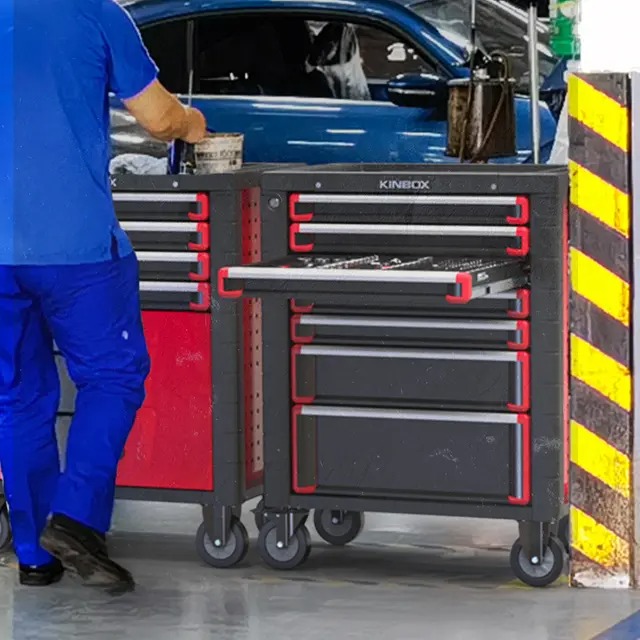
Many industrial buyers do not want generic storage anymore. They want cabinets that better match their own workstations, tool sets, or storage logic. This is where customization becomes increasingly important. However, customization also raises the manufacturing challenge. It is one thing to produce a fixed standard model repeatedly. It is another to adapt drawer layouts, tray options, internal structures, panel styles, or accessory combinations while still keeping product quality consistent.
That is why experienced sheet metal manufacturers often have an advantage in custom storage production. If the production system is flexible and well managed, the manufacturer can support varied requirements without losing structural quality or visual consistency. For buyers, this matters because customized storage should still perform like a serious industrial Tool Cabinet, not like a one-off improvised solution.
Customization can include different drawer configurations, tool kit integration, BMC tray layouts, EVA tray options, EPS tray arrangements, upgraded metal panel details, or specific design choices related to workflow. When these options are supported by strong manufacturing capability, they create cabinets that are more useful in practice while still maintaining industrial-grade quality.
As production nears completion, final assembly and testing become critical. This is the point where components stop being parts and become a complete Tool Cabinet. Handles, locks, wheels, drawer systems, liners, trays, and accessories all need to be installed correctly. More importantly, they need to work together correctly.
A high-quality cabinet should feel complete when it reaches the customer. The drawers should move smoothly, the cabinet should sit properly, the finish should be clean, and the whole structure should communicate stability. Final testing is important because it verifies that the product performs the way it should, not just that it looks assembled.
Packaging also deserves attention here. Industrial cabinets are large, heavy products, and if final protection is weak, transport damage can undermine everything that was done well earlier in the factory. Good manufacturers understand that quality does not end at production. It extends to how the product is prepared for delivery.
For buyers, understanding the manufacturing process changes how products are evaluated. Instead of focusing only on visible features, they can begin asking more useful questions. Does the manufacturer have strong sheet metal processing capability? Is the structure likely to be accurate and durable? Do the drawers appear well made? Does the finish suggest proper surface treatment? Is the company experienced enough to support consistent production and customization where needed?
This perspective is valuable because a high-quality industrial Tool Cabinet is not defined by one feature alone. It is the result of materials, engineering, process control, assembly discipline, and inspection all working together. When buyers understand that, they are better positioned to choose storage products that offer real long-term value instead of just a good first impression.
It also helps buyers match products to actual application needs. A cabinet used in manufacturing, mechanical service, maintenance, or garage storage should not be judged the same way as a light-duty office storage unit. The working environment matters, and manufacturing quality becomes much more important as usage intensity increases.
In the end, high-quality cabinet production is not only about machines. It is also about experience, process understanding, and the ability to keep standards steady across many production runs. Manufacturers that specialize in iron and sheet metal processing often have an advantage because they understand the material, the forming methods, the finishing requirements, and the practical details that make metal storage products perform well.
This kind of experience tends to show up in the finished product. Cabinets feel more solid. Drawer movement is more consistent. Fit and finish are better controlled. Customization is more realistic. And customer support tends to be stronger because the manufacturer actually understands the product rather than just selling it.
That is especially important for buyers who plan to use industrial tool cabinets in real work environments, where durability and usability matter much more than temporary appearance.
High-quality industrial Tool Cabinets are manufactured through a combination of good materials, precise sheet metal processing, accurate forming, stable structural assembly, well-made drawers, reliable moving components, protective surface treatment, and continuous quality control. In other words, real cabinet quality is built step by step. It does not come from a single feature or a polished product photo. It comes from a disciplined production process that treats strength, consistency, and usability as connected priorities.
For buyers, understanding how these cabinets are made provides a more practical way to judge quality. It helps explain why some cabinets perform better, last longer, and feel more dependable in daily use. When manufacturing is done well, the final cabinet supports organization, efficiency, and long-term value in workshops, factories, maintenance areas, and professional storage spaces.
For businesses looking for a professional manufacturing partner, Kinbox offers meaningful advantages in this field. Ningbo Kinbox Tools Technology Co., Ltd., established in 2013, specializes in iron and sheet metal product processing and has grown into a modern manufacturer of tool trolleys, tool cabinets, tool carts, garage storage systems, and workbenches. With an approximately 50,000-square-meter workshop in Ningbo’s Cixi industrial area, advanced sheet metal working and treatment capability, a focus on quality and versatility, and support for customized workstation solutions, Kinbox is well positioned to provide durable and practical storage products for national and international markets.
Industrial Tool Cabinets are typically manufactured from sheet metal, usually steel, because it offers the strength, durability, and formability needed for workshop and industrial storage applications.
Sheet metal processing is important because it determines the accuracy, strength, and consistency of the cabinet’s main structural parts. Precise cutting, bending, and forming help ensure better fit, better assembly, and better long-term performance.
A high-quality drawer system depends on accurate drawer construction, strong materials, reliable slides or runners, smooth movement, and the ability to perform consistently under repeated daily use and tool load.
Surface treatment helps protect the cabinet against wear, corrosion, and daily handling while also improving appearance. A good finish makes the cabinet more durable and helps it maintain a professional look over time.
Buyers should care because manufacturing quality directly affects durability, usability, load performance, and long-term value. A cabinet that is well manufactured is more likely to stay reliable in demanding industrial environments.



