
 English

Views: 0 Author: Site Editor Publish Time: 2026-04-22 Origin: Site


In many manufacturing plants, 5S is talked about so often that it starts to sound like a slogan rather than a working system. Teams hear about sorting, organizing, cleaning, standardizing, and sustaining, yet the real challenge is usually much more practical: where do tools actually go, how do operators find them quickly, and how do supervisors keep work areas consistent across shifts? That is where the right storage system becomes more than just furniture. A well-designed Tool Cabinet can quietly support almost every step of 5S management, from reducing clutter to improving visual control and helping teams maintain discipline over time.
The reason this matters is simple. In a busy plant, small inefficiencies build up fast. A wrench left on the wrong bench, a missing measuring tool, an overfilled drawer, or a trolley parked in the wrong aisle can interrupt workflow more than people like to admit. These are not dramatic problems, but they are costly ones. They slow changeovers, create frustration, increase motion waste, and make it harder to maintain a clean and professional work environment. When management wants 5S to work in a practical way, not just on paper, tool storage needs to be part of the conversation early.
A Tool Cabinet helps bridge that gap between lean theory and daily plant behavior. It gives every tool a defined place, supports cleaner workstations, improves accessibility, and creates a more structured environment for operators, maintenance teams, and supervisors alike. In plants where mobility matters, roller cabinets and tool carts also bring storage closer to the point of use, which is often one of the easiest ways to reduce unnecessary movement on the floor.
This article looks at how manufacturing plants can support 5S management with tool cabinets in a way that feels practical, sustainable, and realistic. Rather than treating storage as an afterthought, it helps to see it as one of the foundational tools for order, efficiency, and long-term discipline.
5S remains one of the most effective workplace organization methods because it focuses on visible, repeatable improvements. It does not begin with expensive automation or complicated software. It begins with the work area itself. Is it clear? Is it clean? Can people find what they need? Can they return it to the same place every time? These questions may sound basic, but they shape productivity, quality, and safety more than many plants expect.
In manufacturing, 5S helps reduce wasted time, supports safer movement, improves accountability, and creates a more stable environment for standard work. When operators walk into a station and immediately understand where tools are stored, what belongs there, and what looks out of place, the workspace becomes easier to manage. That clarity also makes problems easier to spot. A missing item, an extra item, or a dirty storage area stands out much faster in an organized environment than in a crowded one.
Another reason 5S continues to matter is that it affects both performance and culture. A disorganized station often leads to inconsistent habits. People improvise storage, borrow tools without returning them, pile up unused items, and create workarounds that slowly become the norm. Over time, that weakens standardization. On the other hand, a plant that invests in clear storage systems sends a different message. It shows that order matters, tools matter, and the daily work environment deserves structure.
This is exactly why a Tool Cabinet is so relevant in 5S implementation. It is not only about storing tools neatly. It is about making order visible, supporting standard practice, and making it easier for people to do the right thing without extra effort.
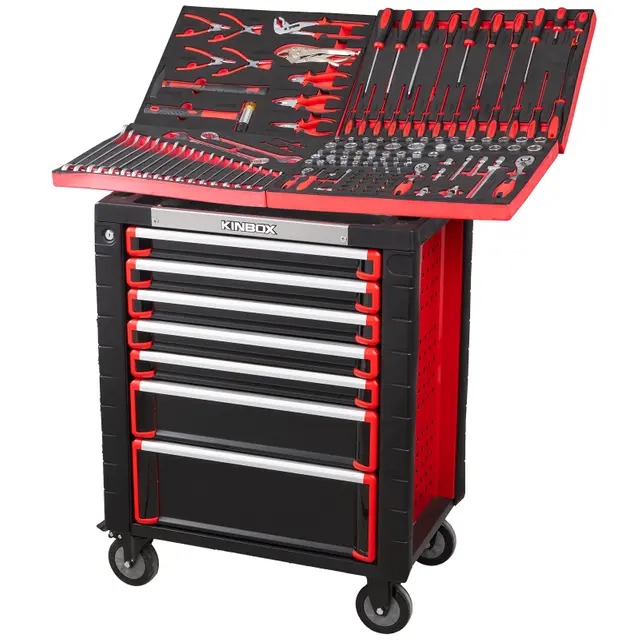
Many 5S programs struggle not because the concept is weak, but because the physical system behind it is incomplete. Teams may label shelves and clean floors, but if tools are still scattered across benches, placed in random drawers, or stored too far from the point of use, disorder eventually returns. Good intentions alone do not keep a plant organized. The environment has to support the behavior.
A Tool Cabinet provides that structure. It creates a clear storage location for hand tools, maintenance tools, accessories, and work essentials. It reduces the temptation to leave items on a machine base, on top of a cart, or in an unused box under the table. When drawers, trays, and compartments are laid out properly, workers spend less time searching and more time doing productive work.
Storage also affects how people think about ownership and responsibility. In a loosely organized workspace, tools feel shared in a vague and uncontrolled way. In a cabinet-based system, responsibilities can be assigned more clearly by production line, station, shift, team, or function. That is especially useful in manufacturing plants where multiple operators use similar tools but still need accountability and consistency.
There is also a visual management advantage. A cabinet that is clean, organized, and logically arranged becomes part of the 5S system itself. It makes the state of the workstation visible at a glance. If something is missing, misplaced, or overcrowded, the problem is easier to catch early.
The first step of 5S is often harder than it sounds. Plants tend to accumulate old tools, duplicate tools, broken accessories, unused spare items, and random materials that no one wants to throw away. Over time, these items occupy valuable space and make it harder to find what is actually needed.
A Tool Cabinet supports sorting by forcing a basic but important question: what deserves a place inside? Once storage space is organized intentionally, unnecessary items become much easier to identify. If a drawer holds three versions of the same tool but only one is used regularly, the excess becomes obvious. If broken or outdated items are still taking up room, they no longer hide in the background.
In practice, this means cabinets help teams define what is essential at each workstation. That alone improves 5S discipline. Instead of keeping “just in case” clutter everywhere, plants can separate active-use tools from backup inventory, rarely used tools, or maintenance-only items.
This is where tool cabinets make their biggest contribution. “A place for everything and everything in its place” sounds simple, but on a factory floor, it only works when storage is practical. Tools must be easy to access, easy to return, and arranged in a way that matches actual workflow.
With the right Tool Cabinet, plants can organize tools by frequency of use, process sequence, operator role, or station function. Frequently used hand tools can be placed in the most accessible drawers, while larger or occasional-use items can be stored lower or in separate sections. Cabinets with multiple drawer sizes help accommodate a range of tools and components, making storage more precise rather than one-size-fits-all.
Some plants also benefit from tray-based organization such as BMC, EVA, or EPS tray layouts, which support clearer positioning of tool sets. This type of arrangement makes storage easier to standardize and faster to inspect. Even without complex systems, a drawer layout that mirrors the work sequence can cut wasted movement and reduce interruptions during tasks.
Cleanliness in manufacturing is not just about appearance. It helps reveal problems. Dust buildup, oil residue, metal shavings, and neglected storage areas can all signal deeper issues in equipment condition or daily discipline.
A good Tool Cabinet supports the shine stage because it keeps tools off open surfaces, reduces random pileups, and makes it easier to clean around and under storage areas. Cabinets built from durable materials such as heavy-duty steel with protective finishes are especially useful in industrial environments because they are designed for repeated use and can stand up better to wear and corrosion.
More importantly, organized storage makes cleaning less frustrating. When tools are scattered around a bench, cleaning becomes a chore that gets skipped or rushed. When tools are stored properly, surfaces are easier to wipe down and visual cleanliness is easier to maintain. That makes daily cleaning routines more realistic, which matters a lot in sustaining 5S over time.
One of the biggest signs of a mature 5S system is consistency. Different workstations may perform different tasks, but the logic of storage should still feel familiar. Operators should not have to guess how a station is organized whenever they move between lines or shifts.
This is another area where a Tool Cabinet adds real value. Standard cabinet formats, drawer logic, tray styles, and labeling methods make it easier to roll out similar practices across departments. Maintenance areas, assembly stations, inspection zones, and repair corners can all follow the same storage principles even if the actual tools differ.
Consistency also makes training easier. New workers can learn where tools belong faster, and supervisors can audit conditions more efficiently. In many plants, standardization breaks down because every station evolves on its own. Cabinets provide a physical framework that helps prevent that drift.
The fifth S is usually the hardest. Most teams can clean up for an audit. The real test is whether the system still looks organized a month later when production gets busy, staffing changes, or urgent orders disrupt routines.
A Tool Cabinet helps sustain 5S because it reduces friction. When returning tools is easy, people are more likely to do it. When cabinets are positioned close to the work area, there is less excuse for leaving tools on a machine table. When the storage layout is intuitive, discipline becomes less dependent on reminders.
This is worth emphasizing: sustainable 5S usually depends more on practical design than on repeated lectures. If the system is awkward, people work around it. If the system fits the job, good habits are easier to maintain.
Manufacturing plants often focus on major wastes such as downtime, scrap, or long setup times, but wasted motion and wasted searching deserve more attention than they usually get. A surprising amount of lost time comes from simple tool-related inefficiencies: walking to another station, opening multiple drawers to find one item, asking coworkers where something was left, or replacing tools that were not actually lost, just misplaced.
A well-planned Tool Cabinet helps reduce these small but repeated losses. It keeps necessary tools near the point of use, supports faster retrieval, and makes missing items more visible. Over a day, these savings may seem modest. Over weeks and months, they become meaningful, especially in plants with multiple operators and repeated manual processes.
There is also an ergonomic benefit. Better storage reduces unnecessary bending, stretching, and carrying. Mobile roller cabinets and tool carts can bring tools directly to where work is happening, which is especially helpful in maintenance, inspection, repair, and flexible production environments. That mobility supports both productivity and operator convenience without adding complexity.
Not every manufacturing task happens at a fixed bench. Many plants have work that moves between stations, between lines, or around larger equipment. In these cases, static storage alone is not always enough. Mobile storage solutions like roller cabinets and tool carts become valuable because they allow teams to bring organized tools to the job rather than repeatedly walking back and forth.
This is where the broader Tool Cabinet category becomes especially useful. Mobile cabinets with wheels support convenience and help reduce wasted motion. They are practical in workshops, maintenance zones, garages, and even smaller production environments where flexibility matters. A compact but well-organized cart can function as a mobile 5S station, keeping essential tools accessible without sacrificing order.
Space-saving design also matters. Manufacturing plants often need storage that offers good capacity without occupying too much floor area. Cabinets with a compact footprint and efficient drawer configuration support this balance well. They help maintain clear work areas while still providing practical storage for tools and accessories.
5S and safety are closely connected. A cluttered work area is harder to clean, harder to inspect, and more likely to create avoidable risk. Loose tools on benches, unstable piles of equipment, and overloaded storage spaces can all contribute to accidents or near misses.
A properly selected Tool Cabinet supports safer work in a few important ways. First, it reduces clutter in active work zones. Second, it helps secure tools when they are not in use. Third, cabinets designed with safety locks and anti-tipping features offer better protection in environments where drawers are used frequently or where storage may be moved.
There is also a strong visual control advantage. When tools are organized inside a consistent storage system, abnormal conditions stand out much faster. A missing drawer item, a cabinet left open, or a mixed-up tray layout is easier to notice than a vague mess on a shared bench. That kind of visibility supports both 5S audits and daily supervision without adding administrative burden.
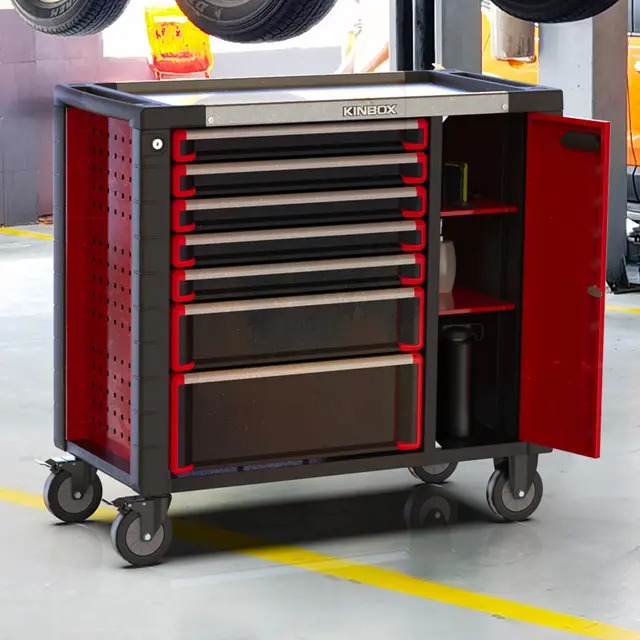
Not all storage solutions support 5S equally well. A plant may buy cabinets and still struggle if the design does not match the actual work. Choosing the right Tool Cabinet should begin with process needs, not just appearance.
Before selecting a cabinet, it helps to study how the station operates. Which tools are used every shift? Which are shared? Which are sensitive, heavy, or easily misplaced? Are operators stationary or mobile? The best storage layout is one that follows the work naturally rather than forcing workers to adapt to an inconvenient system.
Varied drawer sizes support better organization because different tools need different storage depths and layouts. In many cases, tray options such as BMC, EVA, or EPS can further improve order by helping define fixed positions for tools and accessories. This makes drawers easier to inspect and keeps the layout more stable over time.
Manufacturing storage must handle daily wear. Heavy-duty construction, protective finishes, and practical hardware matter more than cosmetic details. Cabinets made for industrial use should hold up well under repeated opening, movement, loading, and cleaning. Powder-coated steel construction is often preferred because it supports both durability and corrosion resistance in demanding environments.
If tasks move around the plant, roller cabinets or tool carts may offer more value than fixed storage. If floor space is limited, compact designs become important. The right choice depends on whether the plant needs a stationary organization point, a mobile tool station, or a mix of both.
One reason many 5S programs lose momentum is that storage is too generic. Plants often need the ability to customize tray layouts, drawer arrangements, or accessory combinations. Customization helps align the cabinet with real work patterns, which makes the system more usable and easier to sustain.
Installing cabinets is not the finish line. To really support 5S management, plants need to treat storage as part of everyday discipline. That means defining tool locations clearly, assigning responsibilities, reviewing layouts periodically, and adjusting when workflow changes. A cabinet that was perfect six months ago may need reorganization after a line change, a staffing change, or a new product introduction.
It also helps to involve the people who use the storage every day. Operators, maintenance technicians, and supervisors usually know where time is being lost and which drawer layouts make sense. When they participate in the cabinet setup process, the result is usually more practical and more likely to stick. This kind of involvement also supports ownership, which is one of the less talked-about drivers of 5S success.
Another important point is that 5S should feel supportive, not punitive. If a Tool Cabinet makes the job easier, workers are more likely to see 5S as useful rather than as another rule. That shift in perception matters. The most effective 5S systems are the ones that quietly improve the day-to-day experience of work.
For manufacturing plants that want 5S to move beyond posters and checklists, tool organization needs real attention. A Tool Cabinet is one of the most practical ways to support that effort because it helps connect lean principles with daily behavior. It supports sorting by exposing clutter, supports order by giving tools a fixed home, supports cleaning by keeping work areas manageable, supports standardization by creating repeatable storage logic, and supports sustainability by making the right habits easier to maintain.
Just as importantly, the right cabinet can reduce wasted motion, improve visual control, support safety, and create a more professional working environment. Whether the need is a compact tool cart for home-style maintenance tasks, a professional handcart with organized tray systems, or a multi-drawer roller cabinet for workshop storage, the goal is the same: create a workspace where tools are accessible, secure, and consistently managed.
For companies looking for a reliable storage partner, Kinbox brings useful strengths to this conversation. As a professional tool cabinet manufacturer established in 2013, Ningbo Kinbox Tools Technology Co., Ltd. combines sheet metal processing experience, a large-scale workshop of around 50,000 square meters, and a product range that includes tool cabinets, tool trolleys, tool carts, garage storage systems, and workbenches. With a focus on quality, versatility, customization, and customer support, Kinbox can help businesses build more organized, efficient, and practical workstations that align naturally with 5S management goals.
A Tool Cabinet gives tools a fixed, visible storage location, which makes it easier to sort, organize, clean, standardize, and sustain work areas. It reduces clutter, shortens search time, and supports better discipline on the factory floor.
Plants should look for durability, practical drawer configuration, space-saving design, mobility when needed, and options for customization. Features such as heavy-duty steel construction, corrosion-resistant finishes, safety locks, anti-tipping design, and tray-based organization can be especially useful.
It depends on the workflow. Roller cabinets are ideal when teams need to move tools between work areas or perform flexible maintenance tasks. Fixed cabinets may work better for dedicated stations with stable tool requirements. Many plants benefit from using both.
They improve productivity by reducing wasted motion and search time, keeping tools near the point of use, and making workstations easier to manage. When operators can access and return tools quickly, workflow becomes smoother and interruptions are reduced.
Yes. Many tool cabinet solutions can be adapted with different drawer layouts, tray options, storage configurations, or accessories. Customization is helpful because different workshops, maintenance teams, and production stations often have different organizational needs.



