
 English

Views: 0 Author: Site Editor Publish Time: 2026-06-10 Origin: Site


A well-designed garage is no longer just a place to park a car or store a few tools. For many homeowners, mechanics, workshop operators, and even hobbyists, the garage has become a multifunctional space that needs to support storage, productivity, efficiency, and aesthetics all at once. Whether it is a residential workshop, a commercial service bay, or a personal DIY area, organization plays a major role in how effectively the space functions.
This is exactly why professional garage designers spend so much time planning layouts around modular garage storage systems. Instead of randomly placing shelves, drawers, and cabinets wherever there is empty space, experienced designers approach the garage like a carefully engineered workspace. Every wall, corner, cabinet height, and walking path matters.
At the center of this planning process is usually the tool cabinet. More than just a storage unit, a high-quality tool cabinet becomes the backbone of an organized garage system. When paired with modular garage storage cabinets, workbenches, and wall-mounted systems, it creates a workspace that feels efficient, clean, and surprisingly comfortable to use.
The difference between a cluttered garage and a professional-grade workspace often comes down to planning. And while many people assume garage design is mostly about appearance, professionals know the real challenge is maximizing functionality without sacrificing flexibility.
In this article, we’ll look at how professional garage designers actually plan spaces around modular garage storage cabinets, what principles they follow, and why the right storage setup can completely transform the way a garage works.

Many garage problems are not caused by having too little space. In reality, they are caused by poor organization.
A garage may have enough square footage, but if tools are piled into random drawers, large equipment blocks walking paths, and cabinets are installed without any workflow in mind, the space quickly becomes frustrating to use.
Professional designers approach garages differently. They start by asking practical questions:
How is the garage used every day?
Which tools are accessed most often?
How much floor space should remain open?
Are there heavy-duty storage requirements?
Does the user need mobility or fixed storage?
Will the garage evolve over time?
These questions help determine how modular garage storage cabinets and tool cabinet systems should be positioned.
A garage designed for automotive repair, for example, needs a very different layout from a woodworking workshop or a home storage garage. Professional planners know that storage must support workflow, not interrupt it.
This is why modular systems have become increasingly popular in modern garage design. They provide flexibility, scalability, and customization that traditional fixed storage simply cannot match.
Modular garage storage cabinets are designed to work together as a complete system rather than as isolated storage units.
Unlike standalone cabinets purchased one piece at a time, modular systems allow designers to create coordinated layouts that maximize both horizontal and vertical space.
A typical modular garage setup may include:
Tall storage cabinets
Wall-mounted cabinets
Rolling tool cabinets
Drawer units
Overhead storage
Workbenches
Pegboards and wall systems
Corner storage modules
Professional designers often compare garage storage planning to kitchen design. The goal is not simply fitting cabinets into a room. The goal is creating a functional workflow.
For example, heavy-use tools may be placed near the primary workbench, while seasonal equipment is stored in overhead cabinets. Cleaning products may be separated from metalworking tools. Frequently used hand tools may be organized in shallow drawers within arm’s reach.
The beauty of modular systems is that they can adapt over time. If a garage owner later adds equipment, changes hobbies, or expands a business operation, the storage layout can evolve without requiring a complete redesign.
That flexibility is one reason why modular garage storage cabinets are now widely used in both residential and commercial environments.
Professional garage planning usually begins with careful space analysis.
Before selecting a tool cabinet or storage configuration, designers evaluate several important factors.
One of the first steps is measuring usable wall space. Designers examine:
Full wall length
Ceiling clearance
Window and door placement
Electrical outlets
Lighting positions
Ventilation systems
Vertical storage is especially important in smaller garages. Tall garage storage cabinets can dramatically increase storage capacity without reducing floor space.
Experienced designers avoid wasting upper wall areas. Ceiling-height cabinets and overhead storage systems are often used for less frequently accessed items.
A common mistake in amateur garage setups is ignoring movement space.
Professionals always ensure there is enough clearance for:
Vehicle doors opening
Walking around vehicles
Moving rolling carts
Carrying large equipment
Accessing cabinets comfortably
Even the best tool cabinet becomes inconvenient if drawers cannot fully open because of poor spacing.
Garage designers typically establish dedicated work zones and traffic flow paths before installing any cabinets.
Some garages need to support heavy machinery, compressors, welders, or charging stations.
This affects cabinet placement significantly.
Designers may create reinforced workstations near power outlets while positioning flammable materials away from heat-producing equipment.
Modular garage storage cabinets help simplify these requirements because layouts can be customized around equipment dimensions.
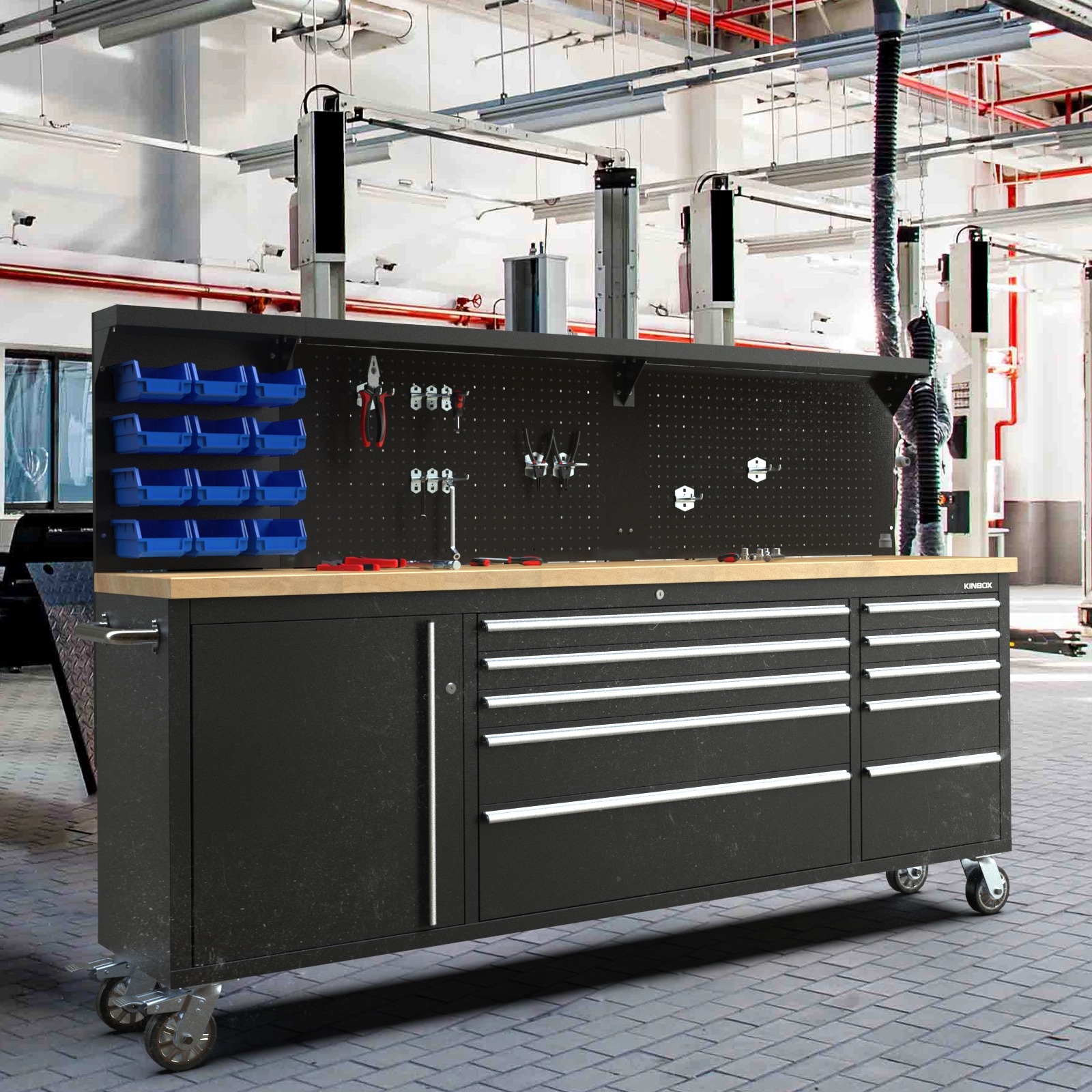
In professional garage design, the tool cabinet is rarely treated as just another storage box.
Instead, it often acts as the operational center of the workspace.
That’s because tools are typically the most frequently used items in the garage. Poor tool organization slows down workflow, wastes time, and increases frustration.
Professional designers prioritize several key features when selecting a tool cabinet:
Different tools require different drawer depths.
Shallow drawers work well for:
Screwdrivers
Wrenches
Pliers
Measuring tools
Deep drawers are better for:
Power tools
Impact drivers
Heavy equipment
Bulk storage
Designers often organize drawers based on frequency of use, with everyday tools placed between waist and chest height for easier access.
Some garages benefit from rolling tool cabinets that can move around the workspace.
Others require fixed cabinets for security and stability.
Professional designers carefully evaluate workflow before deciding.
In automotive workshops, rolling tool cabinets are common because mechanics frequently move between vehicles. In woodworking or fabrication environments, fixed-position systems may provide better efficiency.
A garage environment can be demanding.
Heavy tools, oil exposure, temperature changes, and frequent drawer movement all place stress on storage systems.
Professional designers therefore favor heavy-duty steel tool cabinet systems with reinforced drawers, durable powder coating, and high-load slides.
Cheap storage solutions often fail over time, especially in busy workshops.
One of the biggest differences between professional garage layouts and ordinary DIY setups is workflow planning.
Designers do not simply ask where cabinets can fit. They ask how people actually move and work inside the garage.
This is similar to industrial workspace planning.
Most professional garage layouts include dedicated zones such as:
Repair zone
Tool preparation area
Cleaning station
Storage wall
Workbench zone
Equipment parking area
Each zone supports a specific function.
For example, a garage used for automotive repair may place the main tool cabinet beside the lift or work area to reduce unnecessary movement.
Professional designers understand that poor layout wastes energy.
Repeatedly walking across the garage for commonly used tools slows down work and increases fatigue.
This is why frequently accessed tools are typically stored close to workbenches.
The idea is simple: the fewer steps required to complete a task, the more efficient the workspace becomes.
A cluttered workbench reduces productivity.
Modular garage storage cabinets help designers keep surfaces clear by providing dedicated storage areas for tools, accessories, hardware, and consumables.
This improves both organization and safety.
In many garages, wall space is more valuable than floor space.
Professional designers maximize vertical storage whenever possible.
This is especially important in smaller garages where maintaining open floor areas is critical.
Wall-mounted garage storage cabinets help free up floor space while keeping tools accessible.
These cabinets are often installed above workbenches or along side walls.
Designers carefully consider cabinet height to ensure daily-use items remain comfortable to reach.
Tall cabinets are commonly used for:
Power equipment
Cleaning supplies
Safety gear
Seasonal items
Automotive fluids
These units provide high storage capacity without overcrowding the garage.
Professional garage layouts frequently include overhead storage for infrequently used items.
This may include:
Holiday decorations
Spare tires
Camping equipment
Long-term storage bins
Using upper storage strategically keeps the garage cleaner and more organized.
Professional designers pay close attention to cabinet materials because garages are harsh environments.
Humidity, dust, chemicals, oil, and heavy use can quickly damage low-quality products.
Steel remains the preferred material for professional tool cabinet systems.
Why?
Because steel offers:
Higher durability
Better load capacity
Fire resistance
Easier cleaning
Longer service life
Wood cabinets may look attractive initially, but they are more vulnerable to moisture and heavy wear.
High-quality powder coating helps protect garage storage cabinets from:
Corrosion
Scratches
Chemical exposure
Daily wear
This is especially important in commercial workshops and industrial environments.
Professionals also pay attention to drawer slide systems.
Smooth heavy-duty slides improve usability and extend cabinet lifespan.
Soft-close systems and ball-bearing slides are increasingly popular in premium garage designs.
No two garages are exactly the same.
That is one reason modular garage storage cabinets have become so popular.
Professional designers appreciate systems that can adapt to different needs.
Homeowners often want garages that balance storage and appearance.
Modern residential garages may include:
Matching cabinet finishes
Integrated lighting
Workstations
Hidden storage
Sports equipment organization
Charging stations
The garage is increasingly viewed as an extension of the home rather than a purely functional utility area.
Commercial garages prioritize durability and efficiency.
Designers may include:
Heavy-duty tool cabinets
Industrial workbenches
Lockable storage
Specialized tool drawers
Large-capacity storage walls
Modular systems make these customizations easier to implement.
Another advantage of modular garage storage cabinets is future scalability.
A garage owner can start with a smaller setup and later expand by adding additional cabinets, workstations, or storage modules.
This flexibility makes modular systems a practical long-term investment.
One detail many people overlook is lighting.
Professional garage designers understand that even the best storage layout becomes frustrating if visibility is poor.
Cabinet positioning often works together with lighting design.
Workstations typically require bright, focused lighting.
This helps users:
Find tools quickly
Improve precision work
Reduce eye strain
Improve safety
Some premium modular garage storage cabinets now include integrated LED lighting.
This not only improves visibility but also creates a cleaner and more modern appearance.
Designers also avoid cabinet placements that block light sources or create dark corners.
The goal is creating a workspace that feels open, functional, and easy to navigate.
Many people focus only on the initial appearance of a garage.
Professionals think further ahead.
A properly designed garage should remain functional for years.
This means choosing durable storage systems, planning for future needs, and avoiding layouts that become restrictive over time.
Well-designed modular garage storage cabinets help reduce clutter accumulation because every item has a designated place.
Over time, this creates a workspace that is easier to maintain.
And honestly, that daily convenience matters more than most people realize.
People naturally work better in organized spaces. A clean garage feels less stressful, more professional, and far more enjoyable to use.
Even the best garage design concepts depend heavily on product quality.
Professional designers usually prefer manufacturers that can provide:
Consistent product quality
Strong steel construction
Flexible modular systems
OEM/ODM capabilities
Reliable after-sales support
International manufacturing standards
As global demand for professional garage organization continues to grow, manufacturers with advanced sheet metal production capabilities are becoming increasingly important.
Companies like KINBOX have focused on developing durable tool cabinet and garage storage cabinet solutions for both residential and industrial users. With large-scale manufacturing facilities, advanced sheet metal processing technology, and extensive experience in garage storage systems, KINBOX continues to support customers worldwide with practical and customizable storage solutions designed for modern workspaces.
Professional garage designers understand something that many people overlook: storage is not just about where things go. It is about how people work.
A carefully planned garage built around modular garage storage cabinets and a high-quality tool cabinet can dramatically improve organization, productivity, safety, and overall workflow.
From vertical storage planning to workflow optimization, lighting integration, durability considerations, and future flexibility, every detail plays a role in creating a garage that truly functions efficiently.
As garages continue evolving into professional-grade workspaces, modular storage systems will remain a key part of smart garage design. Whether for homeowners, mechanics, industrial workshops, or hobby enthusiasts, investing in a well-designed storage system is ultimately an investment in efficiency and long-term usability.
Modular garage storage cabinets provide greater flexibility, customization, and scalability. Users can expand or rearrange the system over time based on changing storage needs, making them more adaptable than traditional fixed storage setups.
A high-quality tool cabinet should include durable steel construction, smooth heavy-duty drawer slides, strong load capacity, corrosion-resistant coating, and practical drawer organization for different tool sizes.
Professional designers maximize small garages by using vertical storage, wall-mounted cabinets, overhead systems, and carefully planned workflow zones to keep floor space open and organized.
In most professional garage environments, steel cabinets are preferred because they offer better durability, higher load capacity, moisture resistance, and longer lifespan compared to wooden cabinets.
Yes. Modular garage storage systems are widely used in automotive workshops, industrial facilities, woodworking shops, and residential garages because they can be customized to match specific workflow and storage requirements.



