
 English

Views: 0 Author: Site Editor Publish Time: 2025-12-31 Origin: Site


A well‑designed tool cabinet does more than store tools — it transforms a chaotic garage or workshop into a safe, efficient, and productive workspace. By combining thoughtful storage layout, durable construction, and ergonomic design, a tool cabinet helps prevent accidents, reduce downtime, and keep tools organized and accessible. In this article, we break down how proper tool cabinet design enhances both safety and workflow, what features matter, and how to choose or set up a cabinet for long‑term benefit.
Just having a tool cabinet isn’t enough. If the cabinet is poorly designed — with flimsy materials, inadequate layout, or bad ergonomics — you may still face tool‑loss, inefficiency, or safety hazards. Proper design ensures that the cabinet doesn’t just hold tools, but actively supports good workflow and reduces risks.
Here are the core reasons why good design matters:
A poorly designed cabinet can create hidden hazards (unstable base, overloaded drawers, sharp edges).
If tools are hard to reach or drawers jam, workers may leave tools out — defeating the purpose of storage.
Inconsistent organization makes retrieving tools unpredictable and wastes time.
Dust, moisture, and exposure increase tool wear and corrosion when storage is inadequate.
Thus, to genuinely improve both safety and efficiency, the tool cabinet design must meet high standards.
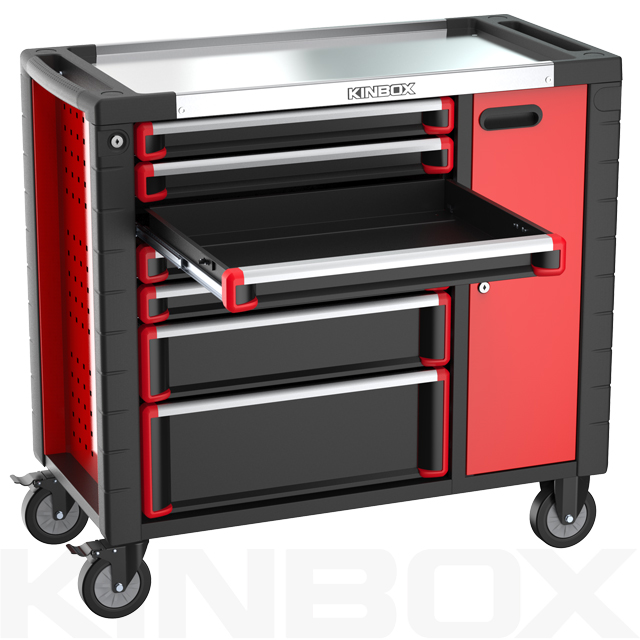
Here are the critical design features that distinguish a high‑value tool cabinet capable of improving safety and workflow.
Heavy‑duty materials: Cabinets built with strong metals — typically steel — resist dents, bending, and deformation under load. Good material strength ensures the cabinet remains stable even when fully loaded.
Rust and corrosion resistance: Many cabinets employ powder‑coated or corrosion‑resistant finishes so tools remain protected from moisture, dust, and grime.
Stable base or secure mobility: Whether stationary or rolling, the base must support full load without tipping. Rolling cabinets should include lockable, heavy-duty casters.
A sturdy cabinet reduces the chance of collapse, tipping, or drawers getting stuck — all potential safety hazards.
A cabinet's internal design is as important as its external durability. Key layout features include:
| Feature | Benefit for Safety & Workflow |
|---|---|
| Mixed-depth drawers (shallow + deep) | Lets you store small hand tools in shallow drawers and bulky or heavy power tools in deep drawers, improving organization and reducing clutter. |
| Smooth, full‑extension drawer slides & ergonomic drawer access | Easy access reduces strain and makes retrieving tools faster, minimizing time wasted and lowering risk of back strain or dropped tools. |
| Modular compartments, dividers, trays, bins | Helps categorize tools — fasteners, hand tools, specialty tools — making tool retrieval predictable and reducing clutter. |
| Lockable drawers/doors | Secure storage protects expensive tools from theft or unauthorized use; containment of sharp or hazardous tools improves safety. |
| Compact yet high‑capacity design | Maximizes storage while minimizing footprint — useful in small garages or crowded workshops, freeing space for movement and work. |
When a cabinet is designed with these storage‑organization principles, it significantly reduces clutter, makes tools easy to find, and ensures that the cabinet supports daily tasks rather than hindering them.
Beyond storage, a good tool cabinet helps integrate tool access into the natural workflow of projects:
Reduced search time / faster retrieval: With tools assigned to fixed locations based on usage frequency (e.g. frequently used tools in top drawers), you save valuable time, reducing interruptions. A well‑organized tool cabinet enables fast, predictable access.
Less physical strain: Smooth-drawing drawers, ergonomic handle placement, and correct drawer weighting reduce bending, twisting, and heavy lifting — helping prevent workplace injuries.
Cleaner, safer workspace: With tools off the floor and properly stored, the workspace becomes safer — fewer trip hazards, fewer tools lying around, and a more open, navigable area.
Predictable tool availability: Especially in shared workshops or larger teams, a consistent storage system ensures everyone knows where tools go and finds them when needed — reducing delays and confusion.
In practice, this means projects start faster, proceed with fewer interruptions, and finish earlier — improving overall productivity and reducing accident risks.
To illustrate the difference that good design makes, here’s a comparison between settings using a well‑designed tool cabinet and ones relying on ad‑hoc storage (bins, open shelving, scattered tools).
| Aspect | Poor / Ad‑hoc Storage | Proper Tool Cabinet Design |
|---|---|---|
| Tool retrieval time | High — rummaging through bins, pile => 5–15 min | Low — tools in labeled drawers, retrieval 30–60 seconds |
| Clutter & floor hazards | Tools on floor, scattered items — tripping risk, messy floor | Clutter cleared, tools stored in drawers — safer walking/work areas |
| Tool damage / wear | High — exposure to dust, moisture, accidental knocks | Low — enclosed drawers, protection from elements, stable storage |
| Workflow interruptions | Frequent — lost tools, wasted time, searching, reorganizing | Minimal — tool always in place, less time wasted, better flow |
| Safety risk (sharp tools, heavy items) | High — tools exposed or stacked precariously | Lower — lockable compartments, organized storage, reduced accidents |
| Overall organization & tool tracking | Poor — tools go missing, random placement, inconsistent setup | Good — systematized storage, easier inventory tracking and maintenance |
This comparison shows why good tool cabinet design isn’t just a matter of convenience — it’s a critical factor in safety, efficiency, and long-term tool preservation.
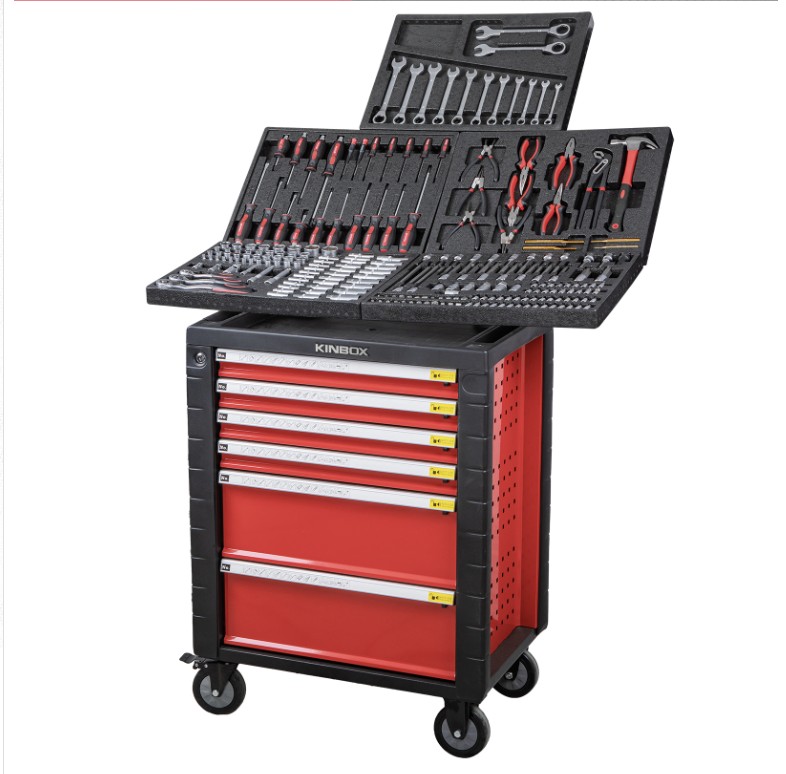
As garages evolve into multifunctional workspaces — for DIY, auto repair, woodworking, or small workshops — tool cabinet design keeps up. Here are some of the latest developments increasing safety and workflow efficiency:
Modern tool cabinets are often modular: configurable drawers, adjustable shelves, removable compartments and dividers. This flexibility lets users re‑organize storage as their tool collections grow or change, without needing a new cabinet.
This modularity improves long-term value, ensures the cabinet adapts to new needs, and reduces waste.
In multi-user or professional settings, cabinets with lockable drawers/doors, or even digital access control, are increasingly common. This enhances security — preventing unauthorized use, minimizing tool theft or loss, and ensuring that only trained personnel handle hazardous or expensive tools.
Rather than just a stand‑alone cabinet, many workshops integrate tool cabinets into larger storage systems: wall‑mounted storage, overhead racks, workbenches, dedicated zones for power tools, spare parts, and consumables. This comprehensive storage design improves workflow — everything has its place, and tools are accessible where needed.
Designers now pay more attention to ergonomic factors: drawer height, ease of opening, smooth slides, balanced load capacity, safe drawer closing. These ergonomic improvements reduce fatigue, lower risk of injury, and encourage consistent tool return behavior — important for maintaining an organized, safe workspace over time.
If you’re selecting a tool cabinet — or planning to upgrade — here’s a practical guide to ensure the design supports safety and efficiency.
List all the tools you currently own (hand tools, power tools, consumables).
Estimate future growth (additional tools, parts, accessories).
Evaluate how often and in what context you use tools: occasional DIY, regular maintenance, professional workshop, shared use, etc.
This helps you determine the size, layout, modularity, and security requirements your cabinet must meet.
When selecting a cabinet, ensure it includes:
Durable metal construction (steel or equivalent).
Mixed-depth drawers, smooth full‑extension slides, ergonomic heights.
Lockable drawers or doors if you have valuable or hazardous tools.
Modular compartments or adjustable shelving for flexibility.
Stable base or heavy-duty casters (if rolling) with locking mechanism.
Avoid cabinets that feel flimsy, have inconsistent drawer action, or lack sufficient storage organization features.
Organize tools by:
Type (hand tool, power tool, fasteners, accessories).
Frequency of use (frequently used on top shelves/drawers; seldom used items deeper or locked).
Tool size and weight (heavy tools in drawers with strong slides; light tools in shallow drawers).
Use drawer liners, small bins, dividers to avoid tools banging into each other, which can cause wear or damage.
A good cabinet is part of a bigger system. Complement it with:
Wall storage (pegboards, slatwall) for items used often.
Workbench nearby for assembly or repair tasks.
Overhead or wall-mounted storage for less-used items (seasonal tools, spare parts).
Clearly marked zones (e.g., fasteners, power tools, hand tools) to prevent mixing and confusion.
This layered storage strategy ensures the entire workspace is optimized for ease, safety, and flow.
Always return tools to their designated drawer or compartment after use — avoid “temporary dumping.”
Periodically inspect cabinet for wear, rust, or damage; lubricate drawer slides and hinges as needed.
Clean drawers to remove dust, debris, metal shavings or grease — prolonging tool and cabinet lifespan.
Re‑evaluate storage layout if tool collection changes — keep interior organization aligned with actual tool inventory.
Good cabinet design plus disciplined use and maintenance ensures your workspace remains safe and efficient over time.
From industry blogs, garage‑organization experts, and workshop case studies, it’s clear that properly designed tool cabinets deliver measurable benefits:
According to a workshop‑efficiency analysis, custom storage systems with well‑organized cabinets cut tool retrieval and idle time, increasing overall workflow efficiency substantially.
Organized storage reduces exposure of tools to dust, water, and rust — prolonging tool life and reducing replacement cost over the long run.
Cabinets with lockable drawers or doors help secure tools and hazardous materials, reducing risk of accidental misuse, theft, or injury — especially in shared or household environments with children or pets.
A well‑organized garage with cabinets improves usability of space — making room for vehicles, projects, or other equipment, turning a cluttered area into a functional workshop or storage zone.
These findings reinforce that tool cabinet design is not just about convenience — it's central to safety, efficiency, and long-term value.
A tool cabinet that’s thoughtfully designed — with durable materials, organized layout, ergonomic access, and security — becomes more than a storage solution; it becomes the backbone of a safe, efficient, and productive workshop or garage.
By investing in a well-designed cabinet and combining it with smart organization and maintenance habits, you can significantly reduce accidents, cut tool retrieval time, protect your tool investment, and enhance overall workflow.
Whether you’re a DIY enthusiast, a small‑shop mechanic, or running a professional workshop — focusing on design quality over mere storage volume or price will pay off in reliability, safety, and long-term satisfaction.
Q1: What’s the most important feature to check when selecting a tool cabinet for safety?
A1: A stable base (or lockable heavy-duty casters if mobile), strong drawer slides, and a robust metal construction are critical. These ensure the cabinet won’t tip or collapse under load — reducing accident risk.
Q2: Are rolling tool cabinets safe enough compared to fixed cabinets?
A2: Yes — when properly built with lockable, heavy‑duty casters and a stable base. Rolling cabinets offer mobility and flexibility, but must be locked when in use to avoid unintended movement or tipping.
Q3: How does internal organization improve workflow compared to open shelving or bins?
A3: Internal organization (drawers, dividers, trays) allows tools to be sorted by type, size, or frequency of use — making retrieval predictable and fast, reducing search time, and preventing clutter from returning.
Q4: Can tool cabinet design really impact tool longevity?
A4: Definitely. Cabinets that protect tools from dust, moisture, and accidental drops significantly reduce wear, rust, and damage — extending tool life compared to tools stored loosely or exposed.
Q5: What’s the best way to maintain a tool cabinet for safety and efficiency long-term?
A5: Establish regular habits: always return tools after use; periodically clean drawers; lubricate smooth‑action parts; avoid overloading drawers; and re‑evaluate organization layout if tools or needs change.



