
 English

Views: 0 Author: Site Editor Publish Time: 2026-03-25 Origin: Site


If you have ever opened a drawer or picked up a hand tool from the garage and noticed a thin orange film, a few dark spots, or that slightly rough feeling on the metal, you already know the problem is real. Tool oxidation does not always arrive dramatically. Most of the time, it shows up quietly. A wrench looks a little dull. A screwdriver shaft starts to stain. A socket that used to look clean now has a tired, slightly rusty ring around the edges. It happens slowly enough that people often ignore it until the damage is obvious.
That is exactly why the question matters: how does a Garage Storage Cabinet prevent tool oxidation? The short answer is that it helps by controlling exposure. A cabinet cannot change the chemistry of metal, but it can change the environment around the tool. And that is what makes the difference. When you reduce moisture, limit dust, avoid repeated temperature swings, and keep metal surfaces cleaner, oxidation slows down. In many garages, that is enough to noticeably extend tool life.
To understand why, it helps to start with the basics. Oxidation is a reaction between metal and oxygen. In the case of iron and many kinds of steel, that reaction becomes rust when moisture is involved. In plain language, metal lasts longer when it stays drier and cleaner. That is why open shelving, cluttered benches, and random storage habits often lead to more rust, while enclosed, more controlled storage usually leads to less of it. A Garage Storage Cabinet works best not because it is fancy, but because it creates a more stable place for your tools to live.
A garage feels dry a lot of the time, but that can be misleading. What matters is not just whether you can see water. What matters is whether moisture is present in the air, whether the temperature is changing, and whether metal surfaces are reaching the point where condensation can form. When warm, humid air cools to the dew point, that moisture turns into liquid water on colder surfaces. Metal tools are very good at becoming those colder surfaces, especially at night, during seasonal changes, or when the garage heats up and cools down quickly.
That is why oxidation often starts in garages even when there is no leak and no obvious damp floor. The problem is usually repeated low-level exposure. A little condensation here, a humid evening there, dust collecting over time, fingerprints left on polished steel, and the cycle repeats. None of it looks serious in the moment, but over weeks and months it adds up. That is how tools go from “still fine” to “why is this rusting already?” without any one dramatic event causing it.
Garages also tend to be messy environments by nature. There is airborne dust, dirt from tires, debris from cutting or sanding, and sometimes residue from chemicals, cleaners, or outdoor use. Even if you do not think of the room as dirty, the metal sees all of it. A tool sitting out in the open is not just exposed to oxygen. It is exposed to whatever the room is carrying that day. That is one of the reasons enclosed storage makes such a practical difference. It is not only about appearance. It is about reducing what settles on the tool between uses.
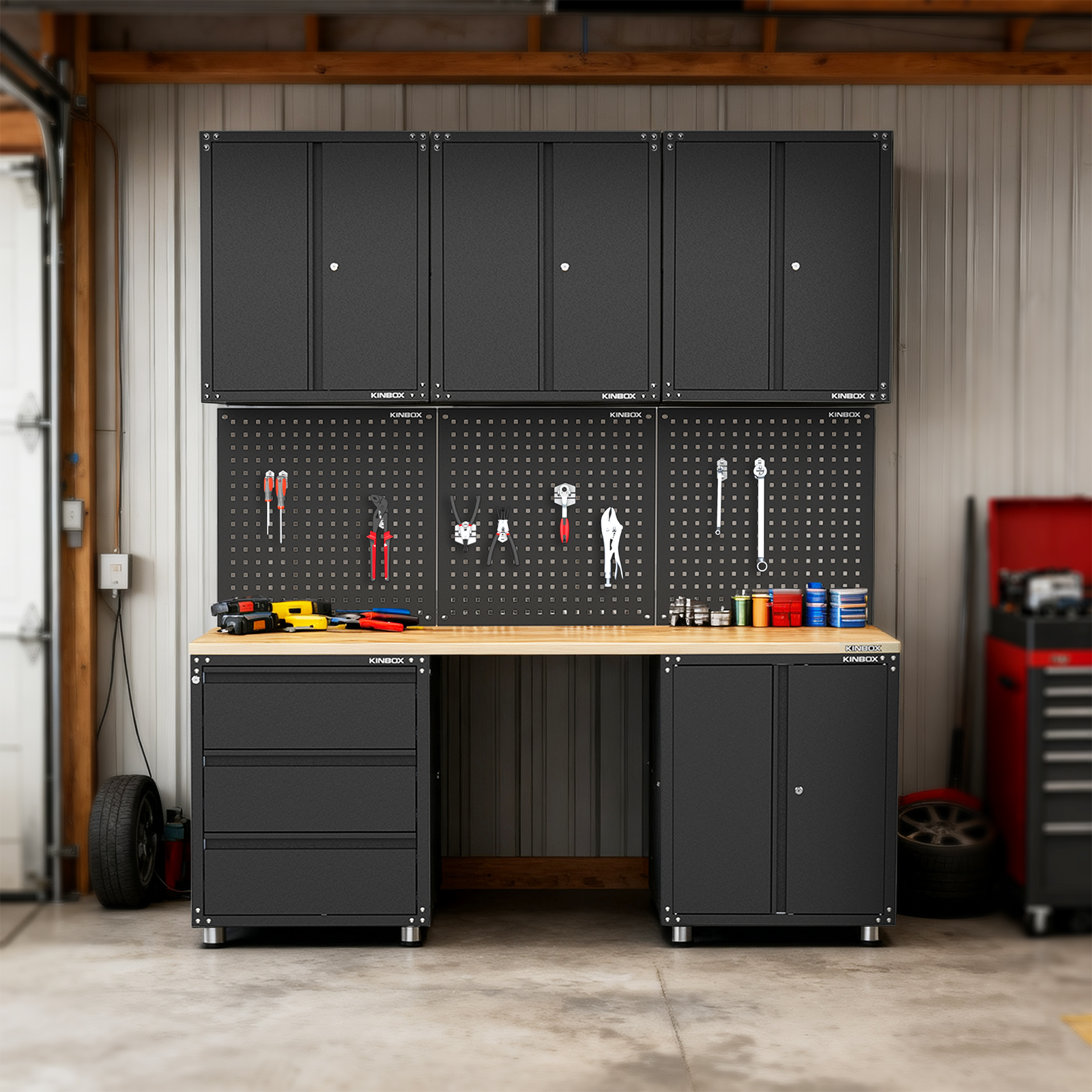
A Garage Storage Cabinet helps prevent tool oxidation by creating a buffer between your tools and the rest of the garage. That buffer does several useful things at once. It reduces direct contact with room air. It slows down how quickly tools experience humidity changes. It limits dust settling on exposed metal. It encourages cleaner storage habits. And it gives you a contained space where moisture-control products like desiccants can actually work more effectively.
This part is important: a cabinet does not make tools rust-proof. It simply makes the environment less aggressive. That is a big difference. If tools are left on an open bench, they experience every humidity swing, every dusty day, every accidental splash, and every careless touch. Inside a cabinet, the exposure is reduced. Not eliminated, but reduced enough to matter. In a workshop or garage, a reduction in exposure is often exactly what you need.
Another reason cabinets help is psychological, and that matters more than people admit. When tools have a defined home, people are more likely to wipe them down, put them away properly, and close the door behind them. When storage is open and casual, people tend to toss tools down wherever there is space. So part of the cabinet’s value is environmental, and part of it is behavioral. It supports better habits, and better habits are a big part of rust prevention.
When tools sit out in the open, they are constantly breathing the room. Every change in the air affects them right away. A cabinet interrupts that direct relationship. Because it is enclosed, the air around the tool does not change as quickly as the air in the room. That slower change is useful. Metal is less likely to be hit by every spike in humidity the moment it happens. In real life, that means fewer opportunities for moisture to settle on the surface and start trouble.
Temperature swings are a big part of oxidation in garages. During the day, the garage may warm up. Overnight, it cools down. If the air cools to the dew point, condensation forms. A cabinet does not stop the weather, but it can soften how suddenly those changes reach the tool. Think of it like this: a tool on an exposed shelf lives in the full drama of the garage; a tool inside a cabinet lives in a slightly calmer version of it. Sometimes that small difference is enough to prevent repeated condensation cycles.
One of the most practical benefits of a cabinet is that it creates a smaller storage zone. Drying out an entire garage is difficult and sometimes expensive. Drying out the inside of a cabinet is much more realistic. If you place moisture absorbers or silica gel packs inside, they have an actual chance to reduce humidity in that enclosed space. On an open shelf, those same products are fighting the whole room and usually doing very little. Inside a cabinet, they become part of a working system.
Tool oxidation is not only about water. Surface contamination matters too. Dust can hold moisture. Dirt can trap grime against metal. Fine workshop particles can sit on a tool for weeks without being noticed. The more that buildup stays on the surface, the easier it becomes for oxidation to get started, especially in humid conditions. A Garage Storage Cabinet helps simply by keeping that buildup lower than it would be in open storage.
This becomes even more important if your garage doubles as a workspace. Cutting wood, grinding metal, sanding, unpacking materials, and just moving in and out with dirty shoes all add particles to the air. Tools left out collect all of it. Tools behind closed doors collect less. That may sound basic, but basic things are often the most effective. Many storage improvements work not because they are complicated, but because they quietly remove the daily little causes of damage.
There is also the issue of fingerprints. People rarely think of fingerprints as harmful, but on bare metal they are not ideal. Skin leaves behind oils, salts, and moisture. Over time, repeated handling without wiping the tool down can contribute to staining and corrosion. A cabinet cannot stop you from touching your tools, of course, but it reduces unnecessary handling because tools are not lying out where everyone brushes past them or picks them up casually. That alone can help keep surfaces cleaner.
Not all cabinets help equally. If oxidation prevention is one of your goals, the design of the cabinet matters more than many people realize. A cabinet that closes well is better than one with loose, constantly gapped doors. A cabinet with a solid body is usually better than something that is half-open or mostly decorative. The more enclosed the storage space, the better your chances of maintaining a cleaner and drier micro-environment inside.
Material choice matters too. A well-made steel cabinet is often a strong option for garage storage because it is durable, easy to clean, and suited to workshop conditions. Adjustable shelves are useful because they allow you to avoid overcrowding. Overcrowding is a problem because packed storage makes it harder for air to move evenly, harder to inspect tools, and harder to keep things clean. A cabinet that is technically big enough but crammed to the edges is not working as well as it should. This is one of those cases where layout matters almost as much as storage volume.
Another overlooked detail is where the cabinet sits. If you place it right against the dampest wall, next to a spot that gets water intrusion, or directly on a floor that tends to sweat, the cabinet starts from a disadvantage. Good storage works best in the driest, most stable part of the garage you can manage. It does not need to be perfect, but it should not live in the worst microclimate in the room.
This is the first rule, and honestly, it solves more problems than most people expect. If a tool comes back from outdoor use, from a damp surface, or even from a cool environment where condensation might have formed, dry it before it goes into the cabinet. Putting wet or damp tools into enclosed storage traps the problem instead of preventing it. The cabinet helps most when it stores dry tools, not freshly damp ones.
You do not need a long maintenance ritual every time. Usually, a quick wipe is enough. The point is to remove the surface contamination that would otherwise sit there for days or weeks. If the tool has bare steel, a light protective wipe can make a noticeable difference over time. The cabinet works best as part of a routine: use the tool, clean it lightly, store it properly. That rhythm is simple, but it is exactly how good storage turns into real protection.
If you live somewhere humid, this is worth doing. Small moisture absorbers or silica gel packs inside the cabinet can help reduce the dampness in that enclosed space. They are not a miracle on their own, but combined with an enclosed cabinet they become much more useful. You do need to replace or recharge them as needed. Otherwise, they stop being helpful and just sit there looking responsible.
A cabinet should store tools, not swallow them. If it is too packed, tools rub against each other, surfaces get scratched, and inspection becomes harder. It also becomes more likely that people start shoving things in quickly instead of storing them carefully. Good rust prevention depends on visibility and habit. You want to be able to open the cabinet and see what is there, not discover forgotten tools months later behind a pile of random hardware.
This is more about practicality than chemistry, but it still supports prevention. When storage is easy to use, people actually use it properly. Heavy tools on lower shelves are safer and easier to return. Frequently used tools at mid-height are easier to grab and put back without cluttering the workbench. The smoother the routine, the more likely your tools spend their downtime in a protected environment instead of being left out in the open.
A cabinet helps a lot, but it does have limits. If the entire garage is consistently wet, the floor gets damp, the walls sweat, or the room is constantly exposed to outside moisture, a cabinet alone cannot fix that bigger environmental problem. It can slow the damage, but it cannot fully overcome a bad room. If humidity in the garage is high all the time, the smarter approach is to combine cabinet storage with broader moisture control, better ventilation, or a dehumidifier.
A cabinet also cannot reverse rust that is already active. If a tool is already oxidized, it needs attention. That might mean cleaning, drying, treating the surface, and then returning it to proper storage. Simply hiding a rusty tool inside a cabinet does not solve the underlying issue. The cabinet is a preventive measure, not a time machine. It protects better than it repairs.
And finally, a cabinet cannot replace habits. If you leave the doors open all the time, throw in wet tools, ignore dusty surfaces, and never check moisture absorbers, the cabinet loses much of its advantage. Good storage is never just about buying the product. It is about using it consistently enough that it changes the environment and your routine at the same time.
People often talk about rust like it is only a cosmetic issue, but anyone who actually uses tools knows better. Oxidation affects appearance first, then feel, then function. A lightly rusted wrench may still work, but it does not feel right in the hand. A measuring tool with corrosion is more than unattractive; it becomes less trustworthy. A blade with surface oxidation may cut worse, clean up poorly, or wear faster. So preventing oxidation is not just about making the workshop look neat. It is about protecting performance, consistency, and replacement cost over time.
That is why a Garage Storage Cabinet is such a practical upgrade in small workshops, home garages, and professional work areas alike. It brings organization, yes, but more importantly it gives tools a better environment between jobs. In real-world maintenance, that in-between time matters a lot. Tools spend far more time stored than they do being used. If the storage environment improves, the tool’s overall life usually improves with it.
So, how does a Garage Storage Cabinet prevent tool oxidation? It prevents it in the most practical way possible: by reducing exposure. It shields tools from open-air humidity, softens temperature swings, lowers dust and grime buildup, cuts down unnecessary handling, and makes dry storage habits easier to maintain. It is not a magic box, but it is a very effective part of a smarter storage system. And if you are choosing cabinets for a workshop, retail project, or industrial storage setup, it makes sense to work with a supplier that understands not just storage capacity, but real protection needs as well—durable materials, practical layouts, solid door sealing, and reliable build quality all matter when the goal is to keep tools cleaner, drier, and in better condition for longer.
No. It can greatly reduce the chances of oxidation, but it cannot make metal immune to moisture and oxygen. The cabinet works best as part of a good storage routine that includes drying tools before storage and keeping the cabinet interior reasonably dry.
In most cases, yes. Open shelves leave tools fully exposed to room air, dust, and humidity changes. A closed cabinet creates a more controlled environment, which generally makes it better for slowing oxidation.
Yes, especially if your garage is humid or goes through seasonal temperature swings. These products work much better in an enclosed cabinet than in open air, though they still need to be replaced or refreshed regularly.
The biggest mistake is putting tools away damp or dirty. Moisture, dust, and residue trapped on the surface can keep oxidation going even inside a cabinet. A quick wipe-down before storage makes a bigger difference than people expect.
It helps most obviously with iron and steel tools because those are the ones that rust most easily, but cleaner and drier storage is beneficial for many kinds of metal tools and accessories. Even when rust is not the main concern, reduced dust and moisture still help preserve overall condition.



