
 English

Views: 0 Author: Site Editor Publish Time: 2026-04-24 Origin: Site


In many workshops, service centers, and manufacturing plants, efficiency problems are often blamed on production pressure, staff shortages, or tight deadlines. Those are real issues, of course. But if you look closely at daily operations, a surprising amount of lost time comes from something much simpler: technicians searching for tools. It happens in maintenance bays, assembly lines, repair rooms, inspection areas, and even well-established facilities that seem organized at first glance. A screwdriver is in the wrong drawer, a torque wrench was borrowed and not returned, a socket set is split across two stations, or a technician has to walk back and forth across the floor just to complete a routine task. None of this sounds dramatic, but together, these small interruptions quietly drain productivity every single day.
That is exactly why storage and organization deserve more attention. A well-planned Tool Cabinet and a practical Garage Storage System do much more than hold tools. They reduce search time, create structure, improve workflow, and support better habits across the team. In real working environments, that matters a lot. Technicians do not just need tools to be stored; they need tools to be stored logically, consistently, and close enough to the point of use that retrieving them does not become a task in itself.
The good news is that reducing tool search time does not always require a huge operational overhaul. Often, the fastest gains come from improving the physical environment. Better cabinets, better drawer layouts, better storage zoning, and better daily discipline can change how technicians move, work, and finish jobs. When tools are easier to find and easier to return, efficiency improves almost naturally.
This article explores how businesses can reduce technicians’ tool search time and improve efficiency with smarter storage planning, especially through the use of a Tool Cabinet and a well-organized Garage Storage System. The goal is not just to make a workspace look cleaner, but to make work faster, smoother, and far less frustrating.
Tool search time is one of those hidden inefficiencies that people get used to. Because each delay is usually small, it rarely gets treated as a major operational problem. A technician spends two minutes checking one drawer, another minute walking to another workbench, and another minute asking a coworker where a tool was last used. On its own, that may not sound like much. But when this happens several times a shift, across multiple technicians, day after day, the cost becomes very real.
There is also a mental cost. Searching interrupts concentration. It breaks task flow and adds frustration, especially during repairs or maintenance work that already requires precision and attention. A technician who should be focused on diagnosis, adjustment, or installation ends up dealing with avoidable storage problems instead. Over time, that can affect not only speed, but also morale.
In busy work environments, poor tool organization often creates a chain reaction. Delays in one task affect the next. Shared tools become harder to track. Temporary shortcuts become permanent habits. Drawers become mixed, carts become overloaded, and workstations start to rely on memory instead of structure. Once that happens, efficiency drops in ways that are hard to measure but easy to feel.
This is why many companies eventually realize that storage is not just about housekeeping. It is an operational issue. A properly designed Tool Cabinet and a functional Garage Storage System help solve that issue by giving tools a fixed location and making the workflow around those tools more stable.
Before solving the issue, it helps to understand why it happens in the first place. In most facilities, excessive tool search time comes from a combination of layout problems, inconsistent habits, and storage systems that were never really designed around actual work.
This is one of the most common problems. Many workplaces have storage, but not true organization. Tools are placed “where they fit” rather than where they logically belong. A drawer may contain several unrelated items, or the same type of tool may be scattered across different cabinets. Without a clearly defined home location, technicians rely on memory, which is unreliable once the team grows or multiple shifts are involved.
Even if tools are technically organized, technicians still lose time if storage is not located where work actually happens. Walking back and forth across a workshop or plant floor adds motion waste that people often underestimate. A storage system needs to follow workflow, not just available wall space.
In many repair and production environments, some tools are shared by necessity. That is not the problem. The problem starts when there is no clear return process, no designated space, and no accountability. Shared tools are especially likely to end up misplaced, left on machines, or moved between stations without notice.
When cabinets become catch-all storage, search time rises immediately. Overcrowded drawers make it difficult to spot items quickly, especially smaller tools or accessories. Technicians may open several drawers before finding what they need, and returning tools becomes less consistent because there is no clean, intuitive place to put them back.
If every station uses a different logic, the entire operation becomes harder to manage. A technician moving between work areas should not have to relearn storage every time. Without standardization, even experienced staff waste time adapting to different cabinet setups and tool locations.
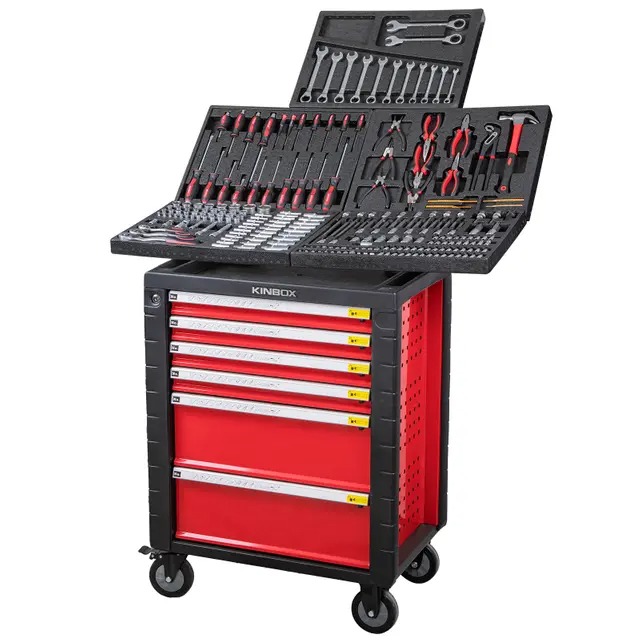
A Tool Cabinet is one of the simplest and most effective tools for improving technician efficiency because it creates order where disorder usually starts. It allows teams to store tools by category, frequency of use, task sequence, or technician role. That structure reduces uncertainty, and less uncertainty means less searching.
Good cabinets also support visual organization. When drawers are arranged properly, technicians can tell at a glance whether a tool is present, missing, or in the wrong place. That may sound basic, but it changes the pace of work in a meaningful way. Instead of spending time checking multiple locations, staff can move directly to the right drawer and retrieve the right tool with far less interruption.
Another advantage is accessibility. Cabinets with multiple drawer sizes and well-planned compartments help separate small hand tools, larger repair tools, consumables, and accessories. This makes storage more precise. A precise storage layout is almost always faster than a generic one because technicians do not have to sort through unrelated items.
Well-built cabinets also support long-term reliability. In a demanding workspace, flimsy storage quickly becomes part of the problem. Drawers stick, layouts collapse, and overloaded compartments turn into clutter zones. A durable Tool Cabinet built for regular use helps maintain organization instead of gradually undermining it.
While a tool cabinet is central to daily tool access, a complete Garage Storage System takes efficiency one step further by creating a broader organizational structure. In many workplaces, technicians do not only use hand tools. They also rely on spare parts, fittings, supplies, testing items, fasteners, and task-specific accessories. If only the tools are organized but the surrounding materials are still scattered, inefficiency remains.
A garage storage system helps divide the workspace into practical zones. Cabinets can handle high-frequency tools, while larger storage systems support backup tools, bulky items, parts, and equipment that need a defined place but are not used every few minutes. This balance is important. It keeps the workstation focused and uncluttered while still ensuring nearby access to what the team needs.
In practice, a good garage storage system often improves movement flow across the entire workspace. It reduces random stacking, makes aisles cleaner, keeps workbenches more usable, and prevents technicians from turning every flat surface into temporary storage. That alone can shorten task completion time because technicians spend less time navigating around clutter or hunting through mixed-use storage areas.
There is also a professionalism factor here. Organized storage makes a workspace easier to supervise, easier to maintain, and easier to scale. When businesses grow, informal organization methods usually break down. A structured Garage Storage System provides a foundation that can support more technicians, more tools, and more complex workflow without creating confusion.
One of the smartest ways to reduce search time is to store tools according to how often they are used. It sounds obvious, yet many workshops still place daily-use items and occasional-use items with little distinction. That forces technicians to spend too much time opening drawers, moving items aside, or reaching into deeper storage for tools that should be immediately accessible.
With a well-planned Tool Cabinet, high-frequency tools should be stored in the most convenient positions. These are the items technicians reach for repeatedly during routine service, maintenance, or assembly work. Mid-frequency tools can be placed in secondary drawers, while low-frequency items can be stored lower down or in nearby supporting sections of the Garage Storage System.
This approach does two things. First, it speeds up retrieval. Second, it protects order. When frequently used tools are too hard to access, people stop returning them properly. They start leaving them on benches or machine covers just to save time. Better placement reduces that behavior because the correct storage location is no longer inconvenient.
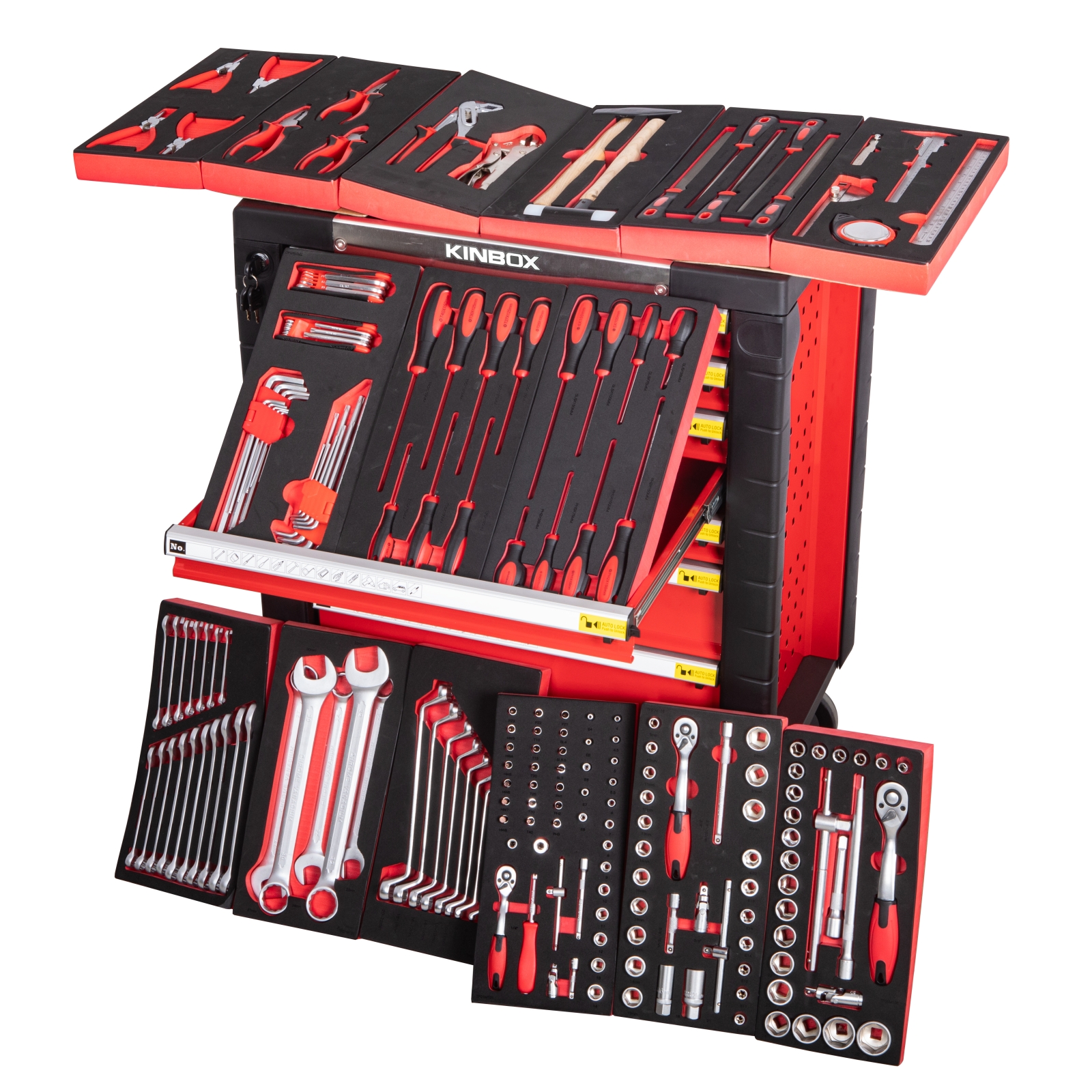
Tray-based organization is especially useful when a workspace needs more structure inside drawers. Options such as BMC trays, EVA trays, or EPS trays can help create fixed tool positions, which makes drawers easier to read and faster to use. For technicians, this is practical rather than cosmetic. A tray layout shows immediately what belongs where.
Inside a Tool Cabinet, tray systems help reduce overlap between tools and make it easier to keep sets complete. This matters for jobs that rely on organized kits, such as service tools, mechanical repair sets, or frequently used hand tools. Instead of tools sliding, piling, or becoming mixed together, each one has a clear place.
There is also a time-saving benefit during cleanup and handover between shifts. When trays are used properly, technicians do not have to guess whether a drawer is complete. Missing items are easier to spot, and returning tools takes less effort. Over time, this kind of structure supports both speed and accountability.
Not every workspace benefits equally from fixed storage alone. In many service and technical environments, mobility is just as important as organization. Technicians may need to work across different bays, around large equipment, or in flexible maintenance areas where a central cabinet is too far away to be truly efficient.
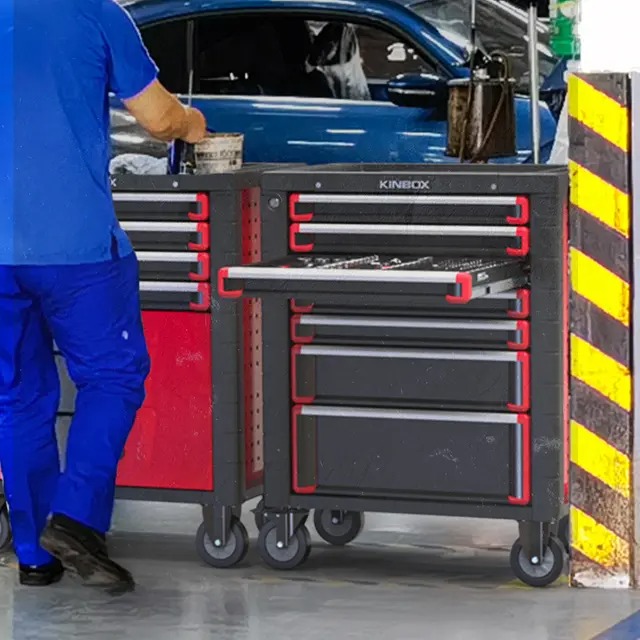
That is where mobile storage becomes useful. A rolling Tool Cabinet or tool cart brings tools closer to the task, reducing repeated walking and helping technicians stay focused on the job in front of them. This is especially valuable in large garages, workshop floors, maintenance areas, and industrial facilities where travel distance adds up quickly.
Mobility also supports temporary work zones and changing job priorities. Instead of gathering tools in random containers or leaving them on whatever surface is available, technicians can work from a structured mobile cabinet that keeps tools organized throughout the task. That reduces search time during the job and makes post-task cleanup easier as well.
When combined with a broader Garage Storage System, mobile storage creates a very practical structure: the main storage system handles backup organization and station-level control, while the rolling cabinet supports immediate, task-level efficiency.
One technician may be able to work efficiently from memory, but that is not a stable system. As soon as staff rotate, shifts change, or teams expand, memory-based organization starts to fail. Standardization is what turns individual good habits into team-wide efficiency.
A standardized Tool Cabinet setup means similar tools are stored in similar places across comparable work areas. The exact contents may vary by function, but the storage logic should feel familiar. This reduces confusion for shared workstations, makes cross-training easier, and allows technicians to move between areas without losing time adjusting to a completely different storage style.
The same principle applies to the larger Garage Storage System. If spare materials, backup tools, and accessories are consistently zoned, the whole workspace becomes easier to understand. That helps supervisors, new hires, and experienced staff alike. It also reduces the common problem of technicians creating their own unofficial storage spots, which may feel efficient in the moment but usually create long-term inconsistency.
Reducing search time is the main goal, but organized storage produces several side benefits that are just as valuable. The first is cleaner work areas. When tools have a proper place in a Tool Cabinet, benches stay clearer and the workspace becomes easier to maintain. That supports better working conditions and often improves safety as well.
The second is accountability. When tools are stored in a logical way, it becomes easier to track use and notice missing items. This is particularly useful in shared environments where loss, duplication, or misplacement can quietly increase operating costs.
The third is workflow confidence. Technicians work more smoothly when they trust the environment around them. A clear and well-managed Garage Storage System reduces small annoyances and helps technicians stay focused on actual technical work rather than avoidable interruptions. That has a noticeable effect on both productivity and job satisfaction.
Companies do not need to solve everything at once. In fact, a practical, step-by-step approach usually works better.
Start by identifying where technicians lose time. Which tools are most often misplaced? Which stations rely on shared storage? Which areas have overloaded drawers or unclear ownership? A short observation period often reveals more than expected.
Not every tool should live at the main point of use. Daily essentials belong in the active Tool Cabinet, while backup items and less frequently used tools can move into the surrounding Garage Storage System. This prevents high-use drawers from becoming crowded.
Group tools by task, type, or usage frequency. Avoid mixed-purpose drawers whenever possible. If technicians have to think too hard about where something should go, the system is not organized enough.
If technicians regularly walk long distances to retrieve tools, a rolling cabinet or handcart may improve workflow immediately. Sometimes mobility solves more delay than a complete storage redesign.
Different technicians and workstations often need slightly different layouts. That is why customization matters. Adjustable drawer setups, tray options, and accessory combinations help storage match the job instead of forcing the job to adapt to generic storage.
Even the best storage system needs regular review. Tool needs change, teams change, and workflows change. Periodic adjustments help the Tool Cabinet and Garage Storage System stay useful rather than becoming outdated.
Reducing technician search time depends not only on organization strategy, but also on the quality of the storage products themselves. Cabinets and storage systems should be durable, practical, and adaptable enough for real daily use. Heavy-duty construction, space-saving layouts, smooth access, and optional customization all contribute to long-term efficiency.
For businesses that want organized, professional workspaces, it also helps to work with a manufacturer that understands both storage function and production quality. A well-designed Tool Cabinet should not only store tools, but actively support faster access, cleaner workflow, and better use of space. The same is true of a complete Garage Storage System. The best results come when storage feels like part of the job, not something added on later.
If technicians spend too much time searching for tools, the workspace is usually telling you something. The issue is rarely just forgetfulness. More often, it points to weak storage logic, inconsistent placement, overcrowded drawers, or a layout that does not match real work. That is why improving storage is one of the most practical ways to improve efficiency.
A well-organized Tool Cabinet makes tools easier to find, easier to return, and easier to manage. A complete Garage Storage System supports that effort by organizing the wider workspace, keeping materials and backup items under control, and helping the whole environment function more smoothly. Together, they reduce wasted motion, shorten interruptions, improve accountability, and create a cleaner, more professional workflow.
For companies looking to upgrade storage in a practical way, Kinbox offers strong advantages as a professional tool cabinet manufacturer. Ningbo Kinbox Tools Technology Co., Ltd., established in 2013, specializes in iron and sheet metal product processing and provides tool cabinets, tool trolleys, tool carts, garage storage systems, and workbenches for organized, efficient work environments. With a workshop area of around 50,000 square meters, advanced sheet metal processing capability, customizable storage solutions, and dependable customer support, Kinbox can help businesses build workspaces that reduce tool search time and support real productivity improvement.
A Tool Cabinet reduces search time by giving each tool a fixed and logical storage position. When drawers are organized by type, task, or frequency of use, technicians can find tools faster and return them more consistently.
A Garage Storage System supports the larger workspace by organizing spare tools, parts, accessories, and backup items, while the Tool Cabinet handles high-frequency tools near the point of use. Together, they improve both speed and order.
They can be, especially in larger workshops or maintenance environments. A mobile cabinet helps technicians bring organized tools closer to the job, reducing walking time and improving workflow efficiency.
Look for durable construction, multiple drawer sizes, smooth access, tray compatibility, compact design, and customization options. These features help create a storage layout that fits actual technician needs.
Yes. Better storage reduces search time, cuts wasted motion, improves organization, and helps technicians stay focused on their work. Even small improvements in retrieval speed can create meaningful productivity gains over time.



