
 English

Views: 0 Author: Site Editor Publish Time: 2026-03-27 Origin: Site


If you spend enough time in a workshop, you start to notice something pretty quickly: disorganization is rarely caused by a lack of effort. Most of the time, it comes from a storage system that cannot keep up with the way people actually work. Tools come out fast, supplies get moved around, jobs overlap, and suddenly the bench is full, the floor has become temporary storage, and no one can remember where the measuring tape went. That is why the question matters. Is a versatile garage storage cabinet really essential for organization, or is it just one more “nice-to-have” upgrade? The honest answer is that it is not the only way to organize a workshop, but for many real-world spaces, it becomes the piece that makes the rest of the system work. A good cabinet does more than hide clutter. It creates structure, keeps stored materials stable, helps keep work areas orderly, and supports the kind of “everything in its place” routine that organized shops rely on. Basic workplace guidance consistently emphasizes clean, orderly storage areas, clear aisles, and materials stored so they do not create hazards, while 5S organization methods focus on sorting, setting in order, and sustaining that order over time. Workshops do not stay tidy by accident. They are active environments. Items move all day. Some tools are used every hour, some once a week, and some only when a specific job comes in. Consumables disappear, spare parts pile up, and surfaces that were meant for work slowly become holding zones for things that were “just set down for a minute.” That is why many shops feel crowded even when they technically have enough space. The problem is not always square footage. The problem is uncontrolled storage flow. That is also why organization systems that look fine in a calm room often fail in a workshop. A few plastic bins and a shelf might be enough for light household storage, but a working shop usually needs something more structured. Guidance on materials handling makes the point clearly: improper storing of materials contributes to avoidable injuries, and orderly storage is part of safe, efficient work. In practice, that means organization is not just about appearance. It affects movement, access, safety, and pace. Not every garage storage cabinet earns the label “versatile.” A cabinet becomes versatile when it can handle different categories of items without forcing the shop into awkward workarounds. That usually means adjustable shelves, a useful mix of open interior height and separated zones, enough load capacity for real tools, and a layout that supports both frequently used items and slower-moving supplies. Versatility matters because workshops rarely store just one thing. The same cabinet may need to hold power tools, hand tools, fasteners, adhesives, cleaning supplies, PPE, chargers, measuring tools, and backup stock. A rigid cabinet that only suits one category becomes frustrating fast. A flexible cabinet, on the other hand, can evolve with the shop. That is one reason “set in order” systems work better when the storage itself supports logical arrangement rather than fighting it. If we are being literal, no single cabinet is universally essential. A very small shop can survive with wall storage, drawers, shelving, and disciplined habits. But in practical terms, a versatile garage storage cabinet becomes essential surprisingly often because it solves several organization problems at once. It centralizes storage. It reduces visual and physical clutter. It helps get items off benches and off the floor. It makes categories easier to maintain. And it gives the workshop a repeatable structure instead of a patchwork of temporary fixes. That “repeatable structure” part matters. Organization is not a one-day cleanup; it is a system that has to survive normal use. 5S thinking frames this well: sort what belongs, put it in order, keep the area clean, standardize the setup, and sustain it. A cabinet does not automatically do all of that, of course, but it supports every step. Without some kind of stable storage backbone, many shops end up cleaning repeatedly without ever becoming consistently organized. This is one of the biggest reasons a garage storage cabinet matters. Organization improves dramatically when every category has a defined location. Not a vague area. A real, repeatable home. One shelf for electrical supplies. One section for measuring tools. One zone for cutting accessories. One shelf for PPE. One area for backup consumables. Once those homes exist, putting things away stops being a decision and starts becoming a habit. That sounds simple, but it changes how a workshop feels. Instead of every job leaving a trail of loose items, the room starts pulling itself back into order more naturally. That is exactly the logic behind “a place for everything and everything in its place.” When that logic is missing, tools drift. When it is present, cleanup becomes shorter and less mentally tiring. Most clutter is not intentional. It is temporary storage that never became temporary again. A tool lands on the bench because there is no obvious cabinet slot for it. A box stays on the floor because the shelf spacing does not fit it. A charger lives on the corner of a workstation because there is no better home nearby. Versatility matters because a cabinet that can adapt to different shapes, sizes, and categories gives those drifting items somewhere realistic to go. And once those items go back into enclosed, designated storage, a second benefit shows up: the work surfaces start becoming usable again. That matters more than it sounds. A workshop with clear benches usually feels bigger, calmer, and easier to operate even when the room itself has not changed at all. There is a difference between a tidy room and a safely organized room. Workshops need the second one. Clear walkways, stable loads, accessible materials, and reduced tripping hazards are all part of real organization. Workplace requirements on housekeeping and materials storage repeatedly come back to this point: passageways, storerooms, and work surfaces should be kept clean and orderly, and stored materials should not create hazards from sliding, collapse, or accumulation. A versatile garage storage cabinet supports that because it gives loose items a secure place to go. Heavy items can be stored lower. Small items can be grouped rather than scattered. Hazardous clutter gets reduced. And when the front of the cabinet is kept clear, you preserve the simple but important habit of open access and open pathways. In other words, the cabinet is not just cleaning up the room visually. It is helping the room function more safely. One of the easiest ways to make storage more practical is to match shelf position to lifting comfort. Ergonomic guidance recommends avoiding repeated lifting from the floor and storing materials off the floor when possible. It also points toward arranging loads within a better handling zone rather than forcing awkward reaches and bends. That is where versatility helps again. If a cabinet has adjustable shelves and enough structural strength, you can store dense tools, hardware boxes, and heavier gear low, while putting daily-use items at mid-height where hands naturally go. It is a small layout decision, but it makes the cabinet easier to use properly every day. And easy-to-use storage is the kind people actually keep organized. A lot of workshops are not truly short on space. They are short on usable space. There is a difference. Floor area gets eaten up by bins, side piles, stacked boxes, and items that never found a proper vertical home. A versatile garage storage cabinet helps reclaim that wasted capacity by consolidating storage upward and inward instead of letting it spread outward. That is one reason cabinets are especially helpful in smaller workshops or garages that serve multiple purposes. Instead of having one shelf for tools, one bench corner for supplies, one random cart for overflow, and two floor boxes that everyone steps around, the cabinet can absorb several storage functions into one controlled footprint. Vertical organization is often the quiet fix behind a workspace that suddenly feels more usable. This sounds less important than it is. Open storage can be useful, but too much of it makes a workshop look busier than it needs to. When every box, bottle, and accessory is visible all the time, the room feels cluttered faster. Cabinets reduce that visual overload. They let the workshop look more controlled, which often makes people more likely to keep it controlled. There is a real behavioral side to organization. A space that already looks chaotic encourages more casual clutter. A space that looks structured tends to pull people toward better habits. That is one reason organized work environments are easier to maintain than messy ones; the room itself starts reinforcing the routine. One overlooked benefit of a versatile garage storage cabinet is that it keeps working even when the workshop changes. And workshops always change. New tools come in. New products are added. One category grows, another shrinks. Seasonal items appear. A cabinet with a fixed, awkward interior often forces a second round of storage improvisation. Before long, the cabinet is full, half the items are living outside it, and the organization problem is back. A cabinet that can be reconfigured is much more forgiving. Shelves can move. Categories can shift. One large zone can become two smaller ones. A power-tool section can become a fastener section six months later if that is what the shop needs. That flexibility is what keeps the storage system from becoming obsolete too quickly, and it is a big reason versatility matters more than looks. Poor organization rarely fails all at once. It leaks time in small amounts. The wrong drill bit is on the other side of the room. The gloves are buried behind extra stock. A tape measure is in one drawer today and on a bench tomorrow. A box of anchors got set on a lower shelf because there was no room where it really belonged. None of that sounds dramatic, but it adds friction to every job. A versatile garage storage cabinet reduces that friction because it allows the layout to match actual workflow. Frequently used items can sit in the most convenient areas. Backup stock can move higher or lower. Categories stay grouped. Reaching, bending, and re-searching all get reduced. Ergonomic guidance supports this general principle by encouraging storage arrangements that limit awkward lifts and reduce unnecessary handling. This may be the most practical argument of all. The best storage system is not the one that looks clever on day one. It is the one people still use correctly three months later. Intuitive cabinets make that more likely. If the category is obvious, the shelf height makes sense, and the cabinet is close to where the work happens, items go back more consistently. That is where versatility becomes more than a feature list. It becomes a sustainability advantage. The easier the cabinet is to adapt and use, the less likely the workshop is to fall back into “temporary” clutter that turns permanent. One person can often work around a messy system because they remember where everything is. Shared spaces do not have that luxury. Once multiple people use the same tools and supplies, informal organization starts falling apart fast. What makes sense in one person’s head rarely survives contact with a team. A versatile garage storage cabinet helps shared workshops because it makes storage more standardized. Categories are easier to label. Return locations are more obvious. Restocking gets simpler. Missing items stand out sooner. And because the cabinet can handle different tool types and changing inventory, it remains useful even as the shop grows. That kind of repeatable structure is exactly what organized workplaces need when memory is no longer a reliable system. It is worth being honest here: a garage storage cabinet is not a magic cure for poor organization. If the workshop never purges unused items, if people refuse to return tools, if overbuying keeps filling every spare inch, or if the cabinet is placed in an inconvenient spot, clutter can still win. Good storage helps, but it still needs a workable routine behind it. That is why the most organized shops usually combine a versatile cabinet with a few basic habits: keep only what belongs in the active storage area, return items after use, review overflow regularly, and adjust the layout when workflow changes. The cabinet gives the structure. The habit keeps it alive. One without the other rarely lasts. If you are asking from a real workshop perspective rather than a theoretical one, the practical answer is yes—very often, a versatile garage storage cabinet is essential for organization. Not because it is the only possible solution, but because it is the most reliable way to bring together order, flexibility, accessibility, and long-term usability in one place. It gives the workshop a center of gravity. It helps keep floors clearer, benches more usable, heavy items safer, and everyday tools easier to find. It supports the kind of organized routine that workshops need if they want to stay efficient after the first cleanup day is over. In that sense, the cabinet is not just storage. It is infrastructure. So is a versatile garage storage cabinet essential for organization? For many workshops, absolutely. It turns scattered storage into a system, makes limited space work harder, supports safer and cleaner layouts, and gives the workshop enough flexibility to stay organized even as tools, supplies, and routines change. That is why, when buyers are choosing storage for a serious workshop, it makes sense to work with a company that understands more than cabinet dimensions alone. At our company, we focus on garage storage cabinet solutions built for real workshop use—durable structures, practical layouts, flexible sizing, and customization options that help customers create cleaner, more efficient, and more professional workspaces for the long term. In many workshops, yes. Open shelving is useful for visibility, but a garage storage cabinet usually does a better job of grouping categories, reducing clutter, protecting stored items, and giving the room a more controlled structure. Cabinets are especially helpful when the goal is long-term organization rather than temporary tidiness. A versatile cabinet usually has adjustable shelves, enough load capacity for real workshop items, and a layout that can hold different categories such as tools, parts, consumables, and safety gear. The main idea is flexibility: the cabinet should adapt to the workflow instead of forcing the workflow to adapt to the cabinet. Yes, especially if the workshop currently relies on scattered storage. A well-placed garage storage cabinet can reduce search time, free up benches, cut down on floor clutter, and make it easier to return items to the right place. Those small improvements often add up to smoother daily work. Ergonomic and organization guidance both support the value of reducing awkward handling and keeping work areas orderly. Heavy items are usually best stored on lower shelves, while frequently used items are best kept at mid-height for easier access. That supports both stability and better lifting posture, which is one reason many storage guidelines recommend keeping materials off the floor but also avoiding awkward reaches and heavy overhead storage. In small workshops, it can be even more valuable. Limited space means clutter builds faster, and every surface matters more. A versatile garage storage cabinet helps consolidate storage, use vertical space more effectively, and keep small rooms from feeling chaotic.Why organization in a workshop is harder than it looks
What makes a garage storage cabinet “versatile”
So, is it essential? In many workshops, yes
A cabinet gives every category a home
It reduces the “I’ll put it here for now” problem
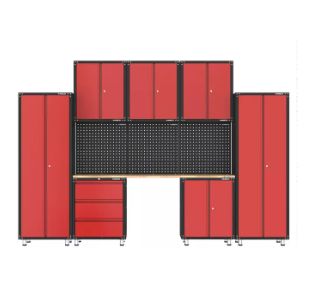
A versatile cabinet supports safer organization, not just cleaner organization
Heavy items belong low, and daily-use items belong in the power zone
It makes better use of limited space
Enclosed storage also reduces visual noise
Versatility helps a shop adapt instead of starting over
It reduces wasted motion and wasted time
Organization is easier to sustain when storage is intuitive
A cabinet is especially important in shared workshops
What a cabinet cannot do by itself
So, is it essential? The practical answer
Conclusion
FAQ
1. Is a garage storage cabinet better than open shelving for organization?
2. What makes a garage storage cabinet versatile?
3. Can one cabinet really improve workshop efficiency?
4. Where should heavy tools go inside the cabinet?
5. Is a garage storage cabinet still necessary in a small workshop?



