
 English

Views: 0 Author: Site Editor Publish Time: 2026-03-30 Origin: Site


At first glance, the phrase garage storage cabinet sounds almost too ordinary for a discussion about modern industries. People hear it and picture a home garage, a few shelves, maybe some hand tools tucked behind metal doors. But once you step into a real workshop, maintenance room, service depot, fabrication area, or industrial support space, the meaning gets much broader. In those environments, a cabinet is not just a place to hide clutter. It becomes part of how the operation stays organized, safe, and efficient from one shift to the next. So is a garage storage cabinet vital for modern industries? The sensible answer is yes, in many cases it absolutely is. Not because every factory or workshop would shut down without one specific cabinet, but because modern industrial work depends on controlled storage, clear access, stable material placement, and repeatable organization. When those things break down, the effects show up fast: slower work, crowded benches, blocked walkways, misplaced tools, awkward lifting, and an overall workspace that feels harder to manage than it should. Rules for workplace housekeeping and material storage emphasize the same basic point: work areas, storerooms, and walking surfaces should be kept clean and orderly, and stored materials should not create hazards. That is why this is not really a question about furniture. It is a question about infrastructure. In modern industries, storage is part of the system that supports output. A well-designed garage storage cabinet helps create order, supports leaner work habits, protects tools and supplies, and makes daily operations easier to sustain. Once you look at it that way, the cabinet stops being a side detail and starts looking like a working component of the shop itself. Industrial work today is faster, tighter, and more process-driven than it used to be. Many shops run with leaner teams, higher output expectations, more product variation, and less tolerance for wasted motion. That creates pressure on the storage system. It is no longer enough to have tools “somewhere nearby” or extra parts “stacked in the corner.” The space has to support quick retrieval, safe handling, and easy reset after every job. That is exactly why organization matters so much in modern industries. Good organization is not only about neatness. It reduces search time, lowers the chance of errors, helps protect materials, and supports more consistent workflows. Lean workplace methods make this point very directly: sorting, setting in order, cleaning, standardizing, and sustaining those habits creates a workspace that is safer, less cluttered, and more productive. A garage storage cabinet fits naturally into that logic because it gives the operation a stable, repeatable storage point. Tools can be grouped by task. Consumables can be separated from backup stock. Daily-use items can be kept in easy-reach zones. Sensitive items can be enclosed instead of left exposed. In short, the cabinet helps turn storage from a loose habit into a controlled system. That is a bigger deal than it sounds, especially in workplaces where dozens of small actions shape the pace of the day. One of the biggest problems in industrial workspaces is not dramatic disorder. It is low-level, constant drift. A drill case gets left on the bench. A box of fasteners gets tucked under a table. Gloves sit on top of a cart. Measuring tools end up in three different places depending on who used them last. Nothing looks disastrous by itself, but the room slowly becomes harder to operate. A garage storage cabinet helps because it gives those wandering items a home. And that is the real power of enclosed storage: not just capacity, but structure. Once categories have clear locations, cleanup becomes quicker, retrieval becomes easier, and the workspace becomes less dependent on memory or individual habits. That is one reason organized work environments are easier to maintain than disorganized ones. The system starts reinforcing the behavior. This is especially important in modern industries where multiple people share the same room, the same tools, or the same support equipment. One person may remember where everything is. A team usually will not. Shared spaces need visible logic. They need locations that make sense even to someone who did not build the original system. A versatile garage storage cabinet helps create that logic. Industrial storage is not just an efficiency issue. It is a safety issue too. When materials end up on the floor, stacked loosely, or parked in walkways “for the moment,” the risks are obvious: tripping, blocked access, unstable loads, and more awkward manual handling. Workplace requirements repeatedly emphasize keeping walking-working surfaces, storerooms, and service rooms clean and orderly, and making sure stored materials do not create hazards from sliding, collapse, or accumulation. A garage storage cabinet helps with this in a very down-to-earth way. It gets items off the floor. It keeps small and medium supplies from spreading into walk paths. It gives heavier tools a secure place to sit instead of being balanced on improvised surfaces. And it reduces the temptation to leave frequently used items lying out just because there is nowhere better to put them. There is also an ergonomic angle here. Manual material handling guidance consistently recommends reducing unnecessary carrying and lifting, storing materials off the ground, and placing frequently handled items in the most accessible locations. A cabinet with a sensible layout supports exactly that. Heavy items can go low. Daily-use tools can sit between knee and chest height. Less-used stock can move higher or deeper into storage. That kind of arrangement reduces strain and makes the workflow smoother at the same time. This part often gets overlooked because it sounds almost too basic. But in real work, poor storage creates bad body mechanics all day long. If the right item is always on the floor, behind something else, or farther away than it should be, people bend more, carry more, and twist more. That kind of friction adds up. A good garage storage cabinet reduces that friction by bringing items into defined, reachable zones. It supports a more natural flow: open, retrieve, use, return, close. That may sound simple, but simple systems are often the ones that last. And in industrial environments, lasting systems are the ones that matter most. Not every industrial space has the budget or room for a full redesign. That is another reason cabinets matter. A garage storage cabinet can significantly improve order and workflow without forcing the operation into a new building or a complete layout overhaul. It gives you concentrated, enclosed, vertical storage in a relatively compact footprint. That is valuable in maintenance rooms, service bays, production support areas, and multi-use workshops where floor space is always under pressure. A lot of shops do not actually lack space in total. They lack usable space. Benches become long-term storage. Side walls go underused. Floor corners turn into overflow zones. A cabinet helps reclaim that lost capacity by consolidating storage upward and inward instead of letting it spread outward. Once that happens, the whole room often feels easier to run, even though the square footage has not changed at all. That is one reason the cabinet becomes close to vital in modern industry. It solves several problems at once: it centralizes storage, reduces visual clutter, protects supplies, and frees up work surfaces. Few upgrades deliver that much practical benefit with such a straightforward change. This may be the strongest argument of all. Industrial operations do not just need places to put things. They need systems that work the same way tomorrow, next week, and three months from now. That is where the idea of repeatability comes in. A cabinet is useful not because it is a container, but because it supports a repeatable storage pattern. Lean workplace methods are built around this principle. It is not enough to clean once. The space has to be arranged so that the right behavior is easy to repeat and the wrong behavior becomes more obvious. A garage storage cabinet helps because it anchors that pattern. It gives tools, parts, supplies, and PPE fixed homes. It makes missing items easier to spot. It reduces the number of decisions workers have to make at the end of a task. And that, in turn, helps the workspace stay organized instead of slipping back into “just put it there for now” mode. It is one thing to talk about sort, set in order, shine, standardize, and sustain. It is another thing to make those habits workable in a busy shop. Cabinets help bridge that gap. They support sorting by giving categories a physical boundary. They support setting in order by defining where each group belongs. They support standardization by making the layout repeatable. And they support sustaining because they reduce the effort needed to reset the space after each use. That is why many industrial spaces that take organization seriously rely on some form of enclosed storage. It is not because cabinets look neat. It is because cabinets make disciplined organization easier to keep alive. Modern industrial spaces are rough on exposed items. Dust, debris, overspray, accidental contact, and simple traffic all take a toll. Open shelving is useful in some contexts, but it also leaves tools and supplies fully exposed to the environment. A garage storage cabinet adds a protective layer. It does not make the contents invincible, but it does shield them from constant dust settling, casual handling, and the kind of random contact that slowly damages or scatters items over time. This is especially important for mixed-use storage. If one area contains hand tools, measuring devices, maintenance supplies, spare parts, and PPE, open storage can turn messy fast. Cabinets help separate categories and keep the space from looking overloaded. That matters visually, but it also matters operationally. The less visual noise a room has, the easier it is to notice what is out of place, what is missing, and what needs attention. In one-person work areas, informal systems can survive longer because the same person remembers the logic. Shared environments do not have that luxury. Once multiple technicians, operators, or maintenance staff use the same storage, vague systems start breaking down. Tools get returned to different spots. Backup supplies get mixed with active stock. Consumables go missing not because they were stolen, but because there was no clear system around them. A garage storage cabinet helps shared spaces because it makes organization more visible and less dependent on memory. Labels work better when there are fixed doors, shelves, and compartments to match them. Return habits improve when locations are obvious. Inventory checks become easier when items are grouped instead of scattered. In modern industries, where team-based work is common, that kind of storage clarity is not a luxury. It is part of what keeps support areas usable. It is worth being realistic here. Not every industrial environment uses a product literally marketed as a garage storage cabinet. Some use workshop cabinets, modular tool cabinets, maintenance cupboards, MRO storage units, or custom enclosed systems. The label changes. The function does not. That function is what matters: enclosed, durable, organized storage that supports workflow. Whether the cabinet sits in an automotive service workshop, a plant maintenance room, an electrical support area, a fabrication shop, or a facilities department, the reason it matters is basically the same. Modern industries need tools and supplies stored securely, accessibly, and consistently. Once you strip away the naming, the cabinet’s role is surprisingly universal. So the better question is not “Do all industries use this exact product name?” The better question is “Do modern industries need controlled enclosed storage that supports safety, organization, and efficiency?” On that question, the answer is very close to yes across the board. That said, a garage storage cabinet is not a miracle cure. If the workplace keeps too much obsolete stock, never resets after jobs, or allows overflow to build up around the cabinet, the system will still struggle. Storage helps most when it is part of a routine: sort what belongs there, group it logically, keep access clear, and review the layout when work patterns change. A cabinet also needs to match the job. Light-duty storage in a heavy workshop can create its own problems. Poor shelf design, weak hinges, or bad placement can make even a decent cabinet frustrating to use. So when industries rely on cabinets, they are really relying on the combination of product quality and process discipline. One without the other rarely delivers the full value. If the question is asked in a real-world way rather than a theoretical one, the answer becomes clear. Yes, a garage storage cabinet is vital for many modern industries because it supports the basic conditions that modern operations depend on: orderly work areas, safer storage, better ergonomics, faster retrieval, clearer inventory logic, and more sustainable organization habits. Those are not decorative benefits. They are operational benefits. Could a shop survive without one? Sometimes. Could it run as cleanly, consistently, and efficiently in the long term without some form of structured enclosed storage? Much less likely. That is why the cabinet ends up feeling essential in so many industrial spaces. It supports the boring but critical layer of work that keeps everything else moving. So, is a garage storage cabinet vital for modern industries? In many cases, yes—it is not just helpful, but foundational. It helps industrial spaces stay organized, supports safer housekeeping, improves access to tools and supplies, reduces wasted motion, and makes leaner, more repeatable workflows easier to sustain. For workshops, maintenance teams, production support areas, and service operations, that kind of storage is not simply about putting things away; it is about keeping the whole environment functional. And when companies are sourcing storage for real industrial use, choosing the right manufacturing partner matters just as much as choosing the right cabinet format. Our company focuses on garage storage cabinet solutions built for demanding workspaces, with durable construction, practical layouts, flexible sizing, and customization support that help customers create cleaner, safer, and more efficient storage systems for long-term industrial use. In many cases, yes. Industrial spaces depend on orderly storage, clear walkways, and fast access to tools and supplies. A garage storage cabinet helps support all three, especially in workshops, maintenance rooms, and shared support areas. Its value comes from combining enclosed storage, organization, space efficiency, and safer material placement in one unit. It helps group items logically, reduces clutter, and makes it easier to maintain consistent storage habits over time. Not in every single case, but for many categories of tools and supplies, yes. Cabinets provide better control, reduce visual clutter, and help keep items grouped and protected, while open shelving is usually better for bulky or very frequently accessed items. A mix of both often works best. Heavy items are generally best placed on lower shelves, while frequently handled materials should be stored in the most accessible zones rather than on the floor or in awkward positions. That supports both stability and better ergonomics. Yes. Even one well-planned garage storage cabinet can centralize tools and supplies, clear benches, reduce search time, and free up floor space. In smaller industrial support areas, that can make a noticeable difference in how smoothly the room works every day.Why modern industrial spaces need stronger organization than ever
A garage storage cabinet helps turn clutter into a system
It supports safety in a very practical way
Better storage usually means fewer awkward lifts
It improves efficiency without requiring a major layout change
Modern industries need repeatability, not just storage capacity
A cabinet makes 5S easier to maintain
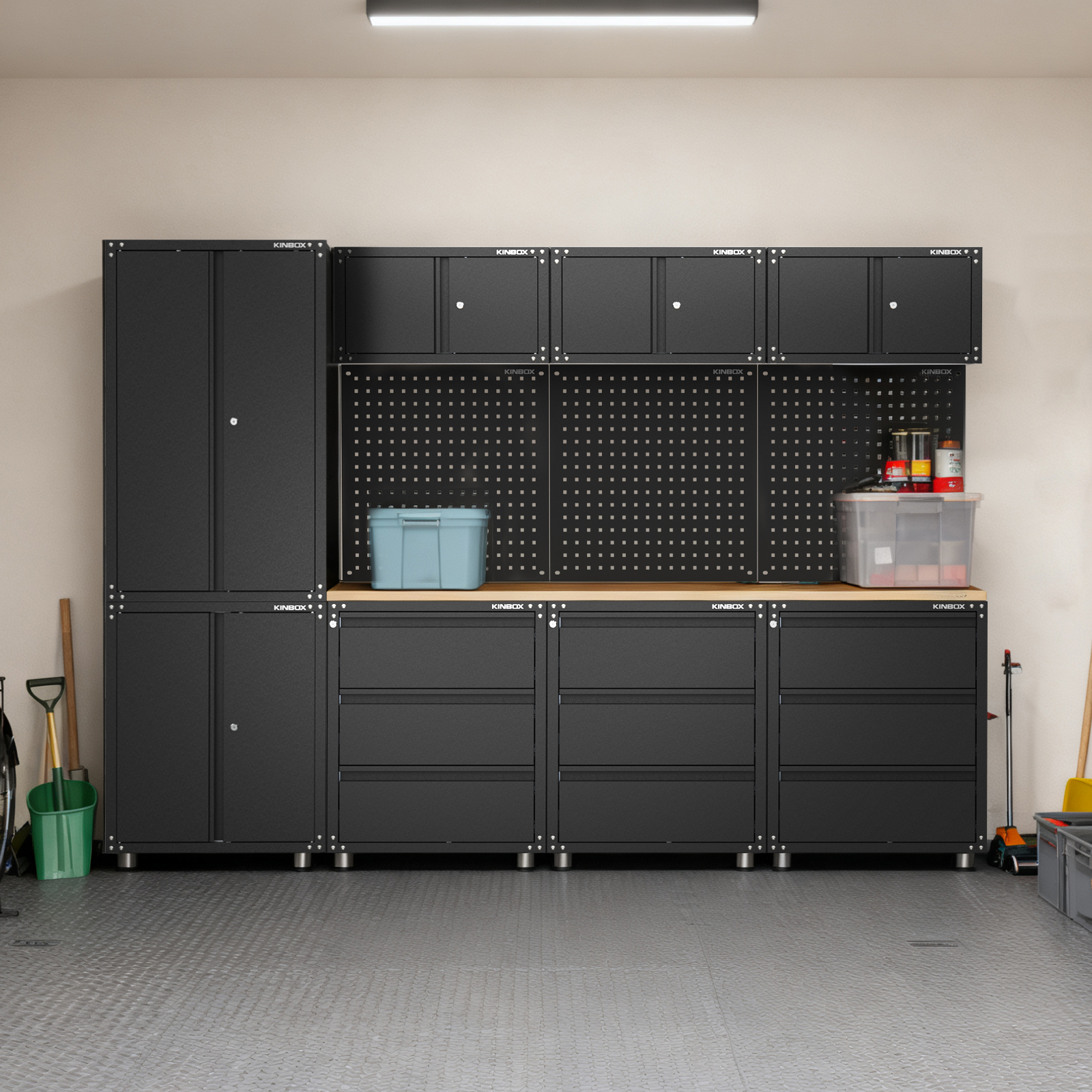
It protects tools, parts, and supplies from everyday shop abuse
A cabinet becomes even more important in shared industrial spaces
Not every industry uses the same cabinet, but the need is the same
What a cabinet cannot do by itself
So, is it vital? The practical answer is yes
Conclusion
FAQ
1. Is a garage storage cabinet really necessary in an industrial workspace?
2. What makes a garage storage cabinet useful for modern industries?
3. Are cabinets better than open shelving for industrial organization?
4. Where should heavy items be stored inside a garage storage cabinet?
5. Can one garage storage cabinet improve efficiency in a small workshop?



