
 English

Views: 0 Author: Site Editor Publish Time: 2026-05-06 Origin: Site


Garage spaces have changed a lot over the years. For some people, the garage is still mainly a place to park a car. But for many homeowners, technicians, hobbyists, and workshop users, it has become something much more important. It might be part storage room, part repair station, part tool zone, and part project workspace. That mix of uses is exactly why traditional storage often stops working after a while. A few shelves, a couple of cabinets, and some wall hooks may seem fine in the beginning, but once the number of tools, supplies, equipment, and daily-use items starts growing, the whole space can become messy surprisingly fast.
This is where Garage Storage Systems start to make a real difference. And more specifically, modular garage storage systems offer an advantage that fixed, one-size-fits-all storage simply cannot match. They are built around flexibility. Instead of forcing users to adapt to a rigid layout, they allow the storage setup to adapt to the space, the workflow, and the changing needs of the user. That sounds simple, but in practice, it is one of the biggest reasons modular systems have become so popular in both personal and professional environments.
A good modular system does more than make a garage look tidy. It improves accessibility, reduces clutter, supports safer storage, helps users make better use of wall and floor space, and creates a more organized environment for daily work. It also gives people room to grow. That matters because no garage stays exactly the same forever. Tool collections expand, hobbies change, work requirements shift, and the way people use the space evolves over time.
In other words, modular storage is not just about putting things away neatly. It is about building a workspace that stays useful. This article takes a closer look at the advantages of modular Garage Storage Systems, why they work so well in modern garages and workshops, and what makes them a practical investment for users who want long-term efficiency rather than short-term tidiness.
Before looking at the strengths of modular storage, it helps to understand why many standard garage storage setups become frustrating. In a lot of garages, storage grows piece by piece. A shelf is added on one wall. Then a cabinet goes into a corner. Later, a workbench gets pushed in. Then a few plastic bins show up, and eventually every open surface starts collecting random items. The result is storage, technically, but not a system.
The problem is not always the amount of storage. Very often, it is the lack of coordination between different storage pieces. One cabinet may be too deep, another too small, a shelf may hold bulky items that are difficult to reach, and valuable wall space may remain underused. Tools get mixed with household items, project supplies get buried behind seasonal equipment, and people end up moving three things just to get to the one thing they actually need.
This kind of setup creates a few familiar problems. First, it wastes space. Second, it makes access less convenient. Third, it encourages clutter because when storage is awkward, people stop using it properly. That is why a garage can look organized right after a cleanup and then slide back into disorder a few weeks later. The storage structure itself is not really supporting daily use.
Garage Storage Systems built with a modular approach solve this problem in a more practical way. Instead of treating storage as a collection of separate items, they treat it as an integrated layout. That shift changes everything.
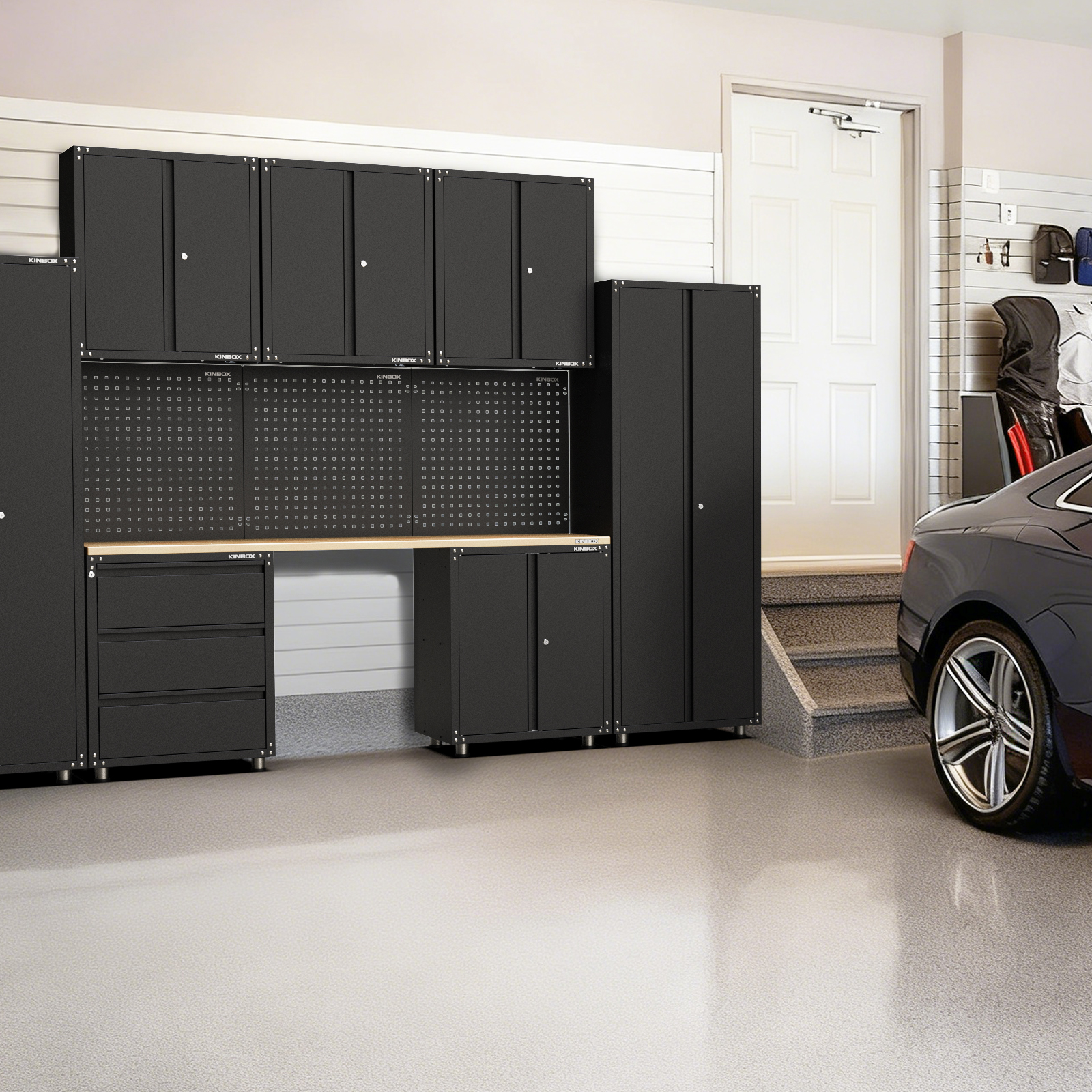
A modular garage storage system is built from coordinated storage components that can be arranged, expanded, and adjusted according to the needs of the user and the available space. Rather than relying on a single cabinet or a fixed storage wall with limited flexibility, modular systems combine multiple compatible units into a more complete solution.
These units may include cabinets, shelving sections, drawer modules, tool storage areas, work surfaces, and other supporting elements. What makes them modular is not just that there are multiple parts. It is that those parts are designed to work together and can be configured in different ways. This gives users more control over how their storage area functions.
That flexibility is one of the biggest reasons modular Garage Storage Systems are so effective. They do not assume every garage has the same dimensions or every user has the same storage priorities. Some people need more enclosed cabinet storage. Others need more open shelving, better tool access, or room to expand later. A modular system makes those adjustments possible without forcing the user to start over from scratch.
If there is one feature that really defines the appeal of modular storage, it is flexibility. Garages are rarely perfect square boxes with identical needs from one owner to the next. Some spaces are narrow. Some are deep. Some are shared with vehicles. Some function more like workshops than garages. Some need to store tools, equipment, cleaning supplies, and seasonal items all at once.
A modular setup allows the storage design to respond to those differences. Instead of trying to make a standard cabinet layout work in an awkward space, users can choose a configuration that fits more naturally. That may mean placing storage along one wall, combining cabinets with shelving, building around a work area, or leaving room for equipment and movement zones.
This flexibility also helps over time. Storage needs rarely stay fixed. A user may begin with a simple setup, then later need more room for tools, hobby equipment, or workshop supplies. With modular Garage Storage Systems, expansion is usually much easier because the system is already built around coordinated components. That makes future upgrades more manageable and more cost-effective than replacing an entire storage arrangement.
To put it plainly, modular storage gives users options. And in real spaces, options matter.
One of the most immediate benefits of modular garage storage is that it helps people use space more intelligently. Garages often contain more usable storage area than people realize, but poor layout choices prevent them from taking full advantage of it. Corners go underused, wall sections remain inefficient, and floor areas become crowded because the storage plan was never really planned.
Modular Garage Storage Systems are useful because they allow users to think in terms of total space rather than isolated storage items. Instead of asking where one cabinet can fit, they can think about how multiple pieces can work together to create a cleaner, more efficient arrangement. This often leads to better use of wall length, more organized vertical storage, and a clearer balance between open floor area and storage capacity.
That matters in both large and small garages. In a small garage, efficient use of space can be the difference between a cramped, frustrating room and a functional one. In a larger garage, modular storage helps prevent the space from turning into a catch-all zone where organization slowly disappears simply because there is room to pile things up.
Another practical advantage is that modular systems are often easier to set up than people expect. Many users hesitate to improve their garage because they assume the process will be complicated, disruptive, or too time-consuming. But a good modular system is designed to make installation and expansion more manageable.
This is one of those details that is easy to overlook until you have dealt with awkward storage before. A system that is difficult to assemble or hard to integrate into the space tends to delay action. People put off the upgrade, live with clutter longer than they should, and continue using inefficient storage because they do not want to deal with a major reorganization project.
By contrast, modular Garage Storage Systems with simple assembly and coordinated design make it easier to move from planning to actual use. That is especially valuable for users who want a practical storage solution without turning the whole garage upside down for an extended period.
Quick setup also supports phased upgrades. A user may begin with one configuration, then add more components later as needs grow. That kind of flexibility makes modular systems feel more realistic and approachable for everyday buyers.
Good storage should not only hold things securely. It should also make them easier to reach and easier to use. That is where ergonomic accessibility becomes important. In many garages, the problem is not just clutter. It is also poor access. Frequently used tools may be stored too high, too low, too deep, or behind other items. That creates unnecessary reaching, bending, lifting, and searching.
Well-designed Garage Storage Systems help solve this by bringing order to the way items are arranged. Frequently used tools and supplies can be placed where they are easiest to reach. Larger or less frequently used items can be stored in positions that do not interfere with daily movement. This improves comfort and saves time at the same time.
That may sound like a small benefit, but it really is not. In a garage or workshop used regularly, ease of access affects how the space feels every day. If people can get to what they need without strain or annoyance, they are much more likely to keep the system organized. When access is inconvenient, even good storage tends to be ignored.
Garage storage has to deal with more wear than many indoor storage environments. Tools are heavy. Equipment is awkward. Doors and drawers get opened repeatedly. Items get moved around, stacked, and shifted. On top of that, garages may face dust, moisture, temperature changes, and a general level of rough use that lighter storage furniture is simply not built to handle.
This is why durability is such a major advantage of quality modular Garage Storage Systems. Strong materials and robust construction help the system stay reliable under long-term use, whether in a professional workshop, a serious hobby setup, or a busy household garage.
Durability matters for more than product life. It also affects daily confidence. Users are more likely to trust the storage system, use it properly, and organize heavier items sensibly when the cabinets and shelves feel strong and stable. Weak storage, on the other hand, often causes people to improvise. And once improvisation becomes normal, disorder usually follows.
From a value standpoint, durable storage is also a smarter investment. A modular system that holds up well over time can keep serving the user even as the layout evolves or the storage demands increase. That makes it more than just a short-term purchase.
Not every storage decision is purely about function. Appearance matters too, especially in spaces where people spend real working time. A clean, coordinated storage system can completely change how a garage feels. Instead of looking like a mixed-use holding area, it starts to feel more like a proper workspace.
This is one of the underrated strengths of modular Garage Storage Systems. Because the components are designed to work together visually, the overall result is usually much more polished than a garage filled with unrelated shelves, loose racks, and mismatched cabinets. The space looks intentional, and that affects how people use it.
When a garage looks organized, people are often more motivated to keep it that way. The storage system itself supports a standard. It encourages better habits without saying a word. For home garages, that means a more pleasant and presentable environment. For professional or semi-professional spaces, it adds a stronger sense of order and competence.
Function still comes first, of course, but it is hard to ignore the fact that a better-looking space usually becomes a better-used space too.
One reason modular systems work so well is that they are useful across a wide range of storage needs. Not every garage user is the same. Some are hobbyists with hand tools, small power tools, and project materials. Some are serious DIY users with growing equipment collections. Others are professionals who need structured, durable storage for daily work routines.
Modular Garage Storage Systems can serve all of these users because they support different combinations of storage types. One person may prioritize enclosed cabinet storage to keep the workspace looking tidy. Another may need more shelving for larger items. Someone else may need a flagship layout with multiple units for a larger workshop or garage operation.
This versatility is especially important because few users only store one category of item. A typical garage may include tools, maintenance supplies, accessories, cleaning materials, hardware, seasonal equipment, and project-related items all at once. A modular setup makes it easier to assign space logically so that one category does not take over the whole room.
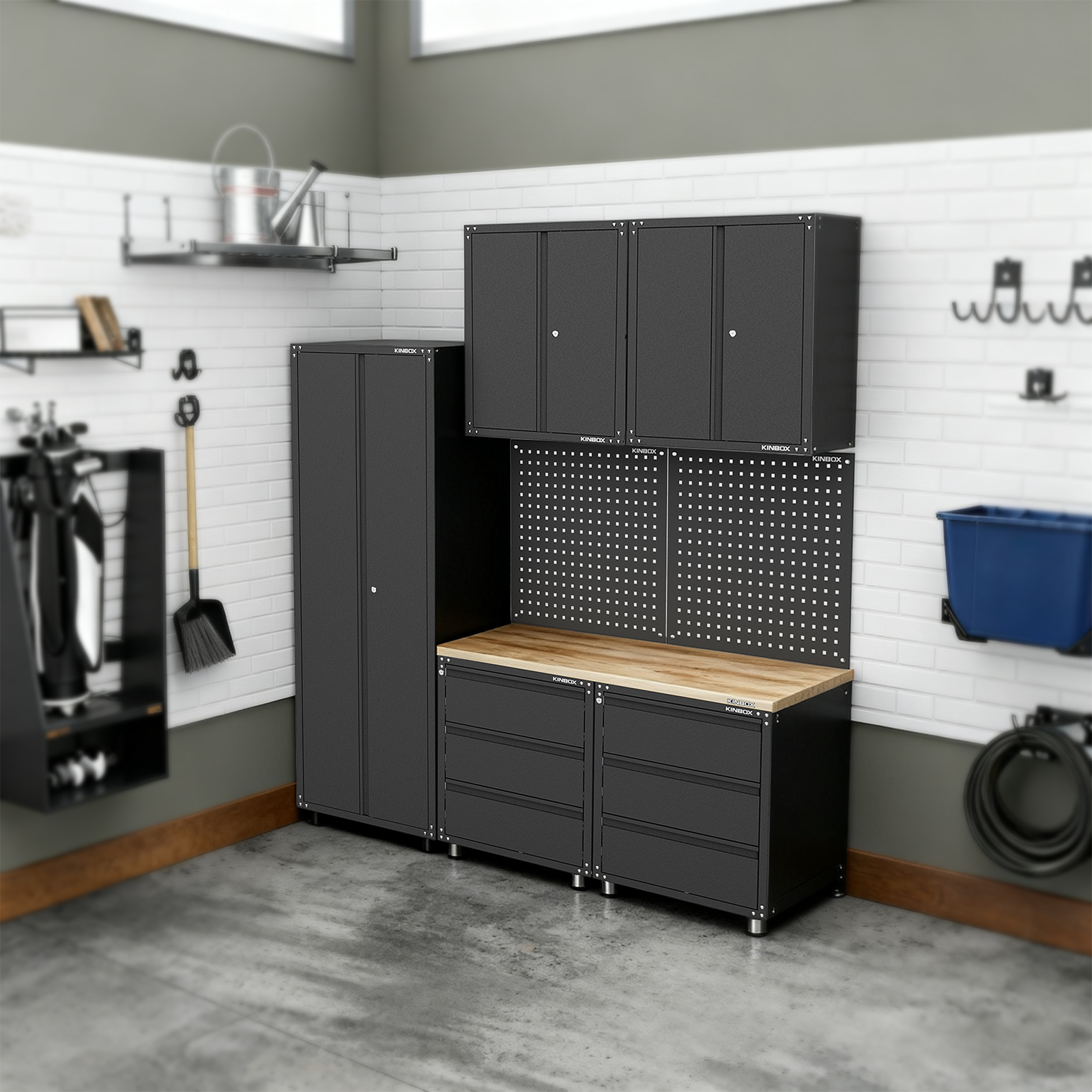
Storage is not only about convenience. It is also about protection. In many garages and workshops, tools and equipment represent a serious investment. Leaving them exposed, loosely stacked, or stored in unstable ways increases the risk of damage, loss, and general wear.
High-quality Garage Storage Systems help protect those items more effectively. Built-in locks, enclosed storage compartments, and sturdy cabinet structures all contribute to better control. This is useful in both home and professional settings, especially where tools need to be secured against unauthorized access or accidental damage.
Protection also matters in a more everyday sense. A well-organized cabinet system keeps valuable items off the floor, away from impact risk, and less exposed to unnecessary movement or misuse. That type of order helps extend the life of tools and equipment simply by storing them more responsibly.
It is easy to think of garage storage as purely a storage issue, but in practice it is also a workflow issue. How quickly can you find what you need? How easily can you return it? How much time do you waste moving items aside, opening the wrong cabinet, or walking back and forth across the room?
This is where modular Garage Storage Systems have a clear operational advantage. Because they allow a more intentional layout, users can organize the garage around the way they actually work. Tools can be placed near the work area, larger equipment can be stored where it does not disrupt movement, and frequently used items can stay within comfortable reach.
That kind of layout improves efficiency without requiring complicated systems. It simply reduces friction. In a home workshop, that means less frustration and smoother project work. In a more professional environment, it means faster daily routines and a workspace that supports productivity rather than slowing it down.
One of the best things about modular storage is that it gives people room to grow. This matters more than it may seem at first. Many storage solutions work fine on day one because the user is organizing current needs only. But garages do not stay static. New tools are purchased, projects become more serious, equipment increases, and expectations change.
With fixed storage, expansion often becomes awkward. Users end up adding unrelated pieces that do not match the existing layout, and the whole space gradually loses consistency. With modular Garage Storage Systems, growth is usually much more manageable. Additional units can be added in a way that still feels coordinated, both visually and functionally.
This is a major long-term advantage because it protects the original investment. Users do not have to replace everything just because their needs have evolved. They can build on what they already have.
Another strength of modular systems is that they fit well across different kinds of environments. In home garages, users often want a combination of organization, easier access, and a cleaner overall look. In workshops or more professional spaces, there may be more emphasis on efficiency, durability, and heavier daily use. Modular systems can support both.
The reason is simple: the core benefits remain the same. Flexibility, strength, ease of access, coordinated layout, and the ability to expand are useful almost everywhere. Whether the space is being used for weekend DIY projects or daily technical work, a better storage system improves how the environment functions.
This broad usability is part of what makes Garage Storage Systems such a smart category. They are not locked into one kind of customer or one narrow use case. They solve a practical problem that many people share, even if the details of their space are different.
Of course, even the best system works better when it is planned well. To get the most value from modular storage, users should think about how the garage is actually used rather than just choosing a layout that looks full or impressive.
Is the garage mainly for tool storage, workshop use, household overflow, vehicle maintenance, or a combination of these? The answer helps determine what kind of modules make the most sense.
Frequently used tools and supplies should be the easiest to access. Less frequently used items can be stored in supporting sections without crowding the main work zone.
One of the biggest benefits of modular Garage Storage Systems is expandability, so it makes sense to plan for future additions instead of filling every inch immediately.
Storage should support how people move through the space. A garage is easier to use when there is a clear relationship between the work area, the storage area, and the open zone for movement.
Modularity is valuable, but only if the system itself is built to last. Quality construction, good materials, and practical design all matter when the goal is long-term use.
The advantages of modular Garage Storage Systems come down to something very practical: they make space work better. They offer flexibility, better use of available room, easier setup, improved accessibility, stronger long-term durability, cleaner visual integration, better protection, and a storage layout that can evolve as needs change. That is why they are often a much smarter choice than piecing together unrelated shelves and cabinets over time.
For homeowners, hobbyists, and professionals alike, modular storage is not just about making a garage look organized. It is about building a space that stays efficient, usable, and easier to manage day after day. When the storage system supports the way the space is actually used, the entire garage becomes more functional.
For businesses and buyers looking for dependable garage storage solutions, Kinbox offers clear strengths in this area. Ningbo Kinbox Tools Technology Co., Ltd. provides garage storage systems designed for organized, efficient, and safe workspaces, with advantages such as modular design flexibility, quick setup, ergonomic accessibility, durable construction, secure protection, and reliable service support. With practical product options including systems like the 20CM12B 12 Pieces Garage Organization & Shelving Tool Chest Storage Cabinet and the 30CM16C 16 Pieces Flagship Garage Storage System, Kinbox can help customers create more streamlined and professional garage and workshop environments.
Modular Garage Storage Systems are coordinated storage solutions made of multiple compatible units, such as cabinets, shelves, and work areas, that can be configured and expanded to fit different garage layouts and storage needs.
They offer greater flexibility, better use of space, easier expansion, and a more organized overall layout. Traditional storage often grows in disconnected pieces, while modular systems are designed to work together as a complete solution.
Yes. In fact, modular systems are often especially useful in smaller garages because they help users plan storage more efficiently and make better use of wall and floor space.
Yes. Their durability, flexibility, and organized layout make them suitable not only for home garages but also for workshops and other professional environments that require efficient storage.
Yes. One of the main advantages of modular storage is that it can usually be expanded more easily than fixed storage, allowing users to add new units as their needs grow.



