
 English

Views: 0 Author: Site Editor Publish Time: 2026-01-05 Origin: Site


Losing tools — whether in a workshop, garage, or job site — can be more than a minor annoyance. It often leads to wasted time, increased costs, and reduced productivity. The foundation of preventing tool loss is not just discipline, but smart storage. A well‑designed tool cabinet can play a pivotal role in safeguarding your tools, improving organization, and minimizing loss or damage. In this guide, we’ll explore how to prevent tool loss, how to choose the right tool cabinet, systems and habits to adopt, and how to build a robust storage strategy that stands the test of time.
Tool loss or misplacement happens for many reasons. Understanding the root causes helps in building a prevention strategy:
Lack of defined storage space — when tools are left randomly on benches, shelves, floors or in boxes, they get lost, damaged, or mixed up.
Poor organization and no system — no labeling, no consistent return place, no tracking, leading to tools being misplaced or borrowed and forgotten.
Exposure to environment — dust, moisture, corrosive substances — tools left unprotected degrade and sometimes become unusable.
Lack of security — in shared workshops or accessible garages, theft or unauthorized borrowing can be common.
Frequent movement and transport — if tools are moved between job sites without systematic storage, items get left behind, damaged, or lost.
The consequences of tool loss include: unplanned expense for replacement, downtime while searching for tools, lower morale, inefficiency, project delays, and even safety hazards if sharp or heavy tools are left lying around.
But by applying a systematic approach — combining proper storage, organizational discipline, and sometimes technology — you can significantly reduce or even nearly eliminate tool loss.
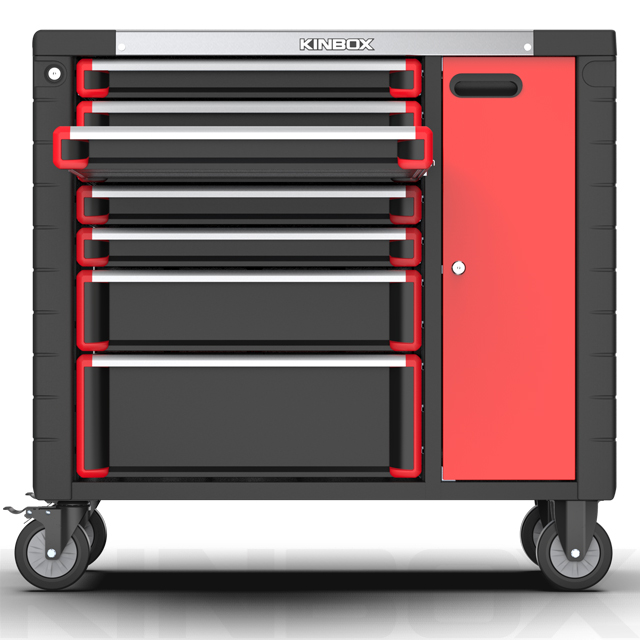
Among all possible storage solutions (bins, open shelves, tool boxes, racks), a tool cabinet stands out for preventing tool loss and ensuring long‑term organization. Here are the main reasons:
A tool cabinet offers a locked, enclosed space — protecting tools from theft, unauthorized access, dust, moisture, and accidental damage.
Modern or well‑built tool cabinets use robust materials (metal, steel) and durable finishes, which guard tools against environmental corrosion and wear.
Cabinets with drawer liners or foam inserts prevent tools from banging into each other — reducing wear, chipping, or breakage.
A good tool cabinet encourages fixed storage locations — each tool gets a home (drawer, slot, compartment), so it's easier to know what’s missing. Modular layouts, dividers, and labeling further enhance this.
With organized storage, you cut down time spent searching for tools and avoid borrowing or buying duplicates — reducing waste and keeping track of your gear.
For professional or shared workshops, modern “smart” tool cabinets even offer inventory tracking, access control, and check‑in/checkout logs — making it far less likely tools vanish unnoticed.
A properly sized tool cabinet consolidates many tools into a compact footprint, clearing benches, walls, and floors — reducing clutter and minimizing places where tools can be misplaced.
It becomes part of your workflow — tools are in predictable places, easy to retrieve and return, which reduces disruptions, lost tools after projects, and ensures tools aren’t left out.
Because of these advantages, a tool cabinet is often the cornerstone of any serious tool‑loss prevention strategy.
Having a tool cabinet alone isn’t enough — you need a full strategy combining smart design, organizational habits, and regular maintenance. Here’s a recommended approach:
List every tool you own — hand tools, power tools, fasteners, accessories, consumables.
Categorize tools by type, function, frequency of use, value, and fragility.
Identify high‑value or easily lost items (precision tools, bits, fasteners, small parts).
This inventory helps you design the storage layout and track what should be stored, what can stay outside occasionally, and what needs extra protection or security.
When selecting a tool cabinet, ensure it meets criteria for loss prevention and protection:
| Feature / Specification | Purpose for Loss Prevention / Protection |
|---|---|
| Lockable drawers/doors | Prevent unauthorized access, theft, accidental misuse or removal |
| Durable metal / corrosion-resistant materials | Protect tools from rust, moisture, wear — maintain long-term tool integrity |
| Modular drawers/dividers/trays or configurable layout | Assign every tool a dedicated place; avoid mixing different types (reduces misplacement) |
| Drawer liners or foam inserts | Prevent tools from banging around — avoids damage and makes visual inventory easier |
| Capacity matched to tool inventory (not over‑sized or under‑sized) | Prevent unused space (where lost items can hide) or overcrowding (where items are lost in clutter) |
Also consider whether you need mobility (rolling cabinet) or a fixed cabinet — depending on whether you work in a stationary shop or frequently move tools between sites.
Label drawers or compartments clearly (by tool type, function, or project).
After each job/project, return every tool to its designated spot — avoid “temporarily placing” tools outside and forgetting them.
Implement a “check‑in/check‑out” routine if multiple users share the workshop (especially in professional settings or shared garages).
Periodically (weekly/monthly) audit the tool inventory — check that everything is accounted for, inspect condition, and reorganize if necessary.
This habit — combined with a good cabinet — drastically reduces tool loss, misplacement, and accidental damage.
Not all tools or items need cabinet storage. For large, bulky, or frequently used tools (e.g. power tools, long-handled tools), combine cabinet storage with other solutions:
Wall-mounted pegboards or tool boards for frequent-access tools.
Overhead racks or shelves for seasonal, seldom-used tools or equipment.
Proper labeling, bins or containers for small parts, fasteners, accessories — keep them grouped, labeled, and stored in drawers or small containers inside the cabinet.
This hybrid system reduces pressure on the tool cabinet, avoids overflow, and keeps everything organized and protected.
Keep the storage environment dry, well‑ventilated, and clean — to prevent rust, corrosion, or degradation.
Regularly clean drawers or compartments — remove dust, metal shavings, and moisture.
Inspect tools periodically for damage, wear, or missing parts — early detection avoids losing bits or tools entirely.
If you store precision tools, consider climate‑controlled or moisture‑sealed cabinets/liners. This extends lifespan and reduces loss due to damage or rust.
For professional workshops, shared garages, or high‑value tool sets, consider advanced or “smart” tool cabinets:
Cabinets with locking mechanisms, access control, or even digital tracking — useful in multi-user environments or where theft is a concern.
Cabinets with modularity and configurable layouts — adapting to changing tool inventories, projects, and workflow demands.
For mobile work or remote jobs, choose mobile cabinets or chests with lockable wheels and durable build to keep tools secure during transport.
Smart cabinets can dramatically reduce loss, misplacement, and theft — but they also require discipline and proper use. They are especially valuable for professionals or shared workspaces.
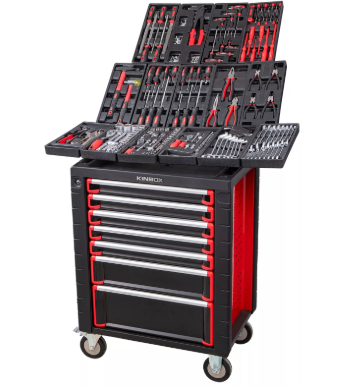
Knowing what tends to go wrong helps you avoid mistakes. Here are frequent pitfalls in tool storage, and ways to prevent them:
No clear storage policy or habit — without defined “home” for each tool and consistent return habit, tools get scattered. Solution: label, assign, enforce return-to-place routine.
Overcrowded or poorly organized storage — mixing small parts with large tools, no dividers, leads to items being lost or forgotten. Solution: keep small parts in bins/dividers, separate by type.
Cheap storage that offers no protection — open shelves, tubs, or cabinets with no lock or no protection from moisture/dust — leads to rust, damage, loss. Solution: use proper tool cabinet with enclosure, corrosion resistance, lockability.
Neglecting maintenance — ignoring rust, dust, or wear leads to tool degradation; broken or worn items often discarded and lost. Solution: regular cleaning & inspection schedule.
Moving tools without proper packing or tracking — when transporting tools (job site, van, truck), loose tools often left behind or stolen. Solution: use secure, lockable cabinets or cases; check inventory before/after transport.
Relying on memory, not systems — trusting that you’ll remember where you put things is unreliable. Solution: use visual organization, labels, checklists, or even digital tracking for large sets.
Avoiding these mistakes is as important as choosing the right storage — a well‑designed tool cabinet with poor usage habits won’t solve tool loss.
Investing in a good tool cabinet and implementing a proper storage system might seem like upfront cost, but the savings over time — by avoiding lost tools, reducing replacement, and improving productivity — can be substantial. Here’s how:
Reduced replacement cost — lost or damaged tools add up over time; good storage preserves tools longer.
Time savings — faster retrieval, less time wasted searching tool, more productivity. For professionals, time saved translates to more billable or productive hours.
Less duplication — fewer duplicate buys because you know what you have; better inventory management.
Lower risk of damage or wear — tools last longer, fewer repairs or replacements.
Increased safety and lower liability — fewer accidents, less risk of stolen or misplaced hazardous tools — less risk and cost related to injuries or liability.
Long-term organization and scalability — as your tool collection grows, a good cabinet adapts, avoiding need for multiple storage systems.
Several industry sources confirm that properly storing and organizing tools significantly extends tool lifespan, improves accessibility and reduces loss or damage.
In many real‑world workshops, investment in a strong tool cabinet and organized storage will pay off many times over — especially if the tool collection is large, expensive, or frequently used.
Here’s a recommended plan to implement a robust tool‑loss prevention system using a tool cabinet and organizational practices:
Take full inventory of tools and accessories. Categorize them (hand tools, power tools, fasteners, consumables, etc.).
Define priorities: Which tools are essential daily? Which are rarely used? Which are expensive or easy to lose?
Select a tool cabinet tailored to your needs (size, mobility, locking, internal layout, material). Use the criteria listed earlier.
Design internal layout: Drawers/bins for small parts; dedicated shelves for bulky tools; lockable compartment for expensive tools; labels or color codes for drawers.
Establish storage rules: After use, always return tools; do a quick check before leaving the workspace; conduct regular inventory audits (monthly or quarterly).
Combine storage systems: Use the cabinet + wall racks/pegboards + overhead shelves to manage everything — big tools, small tools, consumables, seasonal items.
Maintain environment & cabinet: Keep cabinet dry; clean periodically; lubricate moving parts; inspect for damage, rust, or wear.
Consider advanced options (optional): For high-value tools or shared environments — smart cabinets with access control, digital tracking, modular inserts, or labeled systems.
Train all users (if shared space): Make sure everyone understands storage rules, returns tools properly, respects the system.
Monitor and refine: After a few months, evaluate how the system works — lost tools, missing items, misplacement incidents — and adjust layout or rules as needed.
With this strategy, you’ll dramatically reduce tool loss, maintain tool condition, and build a sustainable, scalable storage system.
Preventing tool loss isn’t a one-time effort — it's a commitment to organization, security, and maintenance. A tool cabinet does more than store tools: it provides structure, accountability, protection, and a home for every tool. But storage alone isn’t enough — you need the right cabinet, smart layout, consistent habits, and sometimes technology.
By combining those elements — a high-quality tool cabinet, organized storage layout, user habits, and periodic audits — you can drastically reduce tool loss, extend tool lifespan, improve workflow, and save money and time. Whether you run a professional workshop, a small garage, or a home DIY setup — implementing an effective storage and organization system is the ultimate path to preventing tool loss.
A cabinet is not just a box — it's the backbone of a responsible, efficient, and safe tool management system.
Q1: Is a simple toolbox enough to prevent tool loss, or do I need a full cabinet?
A1: A simple toolbox may work for a small, limited tool set. But for larger collections, frequent use, or shared spaces, a fully designed tool cabinet (with drawers, locking mechanism, and defined layout) provides better protection, organization, and loss prevention.
Q2: How often should I audit my tool inventory to prevent loss?
A2: It depends on usage frequency. For personal garages, a quarterly audit may suffice. For busy workshops or shared environments, monthly audits (or after major jobs) help catch missing tools early and prevent long‑term loss.
Q3: Can wall‑mount storage or pegboards replace a tool cabinet in preventing loss?
A3: Pegboards and wall storage are good for frequently used tools and provide visibility. However, they offer little protection from dust, moisture, or theft. For long-term security and loss prevention — especially for valuable or many tools — a tool cabinet is more reliable.
Q4: What types of tools should go in a locked cabinet versus open storage?
A4: Valuable, sharp, heavy, or easily misused tools — power tools, precision instruments, hazardous items — should be stored locked. Common hand tools frequently used may remain accessible if workspace is secure, but having a “home” reduces loss.
Q5: Are high‑tech “smart” tool cabinets worth the investment for a home garage?
A5: They can be — especially if you have many tools, want precise tracking, or share the space. Smart cabinets with access control, inventory tracking, and modular layout reduce loss risk, help you know exactly what’s available, and add accountability. For small tool sets, they may be overkill — but for serious hobbyists or small shops, they offer strong long-term value.



