
 English

Views: 0 Author: Site Editor Publish Time: 2026-06-12 Origin: Site


Restoration workshops are different from ordinary garages. Whether the focus is classic cars, motorcycles, vintage machinery, or custom fabrication, a restoration space has to do much more than simply hold tools and equipment. It needs to support precision work, organization, efficiency, and long-term durability — all while handling large volumes of parts, specialized tools, and ongoing projects.
Anyone who has spent time in a serious restoration workshop knows that disorganization quickly becomes expensive. A misplaced wrench may waste ten minutes. A lost component from a rare restoration project may cost weeks. Poor storage planning can slow down workflow, reduce productivity, and honestly make the entire workshop feel chaotic.
That is why experienced workshop owners place so much importance on proper storage systems. In many modern restoration spaces, the combination of a heavy-duty tool cabinet and a well-planned garage storage cabinet system becomes the foundation of the entire workshop layout.
A high-end restoration workshop is not built randomly. Every cabinet, workstation, and storage zone is usually planned with purpose. The best workshops balance functionality, accessibility, durability, and appearance in a way that supports daily work without creating clutter.
This guide explores how professional restoration workshops are outfitted, what storage solutions matter most, and how modular garage storage cabinet systems can completely transform the efficiency of a workspace.
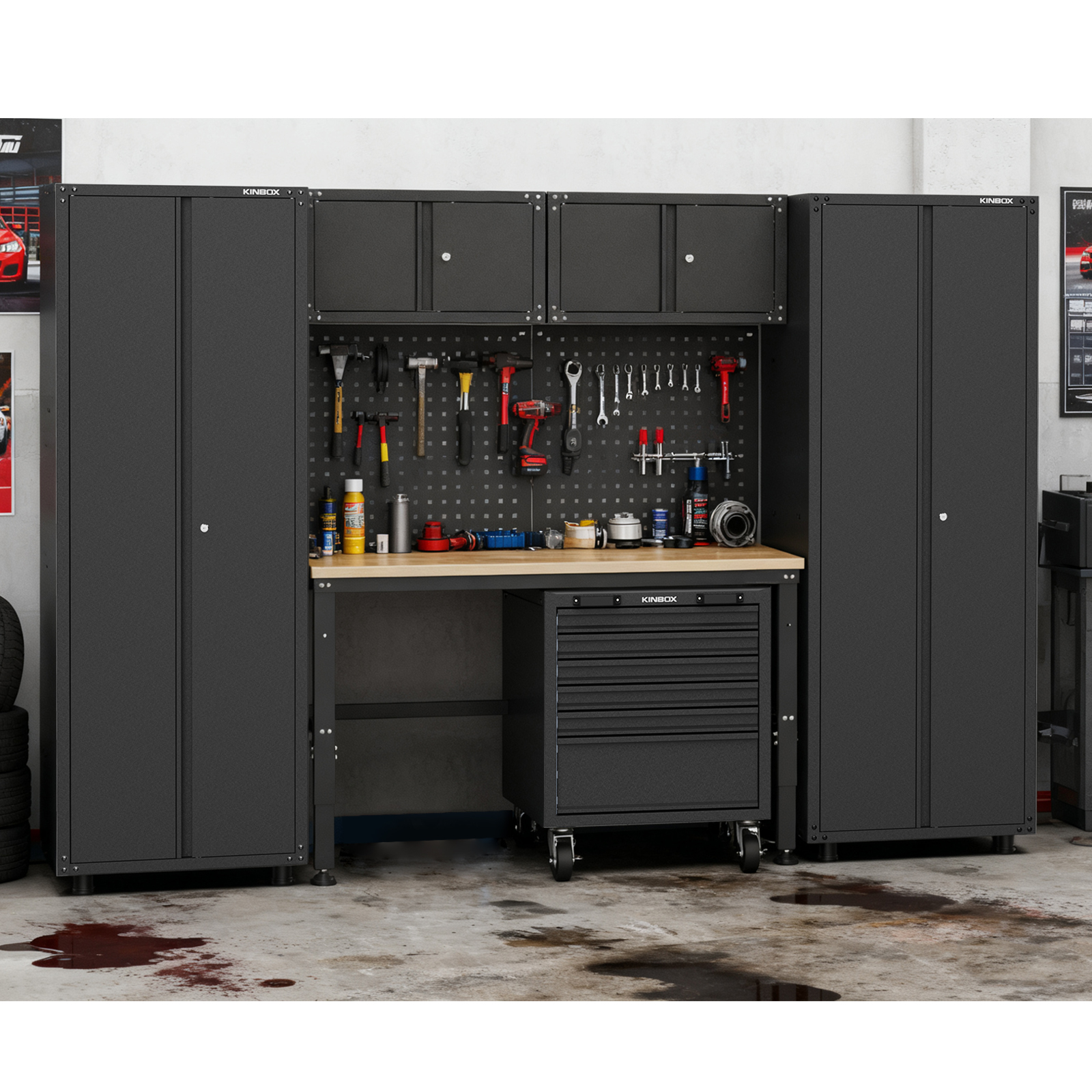
Restoration work is detail-heavy by nature.
Unlike general repair garages where technicians may work on routine maintenance, restoration projects often involve thousands of small components, specialized tools, rare parts, and long-term project timelines. Some projects stay in the workshop for months or even years.
Without proper organization, even experienced restorers can lose valuable time searching for tools or parts.
A well-designed storage setup solves several major workshop problems:
Reduces clutter
Improves workflow
Protects expensive tools
Keeps restoration parts organized
Improves safety
Creates a more professional workspace
Professional workshop owners understand something important: efficiency is not only about skill. It is also about environment.
When every tool has a designated location and every workspace remains organized, technicians can focus more on craftsmanship and less on searching for equipment.
That is one reason why the modern tool cabinet has evolved far beyond a simple rolling toolbox.
The tool cabinet is often the most heavily used storage component inside a restoration workshop.
In high-end environments, tool storage needs to handle constant drawer movement, heavy equipment loads, and years of demanding use.
A low-quality cabinet might look acceptable initially, but over time weak drawer slides, thin steel construction, and poor organization quickly become frustrating.
Professional restoration shops usually prioritize several key features.
Restoration workshops are hard on equipment.
Large socket sets, specialty pullers, fabrication tools, power tools, and measuring equipment all place significant stress on storage systems.
That is why heavy-gauge steel tool cabinet systems are preferred in professional environments.
High-quality steel cabinets provide:
Better durability
Higher load capacity
Improved structural stability
Longer lifespan
Greater resistance to workshop conditions
Powder-coated finishes also help protect cabinets from scratches, oil exposure, dust, and corrosion.
A restoration workshop typically contains hundreds — sometimes thousands — of tools.
Proper drawer configuration helps prevent wasted time.
Experienced restorers often organize tool cabinet drawers by category:
Precision measuring tools
Electrical tools
Bodywork tools
Hand tools
Air tools
Specialty restoration equipment
Shallow drawers are ideal for frequently accessed hand tools, while deeper drawers support heavier power tools and larger components.
Many professionals also use foam drawer organizers to improve visibility and keep tools protected.
Some restoration shops rely heavily on rolling tool cabinets because projects move around the workspace.
Others prefer fixed-position cabinet systems integrated directly into workstations.
The choice usually depends on workflow.
Larger restoration workshops often combine both systems:
Mobile tool cabinets for active work zones
Fixed garage storage cabinets for long-term organization
This hybrid approach provides both flexibility and storage efficiency.
Traditional storage setups often become limiting over time.
As restoration businesses grow, storage needs change. More projects mean more parts, more specialized equipment, and more organizational challenges.
This is exactly why modular garage storage cabinet systems have become increasingly popular.
Unlike standalone storage units, modular systems are designed to work together as part of a larger layout.
They allow workshop owners to create storage walls, integrated workstations, and expandable organization systems that can evolve over time.
One major advantage of modular garage storage cabinet systems is scalability.
A workshop may initially start with:
One workbench
One tool cabinet
Two tall storage cabinets
Later, additional cabinets, overhead storage, and workstations can be added without redesigning the entire space.
That flexibility is extremely valuable for restoration businesses that continue expanding.
High-end restoration workshops are not only functional. They also represent the brand and professionalism of the business.
Matching garage storage cabinets create a cleaner and more organized appearance compared to mixed storage solutions collected over many years.
Clients notice these details.
A clean, professionally designed workshop builds confidence and reflects attention to craftsmanship.
Modular systems also make it easier to create dedicated storage areas for different restoration tasks.
For example:
Paint preparation zone
Engine assembly area
Metal fabrication station
Detailing section
Electrical repair workspace
This type of organization improves workflow and reduces unnecessary movement throughout the workshop.
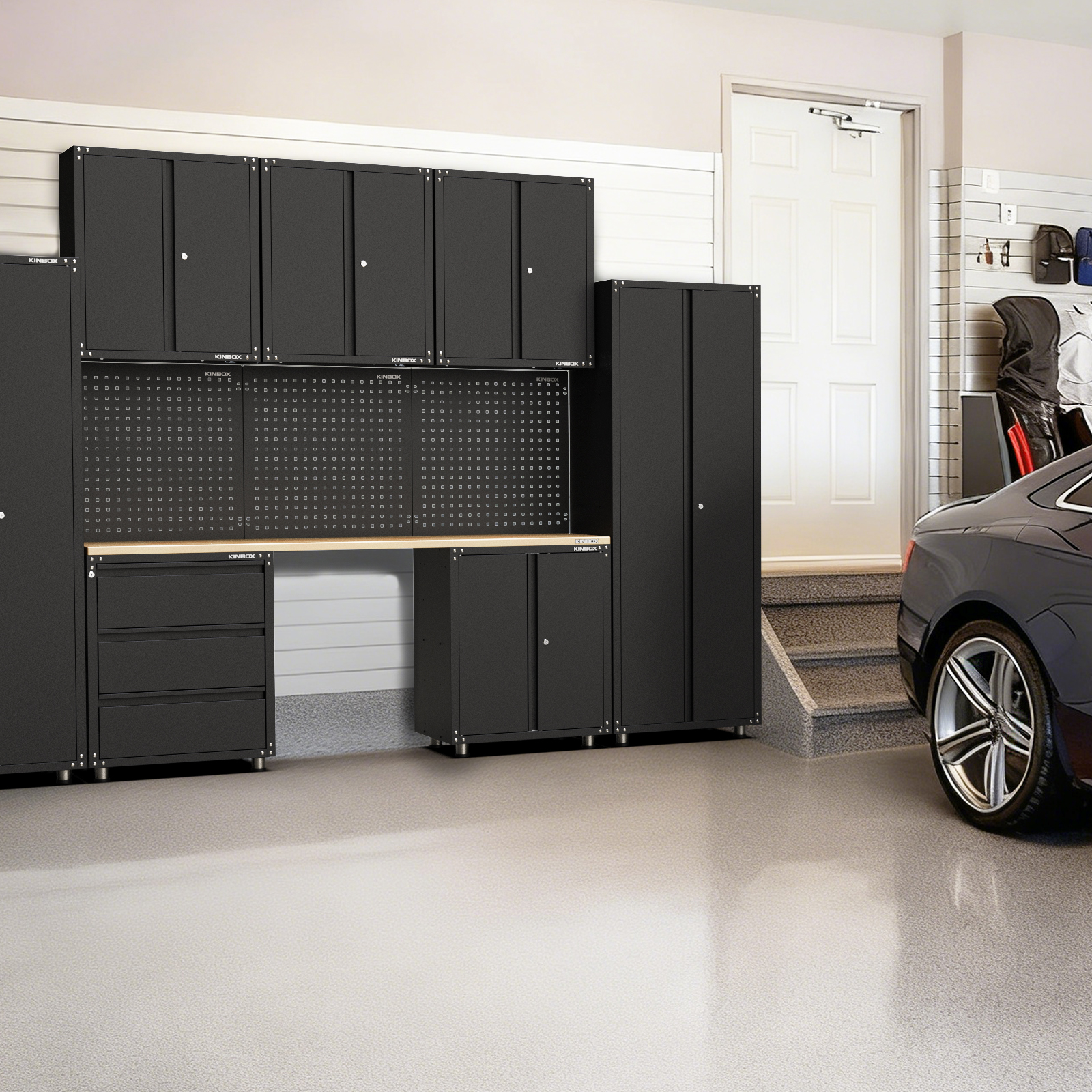
Storage alone does not create an efficient workshop.
Layout planning matters just as much.
Professional restoration workshops are usually designed around workflow efficiency rather than simply filling empty walls with cabinets.
Experienced workshop designers divide the workspace into specific operational areas.
These may include:
Disassembly area
Cleaning station
Fabrication zone
Assembly workspace
Parts storage
Detailing section
Each zone supports a different stage of the restoration process.
This prevents overcrowding and improves project management.
One common mistake in poorly planned workshops is placing frequently used tools too far from active work areas.
Professional layouts reduce unnecessary walking.
Tool cabinets are typically positioned near primary workbenches so technicians can access tools quickly without interrupting workflow.
It may seem like a small detail, but over the course of a full workday, this significantly improves efficiency.
A restoration workshop can quickly become crowded with project vehicles, parts carts, machinery, and equipment.
That is why experienced designers prioritize open floor space.
Wall-mounted garage storage cabinets and vertical storage systems help maximize storage capacity without overcrowding the workspace.
The result is a workshop that feels cleaner, safer, and easier to navigate.
Floor space is always limited, even in large workshops.
Professional restoration spaces therefore make extensive use of vertical storage.
Tall cabinets are ideal for storing:
Large power tools
Paint supplies
Safety equipment
Cleaning products
Bulk materials
These cabinets maximize storage without consuming excessive floor area.
Wall-mounted garage storage cabinets help keep frequently used items accessible while leaving the floor clear.
Many workshops also combine cabinets with:
Pegboards
Magnetic tool holders
Shelving systems
Hanging storage rails
This creates a highly organized workspace where tools remain visible and easy to access.
Professional workshops often use overhead storage for items that are not required daily.
Examples include:
Seasonal equipment
Spare wheels
Packaging materials
Long-term inventory
Using upper storage strategically keeps the workshop cleaner and prevents unnecessary clutter from accumulating in active work zones.
Lighting is one aspect of workshop design that is often underestimated.
Poor lighting makes even the best-organized storage system frustrating to use.
In restoration work, precision matters. Technicians need to quickly identify tools, hardware, and components without eye strain.
Bright task lighting improves visibility around workbenches and tool cabinet systems.
This helps reduce mistakes during:
Electrical repairs
Paint correction
Engine assembly
Precision measurements
Modern premium garage storage cabinet systems increasingly include integrated LED lighting.
This improves visibility while also creating a more professional workshop appearance.
Professional workshop layouts avoid placing tall cabinets where they block lighting or create shadows.
A well-lit workshop simply feels more efficient and comfortable to work in.
And honestly, people tend to maintain cleaner spaces when the environment itself feels organized and professional.
Cheap storage solutions rarely survive in busy restoration workshops.
Cabinets are opened hundreds of times per week. Heavy tools are constantly moved. Oil, dust, chemicals, and metal particles are unavoidable.
That is why experienced workshop owners often view storage systems as long-term investments rather than short-term purchases.
High-quality garage storage cabinet systems may cost more initially, but they provide:
Longer service life
Better reliability
Improved organization
Lower replacement costs
Better workshop appearance
Over time, durable storage systems usually save money because they reduce maintenance and replacement needs.
One thing many workshop owners discover over time is that organization affects customer perception.
Clients naturally feel more confident when they walk into a clean, organized restoration environment.
A professional storage system communicates:
Attention to detail
Quality workmanship
Operational efficiency
Professional standards
In restoration work, trust matters.
Customers are often leaving valuable vehicles or rare equipment in the workshop for long periods. A clean and organized space reassures them that their project is being handled carefully.
Not all storage systems are designed for demanding restoration environments.
Professional workshops typically prefer manufacturers with strong experience in steel fabrication, modular design, and heavy-duty storage production.
Important factors include:
Steel thickness
Drawer slide quality
Surface coating durability
Modular flexibility
Manufacturing consistency
After-sales support
Companies like KINBOX continue to support professional workshops worldwide by manufacturing durable tool cabinet and garage storage cabinet systems designed for industrial and automotive environments. With advanced sheet metal production technology, large-scale manufacturing capabilities, and a strong focus on quality and customization, KINBOX provides practical storage solutions for workshops that require both performance and long-term reliability.
Building a high-end restoration workshop requires more than simply purchasing tools and equipment.
The real efficiency of a workshop often depends on organization, layout planning, and storage quality.
A well-designed combination of tool cabinet systems and modular garage storage cabinet solutions can dramatically improve workflow, protect valuable equipment, reduce clutter, and create a more professional working environment.
From vertical storage planning to workflow optimization and long-term durability, every detail contributes to how effectively a restoration workshop operates.
As restoration projects continue becoming more specialized and demanding, investing in professional-grade storage systems is no longer just a convenience — it is a critical part of building a workshop that performs efficiently for years to come.
Modular garage storage cabinets provide flexibility, scalability, and organized storage solutions that can adapt as workshop needs grow and change over time.
Heavy-duty steel is generally considered the best material because it offers durability, high load capacity, and resistance to workshop wear and corrosion.
Using vertical storage, wall-mounted cabinets, overhead systems, and organized workflow zones can significantly increase storage efficiency while keeping floor space open.
Both have advantages. Rolling tool cabinets provide mobility and flexibility, while fixed cabinets offer higher stability and larger long-term storage capacity. Many workshops use both together.
Very important. Proper organization reduces wasted time, improves workflow, enhances safety, and creates a more professional and efficient working environment.



