
 English

Views: 0 Author: Site Editor Publish Time: 2025-10-22 Origin: Site


The aerospace industryadheres tosome of themost stringentmanufacturing standardsglobally.Fromassemblingaircraft engines tocalibratingflight control systems, every task must beperformedwith precision, reliability, andfulltraceability. In this environment, a misplaced wrench or missing torque tool is more thana mereinconvenience—it canlead toproduction delays, safety hazards, or even catastrophicfailures.
That is why modern aerospace facilities areadoptingtool cabinet solutions that support precision workflows,preventtool loss, and ensure compliance with industry regulations. These advanced storage systems are no longermerelymetal boxes; they areintelligent,secure, and fully integrated into digital manufacturing environments.
In this article, we explore how tool cabinets enhance aerospace operations across productivity, safety, traceability, and efficiency—and why choosing the right system matters more than ever.
Aircraft components are assembled withextremelytight tolerances.Using anincorrect tool orlosing asocket can compromise quality inspections and halt production. Poor tool managementresults in:
ToolMisplacementandDowntime
High costs oftool replacement
ContaminationRisksinCleanroom Environments
Non-compliance with AS9100 and FAAregulations.
Increasedrisk of incidentsin maintenance and assembly lines
Toaddressthesechallenges,aerospace companiesutilizestructured, intelligent tool cabinet systems to organize, secure, and track thousands of tools across multiple workstations.
These industrial-strength cabinetsare constructedfrom cold-rolled steel or high-tensile alloy, designed towithstandheavy loads. They feature multiple drawers, anti-slip mats, and adjustabledividers—making them idealfor organizing torque wrenches, screwdrivers, pliers, and fastener kits.
Modular systemsenableusers to rearrange drawers, add wheels, stack cabinets, and integrate shelves with workbenches. Aerospace facilitiesutilize these systemsto support flexible production layouts, prototype areas, and repair workshops.
The most advancedsolutions incorporateRFID tags, barcode scanners, or electronic locks. These cabinets automatically record tool usage, track missing items, and restrict access to authorizedpersonnel.
For aircraft hangars and large componentssuch aswings or engines, mobility is essential. Mobile tool cabinets equipped with locking wheelsenabletechniciansto transportnecessary tools directly to the aircraft, reducing travel time andenhancingefficiency.
Tools rest in precision-cut foam trays thatclearly indicateeach tool’s exact location. Ifaslot is empty,it isimmediatelynoticeable—anessential feature forpreventingtool loss.
Electronic access systems, password panels,andfingerprint locks prevent unauthorized toolremoval, ensuringcompliance with aerospace safetyprotocols as well as ITARandFAAregulations.
Cabinets areconstructedwith powder-coated finishes, reinforced frames, and anti-rust materials toresistoils, hydraulic fluids,and thehigh humiditycommonlyfound in aerospace workshops.
Aerospace-grade cabinets can support100 to 200kg per drawer,ensuring thesafe storageoftorque tools, calibration equipment, and specialized aerospace instruments.
RFID chips embedded in tools, combined with cabinet-based sensors,enablereal-time tracking. When a technician removes atool, thedata is instantly logged,facilitatingdigital tool audits and preventing tool loss during aircraft assembly.
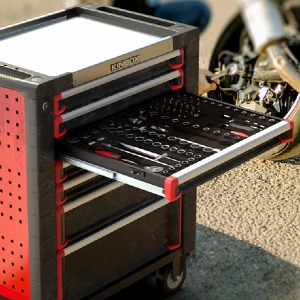
The aerospace industry consumes the use of thousandths of millimeters as its measurement unit. The functions of tool cabinets go beyond just being storage units—they are workflow tools that help with precision, active production, and cleaning up the factory.
Faster Tool Retrieval
Reducing the duration for searching for the tools leads to more productive work areas, which is a very crucial factor for the engineers to keep the flow that is required for just-in-time (JIT) manufacturing. This time saved over weeks or even months is equivalent to hundreds of hours of productive work. Reason: Improved clarity and flow by refining sentence structure and word choice
Minimizing Human Error
Human errors in the aerospace industry are not only costly but sometimes even disastrous. Tools in the cabinets covered by shadow boards and foam cutout tools are visible at all times. If a tool goes missing, it won't take long for it to be noticed. The whole thing reduces the chance of leaving a tool inside the aircraft in areas like wings, fuel systems, or fuselage; such mistakes could lead to the aircraft being subjected to rework, parts being lost, or even unintentional situations during flights. Reason: The original sentence flow was broken up and vocabulary enriched for improved clarity and fluency.
Optimized Workflow and Lean Management
The implementation of 5S manufacturing method: Sort, Set in Order, Shine, Standardize and Sustain, requires the use of tool cabinets. Tools are arranged in the cabinets according to their type, frequency of use, and purpose. Properly arranged tools at the workstation guarantee that the assembly process runs smoothly. The work area being clean and neat is no longer a problem because the cabinets have kept the tools free from dust and dirt. Ultimately, this state of cleanliness becomes a routine and is continued by having the staff trained and inspections being done regularly, thus, waste is minimized and flow of work is made easier.
Calibrated Tool Management is Backed Up
In the aviation sector, it is mandatory that torque wrenches, micrometers, and calipers be calibrated at regular intervals. The digital tracking systems integrated into smart tool cabinets can not only record the usage of tools but also specify their calibration dates and send notifications before their expiry.
With the increase in automation in aerospace factories, the tool cabinets are getting more and more integrated into the Industry 4.0 ecosystems.
Smart Feature | Benefits in Aerospace Operations |
RFID tool tracking | Real-time location tracking and tool check-in/out |
Barcode scanning | Fast manual tool logging and audit compliance |
IoT connectivity | Data upload to ERP/MES systems |
Cloud-based dashboards | Track inventory across multiple facilities |
Automated alerts | Remind for missing tools, overdue calibration |
Technicians can check tool availability using tablets or workstations, while supervisors gain visibility across all workstations, enhancing planning and budgeting.
Custominserts designedfor torque tubes, borescopes, micrometers, and engine calibration tools.
ESD-safe cabinets protect sensitive avionics tools from electrostatic discharge.The drawersmay include anti-static foam and groundingsystems to further prevent damage.
Special coatings resist resin, epoxy, and compositedust commonly encounteredin carbon fiber wing and fuselage fabrication.
Investing in high-quality tool cabinetsprovideslong-term financialbenefits.
Lower tool replacement costs due todecreasedloss and damage
Improved productivity byreducing aircraft assemblytimes.
Fewer repairs and rework, minimizingincidents related to Foreign Object Debris (FOD).
Improvedbudgeting throughaccurate tool inventory data
Extended toollifespan throughproper storage andprotection.
In many cases, aerospace companiesrealizea return on investment (ROI) within12 to 18months.
When selecting tool cabinet solutions,consider the following factors:
Tool quantity andtype: calibratedequipment, precision tools, hand tools, orelectronic devices.
RequiredMobility– StationaryCabinetorMobile Cart?
SecurityLevel:ManualLocksorBiometric Access?
DigitalTracking Needs:RFID,Barcode,orManual Labeling?
CleanroomCompatibility: Anti-StaticorStainless Steel Finishes?
LoadCapacity– Ensure drawerscan support the weight ofheavy aerospace tools.
Choosing a supplier who understands aerospace standards is essential forensuringseamless integration.
In aerospace manufacturing, precision and safety are not optional—they are essential. A modern tool cabinet serves as much more than just a storage solution; it is a vital component of efficient workflow, safety assurance, and effective tool loss prevention. From smart RFID systems to modular cabinets equipped with laser-cut foam shadow boards, these innovations help aerospace companies maintain organization, comply with regulatory standards, and enhance productivity on the factory floor or in the aircraft hangar.
For businesses seeking advanced, customizable, aerospace-grade tool cabinet solutions, Ningbo Kinbox Tools Technology Co., Ltd. offers a range of professional tools and storage systems designed to meet these exacting requirements. Their products are renowned for durability, ergonomic design, and adaptability, making them a reliable partner for modern aerospace operations.



