
 English

Views: 0 Author: Site Editor Publish Time: 2025-12-24 Origin: Site


If your garage looks more like a junkyard than a workshop — with tools scattered, parts lost, and every repair session turned into a frantic hunt — you're not alone. But the difference between perpetual chaos and an efficient, safe workspace often boils down to one change: adding a good tool cabinet. In this article, we explore how a tool cabinet can literally transform your garage, why it works, what to look for when choosing one, and how to set it up to maximize efficiency, safety, and longevity.
Before diving into features and setups, it's important to understand why a tool cabinet isn’t just a nice‑to‑have — it’s a game-changer.
Clutter elimination and space optimization. Tools, parts, and equipment left lying around take up valuable floor space. A robust tool cabinet centralizes storage in a compact footprint, clearing floor space and making room for vehicles, projects, or general movement.
Improved organization and accessibility. When everything has a designated drawer or compartment, you spend far less time hunting for the right tool. Instead of rummaging through piles, you know exactly where things go and where to find them.
Protection and longer lifespan for tools. Tools stored in a proper cabinet are protected from dust, moisture, rust, grease, and accidental damage — which extends their usable life and saves you money in the long run.
Safety improvements. A tidy garage drastically reduces trip hazards, accidental knocks, and general dangers associated with a messy workspace. A cabinet with lockable drawers helps keep sharp or dangerous tools out of reach from children or untrained hands.
Boosted productivity and workflow. With tools organized and easily accessible, you spend less time searching and more time working — projects get done faster, more reliably, and less stressfully.
All these benefits combine to make a tool cabinet one of the most effective investments you can make for workshop or garage organization.
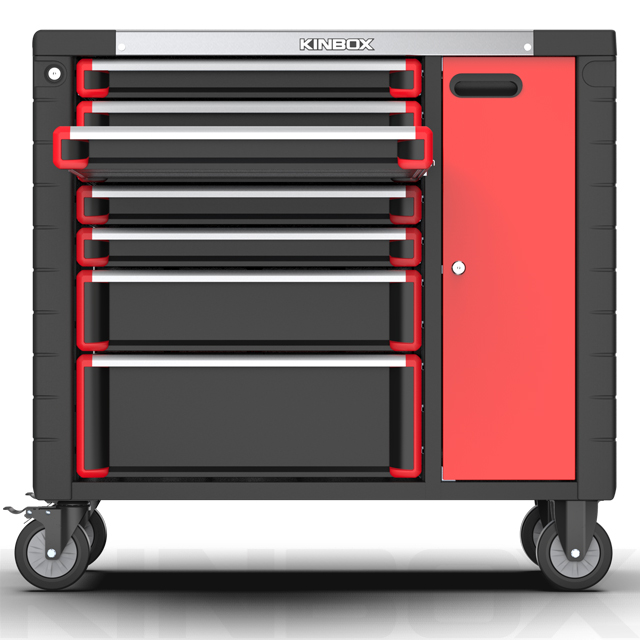
Not all tool cabinets are created equal. If you’re serious about transforming your garage, here are critical standards to evaluate before buying.
Durable construction: Look for steel or heavy‑gauge metal cabinets that resist denting, warping, and wear. Cabinets designed for workshops will typically hold up to heavy tools and frequent use.
Rust- and moisture-resistance: A quality finish, powder‑coat or protective paint helps guard against rust — key if your garage is humid or tools might occasionally be wet or greasy.
Stable base or locking wheels: If the cabinet is mobile, heavy-duty casters with locking mechanisms prevent unwanted movement. If stationary, a stable base (or wall anchoring) helps avoid tipping when drawers are full.
A good tool cabinet isn’t just a big box — its internal design matters. Consider:
| Feature | Why It Matters / Benefit |
|---|---|
| Mixed-depth drawers (shallow + deep) | Lets you store both small hand tools and bulky power tools appropriately. |
| Smooth slides / rails & ergonomic drawers | Easy access even with heavy loads, less strain, and increased speed when grabbing tools. |
| Lockable drawers or doors | Keeps expensive tools secure and reduces risk of theft or accidental misuse. |
| Modular shelves / dividers / compartments | Helps separate different types of tools, hardware, accessories — making organization customizable and scalable. |
| Compact footprint with high capacity | Maximizes storage while minimizing space used — ideal for garages of all sizes. |
Right size for your tools: A massive cabinet looks impressive — but if you only own a small tool set, it wastes space. Match cabinet size to realistic tool volume.
Mobility vs fixed storage: Rolling tool cabinets are great if you move around your garage; fixed wall units may be better if you need large, stable storage.
Room for growth: If you expect to acquire more tools over time, choose a cabinet with flexible interior layout (adjustable compartments, modular design).
Let’s imagine what happens when you go from a cluttered, disorganized garage to one equipped with a well-chosen tool cabinet.
Tools scattered around: benches, floor, boxes, random piles.
Time wasted digging through clutter to find needed tools.
Misplaced or lost tools — small wrenches, sockets, bits.
Risk of tripping, accidents, or tool damage from chaos.
Poor working efficiency; projects take longer; frustration accumulates.
Clearly defined space: drawers, shelves, compartments.
Less absentee time — tools found within seconds rather than minutes.
Tools protected: less exposure to dust, moisture, accidental damage.
Safer environment — no loose items to trip over; hazardous tools locked away.
Neat workspace — easier to clean, maintain, and keep organized.
Better workflow — start projects promptly, complete faster, stay focused.
This transformation not only improves daily use but also elevates the overall value and utility of your garage.
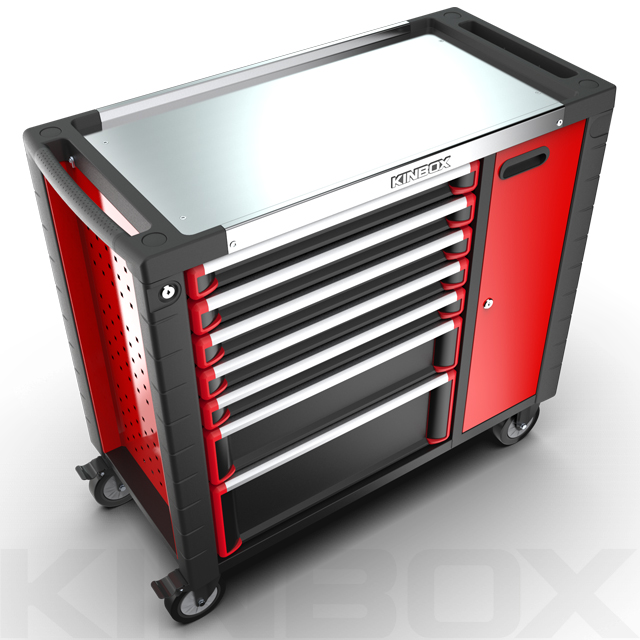
As more people convert garages into workshops or multifunctional spaces, several new trends have emerged — and a modern tool cabinet should align with them.
Rather than one-size-fits-all chests, many newer tool cabinets are modular — drawers, shelves, inserts are configurable. This modularity allows homeowners and professionals to customize storage based on their unique tool sets and adapt as those sets grow or change.
Tool cabinets are increasingly part of larger garage storage ecosystems — involving overhead racks, wall-mounted storage, pegboards, workbenches, and integrated cabinetry. This integrated setup maximizes vertical and horizontal space, giving you a clean, functional workshop feel rather than a jumbled storage area.
With more families using garages for multiple purposes, safety has become a key concern. Cabinets with locking drawers or doors help secure sharp tools, chemicals, or expensive equipment. Smooth surfaces and rounded edges reduce injuries; stable bases or floor anchoring help prevent tipping hazards.
A well-organized, clean garage — with professional cabinets — is often a selling point for a home. Prospective buyers value garages that can store cars, tools, equipment, or serve as a home workshop. A tool cabinet helps turn a messy garage into a usable, attractive space.
Here’s a practical action plan for selecting and setting up a tool cabinet to transform your garage.
List all tools you own (hand tools, power tools, accessories, spare parts).
Measure garage floor and wall space — plan how much footprint you can afford for a tool cabinet.
Decide whether you need mobility (rolling cabinet) or a fixed storage solution.
Consider future growth — will you acquire more tools or gear later?
Ensure the cabinet meets the standards covered above: durable material, drawer design, locking/security features, flexibility, stability.
Use drawer dividers, bins, organizers — categorize tools by type or frequency of use.
Keep frequently used tools in easy‑access drawers, store seldom‑used items below or behind locked doors.
Leave room for expansion — don’t fill every slot immediately.
Add wall-mounted shelves, pegboards, overhead racks for larger items or seasonal tools.
Use robust cabinet + wall storage + rack combo to make full use of vertical and horizontal space.
Keep hazardous or sharp tools locked, and ensure safe placement to minimize accidents.
Always return tools to their place after use — avoid “tool dumping”.
Periodically clean, check for rust or wear, lubricate drawer slides if needed.
Review inventory: discard broken or redundant tools, reorganize layout as needed.
Keep a “workbench + cabinet + storage” approach — treat garage as a workspace, not a dumping ground.
A good cabinet + proper organization can cut tool retrieval time dramatically — some users report finishing jobs up to 30% faster compared to a cluttered garage.
Organized garages reduce trip hazards, clutter-related accidents, and tool loss, which protects both your investment and your safety.
Modular, flexible storage systems tend to have higher “longevity value” than static or over‑sized cabinets — especially as tool collections evolve.
When paired with thoughtful storage planning, a tool cabinet helps reclaim garage space — making room for vehicles or transforming the area into a full workshop rather than a storage maze.
If your garage has become a source of frustration — clutter, missing tools, wasted time — investing in a proper tool cabinet is one of the most effective steps you can take. More than just storage, a tool cabinet becomes the backbone of an organized, efficient, safe, and long-lasting workspace.
When you choose wisely (durable material, functional layout, flexibility, security) and combine the cabinet with a thoughtful organization plan, you won’t just store tools — you transform how you work, how easily you retrieve what you need, and how enjoyable your projects become.
Your garage can go from chaotic to clean, from cluttered to functional, from stressful to satisfying — all with the right tool cabinet and a commitment to organization.
Q1: Should I get a rolling tool cabinet or a fixed wall-mounted cabinet for my garage?
A1: It depends on your workflow. If you often move around the garage or need flexibility, a rolling cabinet is ideal. If you mainly have a fixed workspace and heavy tools to store, a sturdy fixed cabinet mounted against a wall might be safer and more stable.
Q2: How do I organize tools inside the cabinet to maximize efficiency?
A2: Group tools by type or usage frequency (hand tools, power tools, fasteners, small parts). Keep commonly used tools in top or easily reachable drawers; place bulky or seldom-used items lower. Use drawer dividers, bins, or compartments to prevent clutter and improve quick access.
Q3: Will putting tools in a cabinet really extend their lifespan?
A3: Yes. Cabinets protect tools from dust, moisture, grease, and accidental damage — all of which contribute to rust and wear. Proper storage reduces exposure to elements that shorten tool life.
Q4: My garage is small — can a tool cabinet still make a difference?
A4: Absolutely. A compact tool cabinet with good internal layout can consolidate many scattered tools into a single footprint — freeing up floor space, clearing clutter, and providing defined storage without consuming much area.
Q5: What are some maintenance tips to keep the cabinet useful and long‑lasting?
A5: Periodically clean out drawers and remove dust, grease, or metal shavings. Check and lubricate drawer slides if they begin to bind. Avoid overloading drawers beyond their rated capacity. Reorganize tools if your tool set changes. And always return tools after use — good habits keep order.



