
 English

Views: 0 Author: Site Editor Publish Time: 2025-12-29 Origin: Site


If your garage or workshop often feels more like a “tool chaos zone” — where wrenches are lost, screwdrivers disappear, sockets are scattered, and every project starts with a frantic search — then a well‑designed tool cabinet can be the key to transforming that chaos into efficient, safe, organized workflow. This article explains why a tool cabinet matters, how it achieves efficient organization, what features to look for, and how to set up your cabinet to maximize value.
When tools are scattered on benches, floors, shelves, or assorted bins, inefficiency, damage, and frustration become the norm. Switching to a proper tool cabinet brings several major benefits:
Declutter and reclaim space — Instead of tools strewn across benches or floor, a tool cabinet consolidates them into a compact, orderly storage footprint.
Improved tool accessibility and reduced search time — With drawers and compartments assigned for specific tools, you spend far less time hunting for the right wrench or bit.
Protection for your tools — longer tool life — A cabinet protects tools from dust, moisture, grime, and accidental damage. That reduces wear, rust, and prolongs useful life.
Enhanced safety and cleanliness — Loose tools on the floor or benches are a hazard. A cabinet reduces clutter, lowers trip/fall risks, and offers safer storage for sharp or heavy items.
Better use of space — even small garages benefit — A compact cabinet with a well‑thought interior layout can store a large tool set while keeping floor space available.
Improved workflow efficiency and productivity — When tools are organized and easy to find & return, projects proceed faster, with less downtime due to tool searches.
In short: a tool cabinet can turn a messy, inefficient workshop into a streamlined, professional‑feeling workspace — and that transformation often begins with one good cabinet.
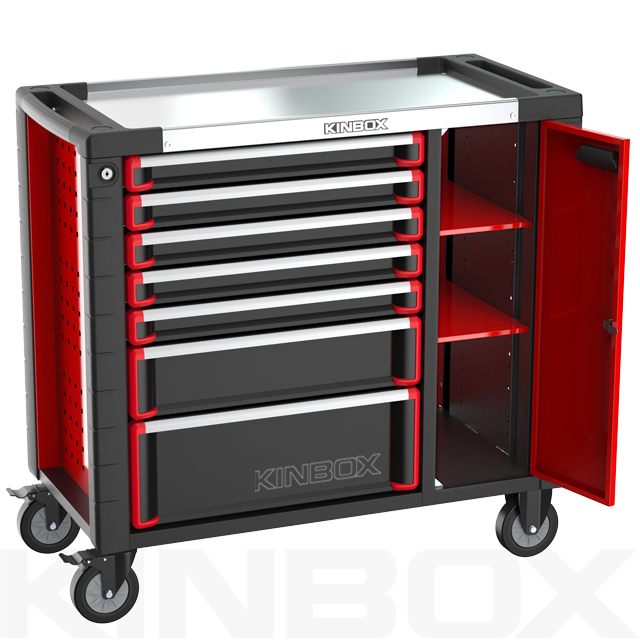
Not all tool cabinets are created equal. To avoid merely swapping clutter for a poorly designed chest, you need to choose based on quality and functionality — not just price or appearance. Here are the key standards for a high‑value tool cabinet:
Heavy‑duty construction: Cabinets made of thick, welded steel or equivalent heavy‑gauge metal offer the strength and longevity needed for heavy tools and frequent use.
Rust / corrosion resistance: A powder-coated or corrosion‑resistant finish helps tools and cabinet last longer, especially in humid or oily environments common in garages.
Sturdy, stable base or lockable wheels (for mobile versions): Prevent tipping, ensure mobility when needed, and maintain stability under load.
A good tool cabinet should enable efficient organization and easy access:
| Feature | Why It Matters |
|---|---|
| Mixed‑depth drawers (shallow for hand tools, deep for power tools) | Allows versatile storage — small parts, hand tools, bulky power tools all have proper places. |
| Smooth, full‑extension drawer slides | Easy access even when fully loaded; reduces strain and ensures reliability over time. |
| Modular compartments, dividers, trays, bins | Keeps different tool types separate and organized — prevents chaos from creeping back in after a few uses. |
| Lockable drawers or doors (for valuable tools / hazardous items) | Adds security, helps protect high-value tools or safety items from unauthorized access or accidental misuse. |
Your tool cabinet should grow and evolve with your needs — not become obsolete after a few months:
Flexible layout: Ability to reconfigure drawers or compartments as tool collection changes.
Space-efficient footprint: Ideal especially for smaller garages: maximize storage while minimizing floor/wall usage.
Integration with workshop setup: Combine cabinet with workbench, wall storage, overhead racks, or modular storage systems for a comprehensive organization solution.
Easy to clean and maintain: Cabinets should allow dust/debris control, avoid corrosion, and support routine maintenance.
Durability under heavy use: Drawer slides, hinges, wheels should be industrial‑grade to survive frequent opening, heavy load, and repeated movement.
Protection for tools: Interior design that avoids tool damage (scratches, rust, impact) — prolongs tool life and protects your investment.
While tool cabinets are powerful, they’re not the only way to store tools. It's helpful to understand how they compare to other popular storage strategies.
| Storage Type | Strengths | Limitations |
|---|---|---|
| Tool Cabinet / Rolling / Static | Strong organization, security (lockable), dust & moisture protection, efficient footprint, scalability | Takes up some fixed footprint, upfront cost, needs proper layout planning |
| Open Shelves / Racks / Pegboards | Great visibility of tools, good for frequent-use tools, flexible placement | No protection from dust/moisture, risk of tool damage, clutter & safety hazards if overloaded or disorganized |
| Plastic Bins / Boxes / Tubs | Low cost, good for small parts or seldom‑used tools, flexible storage | Poor organization, hard to find tools, limited durability, clutter risk |
| Tool Cart / Mobile Cart (open or closed) | Mobility, easy to transport tools where needed, good for small jobs | Less storage capacity than cabinets, less protection from dust/moisture, not ideal for long-term storage or heavy tools |
Conclusion of comparison: Tool cabinets combine protection, organization, security, and capacity in a way that open shelves, bins, or cart-based storage rarely match. For long-term, heavy‑use, and organized workflow, a well-chosen tool cabinet typically offers the best balance.
Here’s a practical blueprint to set up your tool cabinet — and actually keep your garage organized long-term.
List all tools, accessories, and spare parts you own.
Discard or set aside broken, duplicate, or seldom-used items.
Group tools by category (hand tools, power tools, fasteners, specialty tools, etc.).
This reduces unnecessary items and helps you choose the right cabinet size.
Use the criteria above (material, drawer design, layout, size) to pick a cabinet that matches your actual tool volume and workspace. Consider mobility (rolling vs fixed), footprint, and future growth.
Assign a “home” for each tool or tool type (drawer, bin, compartment).
Use drawer dividers, trays, or foam inserts for small tools & parts.
Place frequently used tools in top or easy-reach drawers; heavier / rarely used items at bottom.
Maintain consistent labeling or visual cues so others also know where to return tools.
Combine your tool cabinet with:
Wall-mounted storage: pegboards, hooks, shelves for bulky/odd-shaped items.
Workbench adjacent or combined with cabinet for convenient workspace.
Overhead racks or shelving for seasonal or rarely-used items.
This layered approach optimizes vertical and horizontal space and keeps the floor area clear.
Always return tools to their designated slots after use (makes organization durable, not temporary).
Periodically clean drawers — remove dust, debris, check for rust or wear.
Reevaluate layout if you gain new tools — adjust drawers or compartments accordingly.
Lock up hazardous or expensive tools when not in use, especially if others access the garage.
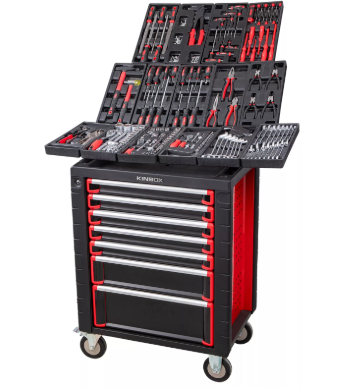
As workshops and garages modernize, tool cabinets are evolving too. Some of the most interesting recent developments:
Many modern tool cabinets are “modular” — with adjustable shelves, removable drawers, configurable interiors. That flexibility ensures the cabinet grows with your tool collection, rather than becoming obsolete.
Cabinets are now designed with ergonomic drawer heights, smooth‑glide drawers, and thoughtful layout — which reduce physical strain and speed up tool access. For those using the garage regularly, this makes a noticeable productivity difference.
Lockable cabinets, safer storage for hazardous tools/chemicals, and clean organized garages are increasingly viewed as value adds — not only for usability but also for home property value and resale impression.
Rather than isolated storage, many people now combine tool cabinets with wall systems, overhead racks, workbenches, and modular storage — creating efficient, professional-grade garage workshops that maximize every inch of space while remaining tidy.
Here is a hypothetical but realistic comparison of garage efficiency before and after installing a quality tool cabinet + proper storage system:
| Metric | Before (Tool Chaos) | After (Organized Cabinet + Storage) |
|---|---|---|
| Average time to find a needed tool | 5–15 minutes | 30–60 seconds |
| Number of misplaced / lost tools per year | 8–20 items | 0–2 items |
| Workshop cleanup time (per week) | 60+ minutes | 10–15 minutes |
| Number of safety incidents (trips, scrapes) per year | 2–4 | 0–1 |
| Usable floor space for projects | ~40% | ~70–80% (thanks to cleared clutter) |
| Perceived workshop “readiness” (project start) | Often delayed | Immediate start possible |
While actual results vary based on usage, tool collection size, and discipline, these numbers reflect what many users experience — significant time savings, safer environment, and higher productivity when adopting a proper tool cabinet system.
Transforming your garage from chaos to organized efficiency isn’t merely a matter of tidying up — it requires structure, design, and discipline. A quality tool cabinet, combined with a thoughtful layout and consistent maintenance, forms the backbone of that transformation.
From reclaiming floor space to protecting tools, improving safety to boosting productivity — the benefits are real and cumulative. And with modern modular designs and flexible storage solutions, it’s easier than ever to adapt a cabinet to your size, style, and needs.
If you’re serious about improving your workspace — whether for occasional DIY, regular repairs, or full‑blown workshop use — investing in a proper tool cabinet is one of the most effective steps you can take. It’s not just a purchase; it’s a long-term upgrade to how you work, how you store, and how you control chaos.
Q1: What size of tool cabinet is ideal for a small home garage?
A1: For a small garage, a compact cabinet with a modest number of drawers — especially mixed‑depth drawers (shallow for hand tools, deeper for a few power tools) — offers the best balance. It optimizes storage without hogging floor space, and still delivers organization and accessibility.
Q2: Can a tool cabinet really improve tool lifespan compared to simple shelf or bin storage?
A2: Yes. A proper tool cabinet protects tools from dust, moisture, grease — all of which contribute to corrosion, rust, or wear. Keeping tools in closed drawers and regularly cleaned, as part of a cabinet system, tends to extend their usable life significantly.
Q3: Are rolling tool cabinets better than fixed ones?
A3: Both have advantages. Rolling cabinets add mobility — useful if you move tools around the workshop or use multiple workstations. Fixed cabinets tend to offer greater stability and capacity for heavy loads. Choose based on how you use your space and tools.
Q4: How do I ensure tools stay organized and don’t end up scattered again?
A4: The best guarantee is a consistent habit: always return tools to their assigned drawer or compartment after use. Combine that with a logical layout, proper labeling, dividers, and periodic re‑organization — and your tool cabinet remains effective long-term.
Q5: Is a tool cabinet worth the cost compared to cheaper storage boxes or bins?
A5: Yes, if you value efficiency, tool protection, safety, and long-term organization. While cheap bins may work temporarily, they often lead to clutter, tool loss/damage, wasted time, and lower productivity. A well-chosen tool cabinet is a long-term investment in productivity, tool care, and workspace quality.



