
 English


If you’ve ever spent a day in a busy garage or workshop, you know that a tool cabinet isn’t just a storage box — it’s a daily-driver piece of equipment. Some cabinets feel sturdy and smooth every single time you use them, while others start squeaking, sagging, or jamming within months. What makes the difference?
A tool cabinet built for high-frequency daily use has to meet much tougher demands than one used occasionally at home. It must combine strength, precision, durability, and thoughtful design so that opening, closing, and pulling out heavy tools never feels like a struggle — even after thousands of uses.
In this article, we’ll unpack all the real-world factors that allow a tool cabinet to stand up to heavy daily use without falling apart or slowing you down.
Understanding Daily Use in a Tool Cabinet
What “High-Frequency Use” Really Means
In a professional shop or busy workspace, high-frequency use means:
Drawers are opened and closed repeatedly throughout the day
Tools of varying weight and shape are stored and retrieved constantly
The cabinet may be moved, set down hard, or bumped into equipment and walls
That’s very different from an occasional weekend project. The design must be engineered for intensity — and measured not just in hours, but in cycles of use. Quality slides are often rated for tens of thousands of open-close cycles before they begin to show wear.
Key Features That Support Heavy Daily Use
1. Slide Quality and Mechanism
One of the most critical parts of a tool cabinet’s daily performance is the drawer slide.
Why Slides Matter More Than Many People Realize
Even if the cabinet body is strong, weak slides can make the whole system feel flimsy over time. Slides dictate how smoothly drawers open, how much weight they can safely carry, and how long the cabinet lasts under frequent use.
There are several common slide types, but for industrial settings, look for:
Heavy-duty ball-bearing slides — can withstand frequent open/close cycles and support significant weight
Dual-track or telescopic heavy-duty slides — often support 150–200+ kg per drawer and over 80,000 cycles in some designs
These heavy-duty mechanisms resist bending and binding — and they outperform basic slides found in cheap cabinets.
Slide Load Ratings Explained
Drawer slides have load ratings that describe how much weight they can handle while still moving smoothly. For example:
Light duty: ~10–35 kg
Medium duty: ~35–65 kg
Heavy duty: ~65–250 kg+
Choosing appropriately rated slides for your tools ensures long-term performance under frequent use.
2. Materials and Construction Quality
Material choice makes a big difference in a cabinet’s durability.
Heavy-Gauge Steel for Strength
Industrial tool cabinets that are used daily almost always use thick, cold-rolled steel for both the cabinet body and the drawers. This type of steel resists dents, stress, and deformation better than thinner metals or cheaper composites.
Reinforced edges and welded seams add extra stiffness, which helps the cabinet keep its shape even after loads are added and removed repeatedly.
Fasteners and Welds
Quality cabinets use precision engineering techniques like:
Welded joints instead of simple bolts
Reinforced internal frames
Reinforcements around drawer openings
These features help spread out stress so that heavy tools don’t cause warping or misalignment over time.
3. Smooth Drawer Movement
One of the telltale signs of a cabinet that’s built for daily use is how the drawers feel.
Full-Extension Drawers
Full-extension drawers allow you to pull the drawer all the way out without the slide bottoming out. This makes tools in the back easy to see and grab, which adds efficiency during repeated use.
Ball-Bearing vs. Roller Slides
Ball-bearing slides outperform roller slides because they resist wear better and handle heavier loads while maintaining smooth action. In industrial applications, ball bearings also reduce friction and noise — something you’ll notice after a long day of opening and closing drawers.
4. Drawer Box Design and Reinforcement
Slides are vital, but the drawer itself matters too.
A well-designed drawer box includes:
Reinforced edges and corners to resist twisting
Internal ribbing or supports to help spread load
Material thickness that matches weight expectations
Simple or poorly braced drawers can flex under load, making the slides work harder and shortening the drawer system’s lifespan.
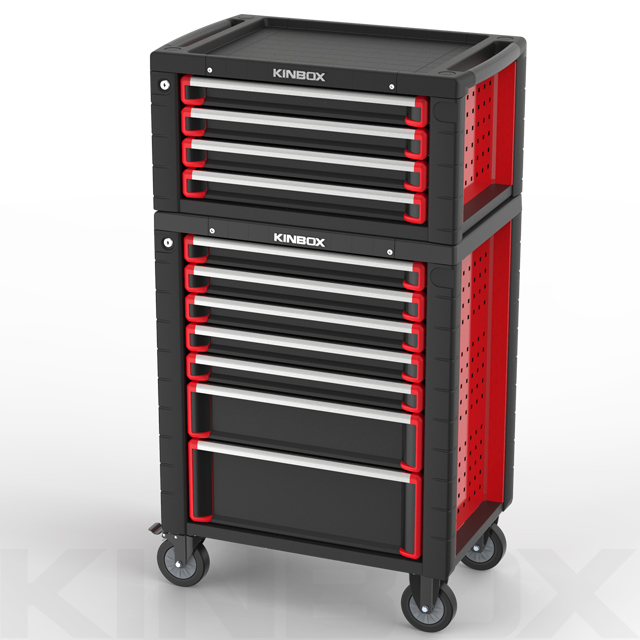
Other Practical Design Elements for Daily Use
Ergonomics and Ease of Access
Cabinets used daily should be easy on the body. Ergonomic drawer handles and balanced drawer heights reduce strain during repeated use.
When I first started using a heavy-duty tool cabinet, I didn’t notice how much smoother it felt until I went back to a lower-quality one — and wow, the difference was obvious even after just a few minutes.
Drawer Organization Features
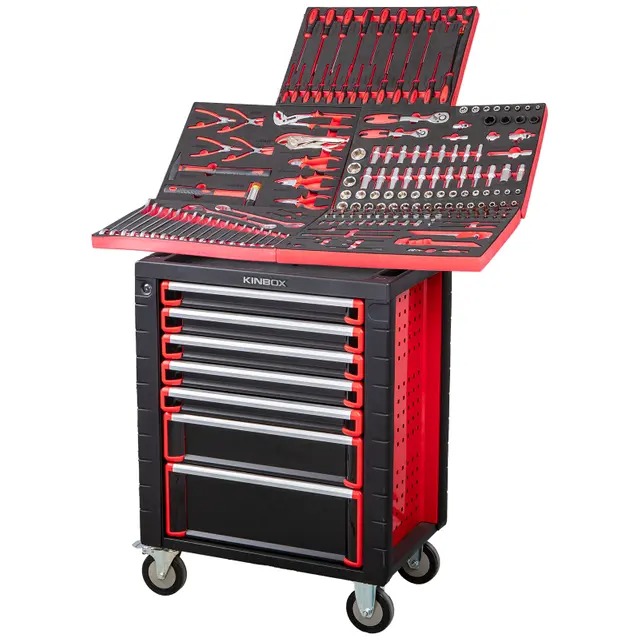
Functional drawer design also includes organizational aids like:
Foam liners or rubber mats
Dividers for different types of tools
Deep drawers for power tools and shallow ones for hand tools
These features keep tools from rolling around and help you find what you need quickly — which matters a lot when you’re opening drawers dozens of times per day.
Mobility and Stability for Workspaces
If the cabinet has wheels, quality casters with reliable brakes are essential. Heavy-duty casters are built to hold weight when static and to roll smoothly without wobbling when moving — even when drawers are full.
This stability is important because a wobbly cabinet can wear out slides faster as tools shift weight within drawers.
Environmental Resistance and Longevity
Corrosion-Resistant Finishes
Workshops can expose tool cabinets to dust, humidity, and chemicals. A good finish (like powder coating) helps protect metal surfaces over time. Without it, cabinets might look fine at first but start showing rust or wear after months of use.
Maintaining Drawer Systems
Daily use still means maintenance. Cleaning debris, lubricating slides occasionally, and checking alignment helps sustain smooth operation.
Cost vs. Convenience: Why Quality Pays Off
When you’re buying a cabinet designed for daily use, quality features might seem expensive upfront — but they pay off quickly in reduced frustration and longer service life. Drawer structure, materials, and hardware quality all contribute to lower maintenance and replacement costs over years of heavy use.
So while two cabinets may look similar in photos, their real-world performance can differ dramatically.
Conclusion
A tool cabinet built for high-frequency daily use needs more than just a pretty finish. It needs strong materials, precision engineering, quality slides, stable drawer boxes, ergonomic access, and durability features that work together to make daily use seamless and reliable.
At Ningbo Kinbox Tools Technology Co., Ltd., we focus on these real-world needs. Our tool cabinets are engineered with heavy-duty slides, reinforced structures, precision materials, and thoughtful details that stand up to demanding workshop environments — whether it’s a professional garage or a busy industrial setting. If you’re looking for a tool storage solution that works as hard as you do, we’d love to help you find the right fit.
FAQ
1. What drawer slide types are best for frequent use?
Heavy-duty ball-bearing or dual-track slides with high cycle ratings and load capacities are ideal for daily workshop use.
2. How much weight can heavy-duty drawer slides handle?
High-quality slides can support 150–200+ kg per drawer, making them suitable for heavy tools and industrial storage.
3. Why is full-extension important?
Full-extension drawers give complete access to the drawer contents, improving efficiency and reducing strain during frequent use.
4. Can regular workshop conditions damage slide mechanisms?
Yes, dust and debris can affect smooth operation, which is why regular cleaning and maintenance help preserve performance.
5. Is a corrosion-resistant finish necessary?
In high-use and humid environments, corrosion-resistant finishes like powder coating significantly improve cabinet longevity.



