
 English

Views: 0 Author: Site Editor Publish Time: 2026-04-20 Origin: Site


At first glance, buying a cheaper Tool Cabinet can feel like a smart decision. The price is lower, the pictures look decent, the size seems right, and on paper it appears to solve the same storage problem as a more expensive model. For many buyers, especially when budget pressure is real, that is enough to move forward.
But that logic usually works much better on a spreadsheet than it does in an actual workshop.
The reason is simple: an industrial Tool Cabinet is not a decorative product, and it is definitely not a one-time-use item. It gets opened, rolled, loaded, bumped, locked, unlocked, reorganized, and pushed hard in daily work. If the build quality is weak, the money saved up front often comes back in other forms—maintenance, downtime, replacement, reduced efficiency, and sometimes even safety issues.
And honestly, this is where a lot of buyers get caught. A cheap cabinet usually does not fail immediately. It may perform reasonably well at first, which makes the purchase feel justified. The real problem shows up later, after the drawers are fully loaded, after the wheels have crossed rough workshop floors for months, after the lock has been used by different people every day, and after the finish has had to deal with grease, dust, humidity, and daily wear. By then, the “cheap” cabinet often stops looking cheap.
So if the purchase price is only one part of the story, what does the rest of the story look like? Usually, it comes down to long-term cost, and that is something many buyers do not fully calculate at the beginning.
Let’s break down why cheap Tool Cabinet solutions often cost more in the long run, and why experienced buyers tend to look beyond the initial quote.
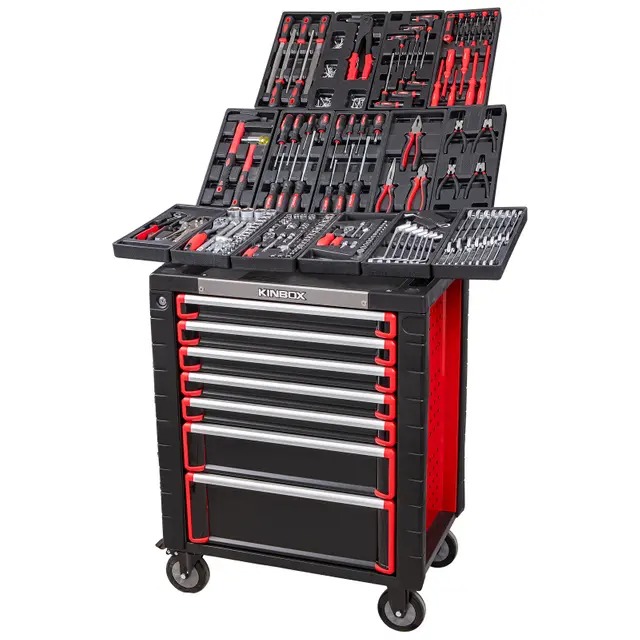
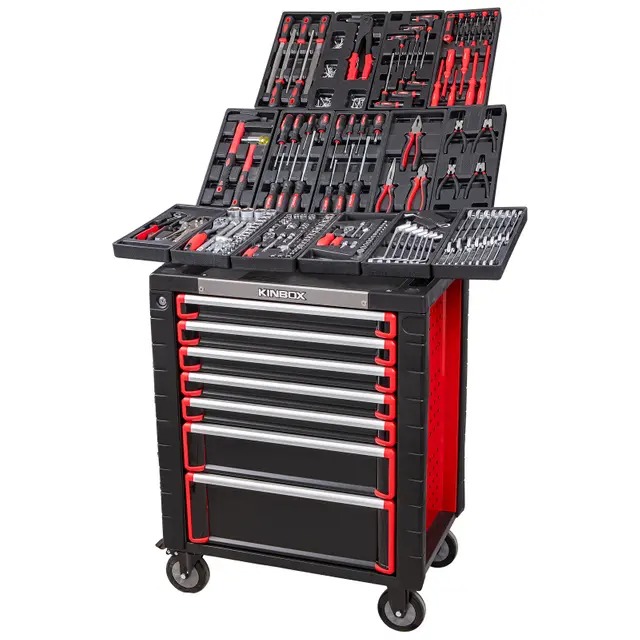
One of the most common reasons a low-priced cabinet ends up costing more is simply that it is built to a lighter standard than the job actually requires.
Industrial cabinet performance depends heavily on material choice and steel thickness. That may sound like a technical detail, but in real use it makes a very noticeable difference. Thinner steel can help reduce manufacturing cost, but it also makes the cabinet more vulnerable to dents, flexing, and long-term fatigue. A cabinet can still look solid in photos and still be underbuilt for daily industrial use.
Once drawers are loaded with sockets, wrenches, measuring tools, spare parts, and power tool accessories, stress starts building throughout the cabinet. Drawer fronts, bottom panels, side walls, caster mounting points, and the overall frame all take pressure. If the material is too light, the cabinet may not fail dramatically at first. More often, it just starts aging faster than it should.
The unit may begin to feel less rigid. Drawer alignment may shift slightly. The structure may wobble more under load. None of these issues looks catastrophic on day one, but together they tell the same story: the cabinet was not designed for the level of use it is being asked to handle.
The hidden cost here is reduced service life. Instead of getting years of reliable use, the buyer ends up with a cabinet that feels worn out too early, performs inconsistently, or needs replacing sooner than expected. At that point, the lower upfront price was never really a saving. It was simply a delayed expense.
Most buyers pay attention to drawer count. Fewer pay attention to the drawer system itself. That is a mistake, because the slides are one of the hardest-working parts of any Tool Cabinet.
In a busy workshop, drawers are opened again and again all day long. They need to carry weight, move smoothly, and remain dependable even when people are in a hurry. If the slide system is weak, that daily use starts wearing it down fast.
Here is what usually happens with lower-cost drawer systems: at first they feel acceptable, maybe even surprisingly decent. Then little problems start showing up. Drawers become harder to open under load. They stop gliding as smoothly as before. Some do not open fully. Others begin to feel slightly loose or uneven. Users start pulling harder, slamming more often, or avoiding certain drawers altogether.
That may not sound dramatic, but repeated friction in a work environment always has a cost. A cabinet that slows people down every day is not just a storage unit anymore. It has become a small but constant workflow problem. Over time, that lost efficiency adds up far beyond the original purchase difference.
This is the part buyers sometimes miss. They think they are saving money on storage, but what they are really doing is accepting a weaker work tool. And once a cabinet starts interfering with the pace of work, the business is paying for it in labor, not just hardware.
Finish quality is one of those details that gets overlooked because it sounds cosmetic. In reality, it is not cosmetic at all.
The surface treatment on a Tool Cabinet helps protect it from scratches, corrosion, moisture, chemicals, and general wear. In an industrial environment, that protection matters. Cabinets are not handled delicately. Tools scrape drawer edges, parts get dropped on top surfaces, dust builds up, oil and grease show up where they always do, and humidity can vary more than people think.
A weak coating often starts to show wear surprisingly fast. First the surface gets marked more easily. Then corners and edges begin to look rough. In harsher environments, small finish failures can lead to rust spots or larger surface deterioration over time. Once that process starts, the cabinet not only looks older than it should, but it also loses part of the durability the buyer expected in the first place.
And yes, appearance does matter more than some people admit. A workshop full of visibly worn-out storage sends a message about maintenance standards and overall organization. But the bigger issue is practical: surface breakdown often becomes the first sign that the cabinet is not going to age well.
If the finish fails early, the buyer is left with three unattractive choices: accept a cabinet that looks worn and degrades further, spend money trying to maintain it, or replace it earlier than planned. None of those options feels like a bargain.
This is one of the biggest cost traps, mainly because people underestimate how heavy tools really are.
A cabinet may be bought with only a rough idea of what will go into it. Then real use starts. One drawer gets filled with sockets. Another takes measuring tools. Another becomes the place for heavy repair items. Before long, the cabinet is carrying much more than the buyer originally pictured.
If the cabinet was built to a lighter standard, the first signs of trouble may be subtle. Drawers sag slightly. Slides feel rougher. The cabinet frame flexes more than expected. Wheels seem to struggle. The whole unit starts to feel less stable when fully loaded. Nothing may be “broken” yet, but confidence in the cabinet starts to drop.
And once users stop trusting a cabinet, they adapt around it. They store tools elsewhere. They overload other storage units. They leave commonly used items out on benches. That creates clutter, inconsistency, and in some cases avoidable safety issues.
If the cabinet needs replacing years earlier than planned, the original savings disappear quickly. Add in the cost of reordering, reorganizing tools, and dealing with operational disruption, and the lower-priced purchase may end up being the more expensive decision by a wide margin.
When buyers look at a rolling Tool Cabinet, they usually focus on the body and drawers. The wheel system often gets treated like a side detail. That is a mistake.
If a cabinet needs to move around a workshop, mobility is not a bonus feature. It is part of the product’s core function. Wheels, brakes, and the way the base handles full load all affect how usable the cabinet really is.
Low-cost wheels may not roll smoothly once the cabinet is loaded. Brakes may not hold firmly enough. Steering may feel awkward. On rougher workshop floors, the cabinet may vibrate too much or feel unstable when moved. Over time, these issues do more than annoy the user. They encourage rough handling, accelerate wear, and make the cabinet less convenient to use as intended.
And the moment a cabinet becomes inconvenient to move, people start changing their habits. They stop bringing tools to the point of work. They leave the unit where it is and carry tools back and forth manually. Or worse, they start leaving tools on worktops and open surfaces because using the cabinet properly no longer feels efficient.
The cost also shows up in behavior. If moving the cabinet feels like a hassle, the cabinet stops supporting efficiency and starts getting in the way of it. That is another example of how a cheap purchase can quietly become an expensive one.
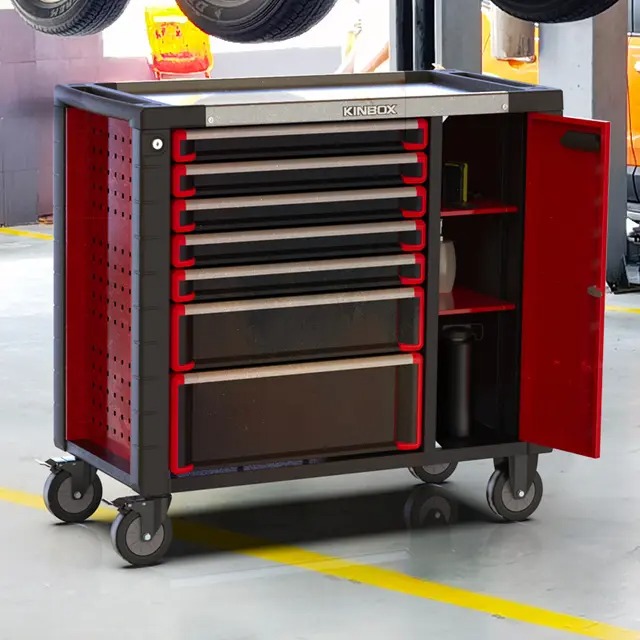
Another reason cheap cabinets cost more in the long run is that they are often built with less flexibility. They may be good enough for the current setup, but not for the next stage of use.
Industrial storage rarely stays static forever. Tool sets change. Teams expand. New workflow requirements appear. Shops reorganize. A cabinet that fits today’s needs perfectly may feel limiting later if it cannot adapt.
A lower-priced cabinet may save money on day one, but if it cannot support different drawer configurations, accessories, or integration with a larger storage setup, it may become a dead end. The buyer then faces a new cost—not because the cabinet physically failed, but because it no longer fits the way the business works.
That is something buyers do not always consider at the procurement stage. They compare current specifications without thinking much about how storage needs might evolve over the next few years.
This is an important point. Not every cheap cabinet is replaced because it breaks. Some are replaced because they are no longer practical. From a cost perspective, that still means the original purchase offered weak long-term value.
This is one of the least visible issues at the time of purchase and one of the most frustrating later on.
When buyers push hard for the lowest possible price, they sometimes end up with a supplier relationship that is weak on technical clarity, slow on service, and limited on spare parts support. That can turn a manageable product issue into a much bigger procurement problem.
If a lock fails and replacement parts are difficult to obtain, that is time lost. If a repeat order arrives with inconsistent specifications, that is risk added. If the supplier was vague from the beginning about materials, load ratings, or finish quality, then small problems become harder to resolve because the original expectations were never clearly defined.
This is especially important for distributors, wholesalers, and project buyers. In those cases, supplier reliability matters almost as much as product reliability. A strong-looking cabinet does not solve much if the supplier cannot support repeat business or respond well when something needs fixing.
Experienced buyers usually understand this very well: a slightly higher quote from a dependable supplier can easily be the cheaper option once spare parts, consistency, communication, and after-sales support are taken into account.
A cabinet is supposed to improve organization. That is the whole point. But when the cabinet is weak, awkward, or poorly suited to the job, it can do the opposite.
Good storage supports clean habits. It helps people return tools to the right place, find things faster, and keep the work area more orderly. Bad storage tends to create workarounds. Tools end up on benches, on top surfaces, in temporary boxes, or in places they should not be.
When drawers do not suit the tools, when movement feels rough, when the cabinet is overloaded, or when the lock is unreliable, people naturally compensate. They take shortcuts. They delay putting tools back. They keep frequently used items outside the cabinet “just for now,” which usually turns into a longer habit than intended.
Over time, that leads to harder-to-find tools, more clutter, less consistency, and more wasted motion. In other words, the cheap cabinet starts reducing the very efficiency it was supposed to improve.
Sometimes it charges in maintenance. Sometimes in wasted labor. Sometimes in early replacement. Either way, it rarely stays cheap for very long.
Cheap Tool Cabinet options usually look attractive because the purchase price is immediate and visible, while the long-term costs are scattered and delayed. But once you factor in lighter construction, weaker drawer systems, lower finish durability, reduced load capability, poorer mobility hardware, limited adaptability, weaker supplier support, and lower day-to-day efficiency, the picture changes quite a bit.
In industrial environments, the better question is rarely “What is the cheapest cabinet?” More often, it is “Which cabinet will still be doing its job properly after years of real use?” That is the question that tends to lead to better procurement decisions.
For buyers who want a more dependable long-term option, it helps to work with a manufacturer that understands both product durability and customer support. Ningbo Kinbox Tools Technology Co., Ltd., established in 2013, specializes in iron and sheet metal products including tool trolleys, tool cabinets, tool carts, garage storage systems, and workbenches. Located in Cixi, Ningbo, with a modern production facility of approximately 50,000 square meters, Kinbox focuses on practical workstation organization, durable metal construction, flexible product solutions, and responsive service, including spare parts and customer support. For importers, distributors, and project buyers who care about value beyond the initial quote, that kind of manufacturing and service background can make a real difference.
Because the purchase price is only one part of the total cost. Lower-quality cabinets may wear out faster, need replacement earlier, reduce workflow efficiency, or create maintenance and support issues that increase long-term expense.
Drawer slides, wheels, locks, finishes, and lighter structural sections are often the first areas where lower-cost cabinets show weakness, especially under frequent industrial use.
Yes. Steel thickness affects durability, rigidity, and load capacity. In industrial use, heavier-duty construction generally performs better over time than lighter alternatives.
A better cabinet supports smoother drawer operation, better organization, easier access to tools, and more consistent storage habits. That reduces wasted motion and helps users work more efficiently.
Buyers should compare material quality, drawer load ratings, slide performance, finish durability, mobility hardware, storage layout, spare parts availability, and the supplier’s after-sales support.



