
 English

Views: 0 Author: Site Editor Publish Time: 2026-03-23 Origin: Site


Walk into any busy workshop and you can usually tell within a minute whether the storage system is helping the work or quietly getting in the way. When tools are piled on benches, consumables are tucked into random corners, and every job starts with a short hunt for the right item, the problem is rarely just “not enough space.” More often, the problem is that the storage is not built for the way a workshop actually runs.
That is where a professional garage storage cabinet earns its place. On paper, it might look like a simple upgrade from open shelving or light-duty cupboards. In practice, it changes how the workshop functions. It helps keep aisles clear, supports better housekeeping, makes tools easier to access, reduces unnecessary handling, and gives heavier items a safer place to live. Clean, orderly storage is not just about appearance either; it is tied to safer working conditions and more reliable workflow. Regulations for workplaces emphasize that walking-working surfaces, storerooms, and service rooms should be kept clean, orderly, and, as far as feasible, dry, while stored materials should not create hazards and aisles should remain clear.
The bigger point is simple: workshops are harder on storage than ordinary garages. Cabinets get opened hundreds of times, loaded with heavy tools, bumped by carts, exposed to dust, and expected to stay organized even when the day gets chaotic. A professional cabinet is designed with that reality in mind. It is not just about storing more. It is about storing better.
A lot of people start with whatever storage is easiest to buy: light cabinets, household cupboards, plastic bins, or mismatched shelves collected over time. That can work for a while, especially in a small setup. But once the workshop gets busy, those stopgap solutions usually show their limits. Shelves sag, doors warp, hardware loosens, and the whole room starts feeling messy even when no single area looks terrible.
That is why choosing a professional garage storage cabinet is less about appearance and more about suitability. Workshop storage has to deal with heavier loads, more frequent use, rougher conditions, and stricter expectations around order and safety. Improper handling and storage are associated with avoidable workplace injuries, and basic housekeeping standards consistently point back to the same idea: materials should be stored in a way that does not create hazards, and the workspace should stay clean and orderly.
In other words, a cabinet in a workshop is not just furniture. It is part of the operating system of the room.
One of the clearest reasons to choose a professional cabinet is strength. Workshop storage is rarely light-duty for long. Even if you begin with hand tools and a few supplies, weight adds up fast once you include power tools, metal parts, hardware boxes, lubricants, measuring tools, chargers, and spare components. A cabinet that seems fine at first can start bending or loosening surprisingly quickly when it is used every day under real load.
A professional garage storage cabinet is usually designed around heavier-duty construction, better hinges, stronger shelving, and hardware that can handle repeated opening and closing. That matters because storage failure is not just annoying; it creates knock-on problems. Sagging shelves encourage clutter, overloaded compartments make access harder, and unstable storage increases the chance of drops, strains, and messy improvisation.
There is also a broader safety logic here. Stored materials are supposed to remain stable and secure against sliding or collapse, and heavy objects are generally better kept lower and in more accessible zones. Guidance on material handling also recommends storing materials off the floor and arranging them to reduce awkward lifting. A cabinet designed to hold real weight makes those safer practices much easier to maintain.
People sometimes underestimate how much time a poor storage system wastes. It is rarely dramatic. It shows up in little fragments: thirty seconds looking for a bit set, two minutes clearing a bench, another minute checking three drawers for the same measuring tool. On paper, those delays look small. Across a week, they add up.
That is one of the strongest arguments for a professional garage storage cabinet. Good workshop storage is not only about putting things away. It is about making the next step easier. When shelves, drawers, and compartments are planned around categories and usage frequency, the room starts flowing better. Daily-use tools stay in easy-reach areas. Backup supplies move higher or lower. Heavy items get safer locations. Consumables stop spilling into work surfaces.
This is exactly the kind of thinking behind 5S-style workplace organization: sort what matters, put it in order, keep the space clean, standardize the layout, and make the routine sustainable. The value of that approach is not just neatness. It is a cleaner, safer, better-organized space that supports productivity instead of slowing it down.
The best cabinet setups are not arranged by guesswork. They are arranged by frequency. Tools used every day belong between knee and shoulder height. Items used once a week can sit a little higher or lower. Heavy pieces should not require awkward reaches from the floor or overhead.
This sounds obvious, but it is exactly where professional storage helps. Cabinets built for workshop use tend to offer more useful compartment layouts and adjustable shelves, which makes it easier to match the storage to the task. And from an ergonomics point of view, storing materials off the floor and within a better lifting zone helps reduce strain.
Every workshop has this problem. The bench is meant for active work, but slowly it becomes long-term storage: drill case here, hardware box there, gloves in the corner, chargers along the back edge, three tools that were “just set down for a minute.” Once that happens, the bench is never really free.
A professional garage storage cabinet helps by giving all that drift a home. When the cabinet is close enough to the main work zone and easy to use, tools are far more likely to go back where they belong. The result is simple but important: the workbench starts working like a workbench again.
A tidy workshop is easier on the eyes. A safe workshop is easier on everyone. Storage has a direct effect on how safe the room feels and functions. When tools are left on the floor, stacked loosely, or stored in unstable ways, the risks go beyond inconvenience. You create tripping hazards, blocked pathways, unstable loads, and more awkward manual handling.
That is why storage and housekeeping show up so often in safety guidance. Clear aisles, orderly work areas, stable storage, and dry floors are not cosmetic standards. They are practical risk controls. Improper storage and handling are associated with costly injuries, while basic workplace rules repeatedly emphasize keeping passageways and storerooms orderly and free of hazards.
A professional garage storage cabinet supports that in several ways. It gets materials off the floor. It gives heavy items proper support. It reduces loose stacking. It keeps access more predictable. And when it includes lockable sections, it can also help limit casual access to certain tools, supplies, or controlled items.
Not every cabinet layout is equally useful. In workshops, one of the smartest habits is storing heavier objects low. That improves stability and reduces the strain of lifting from awkward positions. Guidance for both housekeeping and manual material handling points in that direction: heavy objects should be stored at low levels, and workers should avoid unnecessary lifting from the floor or other poor positions whenever possible.
A professional cabinet makes this practical because the shelves are built to carry that load consistently. That is a major difference from lighter storage that might look fine but is not really designed for dense tools or heavy consumables.
Not every workshop stores only hand tools and fasteners. Some also keep flammable liquids, chemicals, or other regulated materials. In those cases, ordinary storage is not enough. Rules for flammable-liquid storage include specific limits and approved storage cabinet requirements, which is why specialized safety cabinets exist in the first place.
That does not mean every workshop needs a chemical cabinet. It does mean that professional storage planning is better than guessing. Choosing the right type of cabinet for the right category of material is part of what separates a workshop-grade setup from a casual one.
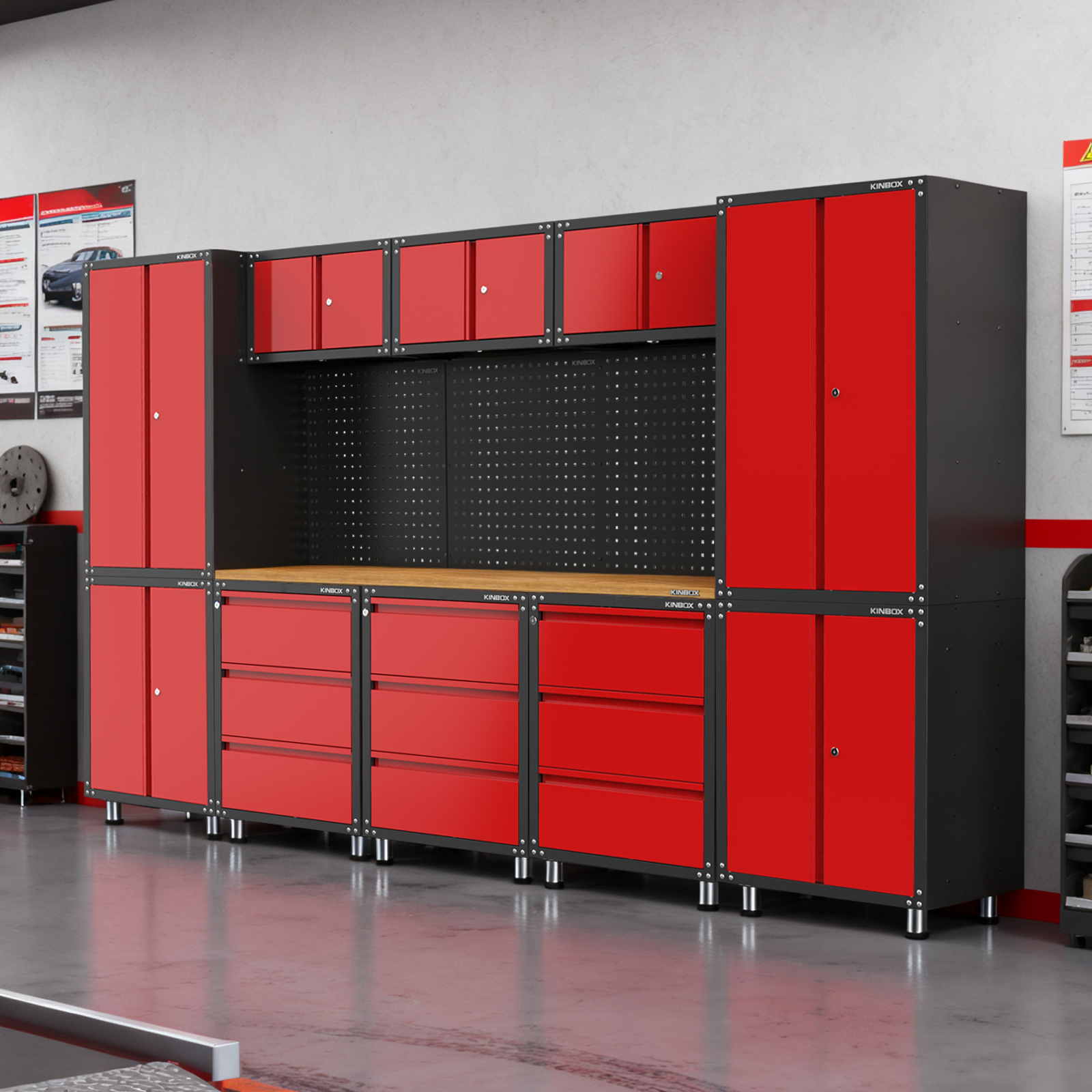
A professional garage storage cabinet usually costs more than a light-duty alternative. That part is obvious. What matters is what happens after that first purchase.
Cheap storage often looks less expensive because the costs arrive later. Shelves bow. Doors stop aligning. Drawer slides get rough. Locks fail. Paint chips. People start avoiding the cabinet because it is awkward to use, which pushes clutter back onto benches and floors. Eventually the shop replaces the cabinet, works around it, or wastes time fighting it every day.
A professional cabinet tends to age differently. Better materials and stronger construction usually mean longer service life, more stable performance, and less frustration. In a workshop, that matters because storage is high-contact equipment. It is part of the daily routine, not a decorative background piece.
There is also an indirect savings effect. Better workplace organization and ergonomics can help reduce injury-related costs, lower wasted motion, and improve overall competitiveness and productivity. In other words, storage that supports better work habits has value beyond the cabinet itself.
Open shelving has one clear advantage: everything is visible. But workshops are dusty places. Even clean ones collect airborne particles, debris, packaging dust, fine metal shavings, and general grime. When tools sit out in the open, they collect all of it.
That is where an enclosed professional garage storage cabinet has a practical edge. Doors reduce direct dust exposure, help cut visual clutter, and make it easier to keep stored items in a cleaner condition between uses. That is especially helpful for measuring tools, precision items, electrical accessories, and anything you do not want living under a fine layer of workshop dust.
The visual side matters too. A workshop with enclosed, orderly storage simply feels more controlled. That can sound superficial, but it affects behavior. When the room looks organized, people are more likely to keep it organized. That is one reason workplace organization methods put so much emphasis on order, cleanliness, and standardization as habits rather than one-time cleanups.
A small workshop can get by on informal storage longer than a larger one. But once tool count, staff count, or job complexity grows, informal systems start breaking down. One person might remember where everything is. Three people usually won’t. Ten definitely won’t.
This is another reason to choose a professional garage storage cabinet early rather than late. It gives the workshop a structure that can grow. Categories are easier to define. Restocking is easier to track. Shared tools are easier to return. Training new staff or helping temporary workers navigate the room becomes less chaotic.
The logic again matches well with standard workplace-organization thinking: systems work best when they are repeatable. A cabinet is valuable not only because it stores items, but because it helps standardize where those items belong. That reduces dependence on memory and lowers the odds of the workshop falling back into a “just put it somewhere for now” culture.
Not every workshop has a theft problem, but most workshops have items that should not be lying around openly. Expensive hand tools, batteries, precision instruments, specialty cutters, and certain consumables all benefit from controlled access. A professional cabinet with reliable locks is a simple way to create that control without turning the whole workshop into a restricted zone.
Security also overlaps with accountability. When tools have assigned storage and certain sections can be locked, it becomes easier to track what is being used, what is missing, and what needs replacing. That is especially useful in shared workshops, service departments, maintenance rooms, and commercial shop floors where tools circulate across multiple users.
This does not mean every cabinet needs to be high-security. It means professional storage gives you the option to build control into the workspace rather than relying on hope and memory.
Choosing the right cabinet is not only about size. A few features matter much more than people first expect.
Start with the basics. The cabinet should be built for workshop loads, not light household storage. That means paying attention to body construction, hinge quality, shelf support, and realistic load ratings. If the shelves will carry dense hardware boxes, tool cases, or heavy supplies, strength is not optional.
Workshops change. New tools arrive, old categories grow, and one shelf plan rarely works forever. Adjustable shelving and mixed compartment options make the cabinet useful for longer because the layout can change with the workshop instead of fighting it.
A workshop cabinet should be easy to wipe down, resistant to routine wear, and not overly delicate. Dust, grease, and hand marks are part of the environment. A cabinet that looks good only when untouched is not really workshop-ready.
Even a great cabinet underperforms if it is placed badly. The path in front of it should stay clear. It should be close enough to the main work zone for daily-use items to be returned without hassle. And it should not sit in the worst damp corner of the room if you can avoid it. The more natural the access, the more likely people are to use the storage correctly.
That may be the most honest answer to the whole question. Why choose a professional garage storage cabinet for workshops? Because workshops need consistency.
They need storage that performs under weight, not just when empty. They need doors and shelves that still work after thousands of cycles. They need a layout that keeps tools easy to find and easy to return. They need clearer aisles, less clutter, fewer awkward lifts, and cleaner work areas. And they need all of that on normal days, busy days, and messy days alike. Standards for housekeeping, materials storage, and ergonomics all point in the same direction: orderly, accessible, stable storage makes the workplace safer and easier to run.
A light-duty cabinet may look fine in a product photo. A professional cabinet is built for what the workshop will actually do to it.
Choosing a professional garage storage cabinet is really a decision about how you want the workshop to operate. If you want cleaner benches, clearer aisles, stronger storage, easier access, better safety habits, and a setup that still works after heavy daily use, professional storage is the smarter choice. It supports productivity in a very practical way: fewer delays, less clutter, less strain, and less improvisation. And for buyers looking for a reliable long-term partner, working with an experienced garage storage cabinet manufacturer or supplier matters just as much as the cabinet itself. A professional company can offer stronger materials, better structural design, flexible sizing, custom configurations, and more dependable quality control, which means you are not just buying storage—you are investing in a workshop solution that is built to last and built to work.
A professional garage storage cabinet is typically designed for heavier use, stronger loads, and rougher workshop conditions. It usually offers better structural strength, more durable hardware, and a more practical layout for tools and supplies, which makes it more suitable for daily workshop use.
In many workshops, yes. The higher upfront cost is often offset by longer service life, better organization, fewer workflow interruptions, and less frustration from weak or unstable storage. Storage that supports better ergonomics and safer handling can also help reduce indirect costs over time.
Yes, that is usually the safest and most practical choice. Lower storage improves stability and reduces awkward lifting. Heavy objects are generally better kept at low levels, while daily-use tools should stay in easier reach zones.
For many workshops, yes. Open shelves provide visibility, but enclosed cabinets do a better job of reducing dust exposure, visual clutter, and loose storage. Many shops use a mix of both, but cabinets are often the stronger choice for controlled, long-term tool storage.
Sometimes they do. If a workshop stores flammable liquids or certain hazardous materials, specialized approved cabinets may be required depending on what is being stored and in what quantity. That category should be treated differently from general tool storage.



