
 English

Views: 0 Author: Site Editor Publish Time: 2026-03-20 Origin: Site


There is a reason steel keeps showing up in workshops, warehouses, factories, service areas, and garages that actually get used. When people say a steel garage storage cabinet is durable, they are not usually talking about one nice feature. They are talking about a combination of qualities that work together over time: strength, stiffness, impact resistance, dimensional stability, surface protection, and the ability to keep doing its job after years of rough daily use. Steel is also not just one single material with one fixed performance level. Its properties can be adjusted through composition, processing, and finishing, which is one big reason it is used so widely in demanding industrial products. That matters a lot in a garage or workshop environment. Storage in these spaces is not decorative. It gets opened and closed repeatedly, loaded with tools, hit by boxes, scraped by hardware, exposed to dust, and expected to stay reliable anyway. A cabinet in that setting has to do more than look solid on day one. It has to resist bending, sagging, loosening, and surface wear over time. That is where steel tends to separate itself from lighter or less rigid materials. The short answer to the title question is this: a steel garage storage cabinet is highly durable because steel gives the cabinet a strong structural base, and then good fabrication and surface finishing make that base hold up even better in real-world use. But that answer is still a little too short to be useful. The better question is why those properties matter so much once the cabinet moves from a catalog page into a real workspace. A cabinet is only as durable as the material carrying its frame, shelves, doors, and stress points. That sounds obvious, but it is where most of the long-term difference begins. Steel has mechanical properties that can be engineered for strength and toughness, which is why it is used across so many structural and industrial applications. Its performance is not accidental. It comes from carefully controlled composition, rolling, forming, and heat-treatment routes that determine how the finished steel behaves under load and use. In simpler terms, steel is a material that is very good at being asked to do real work. It can carry significant loads without behaving like a temporary solution. In cabinet terms, that means shelves are less likely to sag, the body is less likely to rack or twist, and doors are more likely to stay aligned after repeated use. That may not sound glamorous, but in daily storage, those are exactly the things that make a cabinet feel solid years later rather than flimsy after one busy season. A cabinet does not fail only when it breaks. More often, it fails gradually. A shelf dips in the middle. A side panel starts bowing. The doors no longer close quite square. The lock feels slightly off. The whole unit technically still exists, but it stops performing the way it should. That slow kind of failure is what good durability prevents. Steel helps here because it is both strong and stiff. Those two ideas are related, but they are not identical. Strength is about handling load without failing. Stiffness is about resisting flex. A durable garage storage cabinet needs both. If the cabinet flexes too much, the load shifts, hardware starts wearing unevenly, and long-term reliability drops. Steel’s mechanical profile makes it well suited to products that need to hold shape under repeated use rather than just survive isolated force. This is also why steel cabinets tend to feel more “serious” in use. When you pull on the handle, load a shelf, or close a door, the cabinet usually feels stable instead of spongy. That feel is not just psychological. It is the visible result of a material that resists distortion better under normal workshop conditions. This is one of the most practical reasons steel cabinets are considered durable. Garages and workshops rarely store only light items. Tool cases, impact drivers, boxes of fasteners, spare parts, lubricants, electrical supplies, chargers, measuring tools, and dense hardware all add up quickly. The cabinet may not look overloaded from the outside, but the internal shelves are dealing with serious weight over time. Steel is a logical choice for that kind of application because it is widely specified for mechanical components and industrial parts where material performance matters. When the base material is strong and the cabinet is properly designed, the shelves and frame are far better positioned to handle sustained loading without turning into a slow sagging problem. That is a big part of what people really mean when they call a steel garage storage cabinet “heavy-duty.” It is not only about thickness. It is about how the material behaves under long-term stress. There is a practical side benefit too. Cabinets that hold their shape better also keep the organization system working better. A shelf that stays level stores bins more securely. A body that stays square keeps doors closing properly. Durable structure supports durable organization, and that connection is easy to underestimate until a weaker cabinet starts fighting your routine. Garage storage lives a much harder life than indoor furniture. Things hit it. Handles get yanked. A toolbox corner bangs into the side. A part slips from your hand. A box gets shoved onto a shelf a little too quickly. In other words, real use is messy. Steel performs well in that kind of environment because it combines strength with toughness. It is not a delicate surface pretending to be structural. It is a structural material. That makes a difference when the cabinet is exposed to everyday knocks, bumps, and sudden loading. A durable cabinet is not one that never gets touched. It is one that keeps functioning after being touched roughly, repeatedly, and not always carefully. That is also why steel cabinets tend to stay serviceable longer even when they do pick up signs of use. A scratch in a steel cabinet is usually just a scratch. A sharp hit to a weaker storage material can become a crack, broken corner, split fastener hole, or permanent deformation. In a serious workspace, that difference matters. A lot of cabinet problems are not dramatic breakages. They are alignment problems. Doors start rubbing. Shelves feel uneven. Drawers do not track cleanly. The cabinet starts feeling “off.” In many cases, that comes down to a loss of dimensional stability somewhere in the structure. One reason steel performs well over time is that it holds its form predictably when properly manufactured. Because the mechanical properties of steel are tightly specified and controlled for different applications, manufacturers can build around a material whose behavior is consistent. That consistency is one of the quiet reasons steel cabinets often age well. They do not rely on a material that is more likely to swell, soften, or creep under routine service conditions. In everyday language, this just means the cabinet is more likely to stay square. And staying square is a bigger deal than it sounds. It helps hinges line up, locks engage properly, and shelves continue fitting the way they should. A cabinet can only feel durable if the structure keeps cooperating with the hardware, and steel gives that structure a good chance of doing exactly that. Steel is strong, but bare steel is not the whole story. In real storage products, durability also depends heavily on what is protecting the steel surface. That is why finish quality matters so much. When people buy a steel garage storage cabinet, they are not just buying sheet steel. They are buying steel plus a protective system. Many steel products are metallic coated or painted because steel, when exposed to water and oxygen, can corrode. Protective finishes work by isolating the steel from the environment. If the barrier stays intact, the steel underneath is protected. That is the basic logic behind corrosion control in steel products, and it is highly relevant in garages where humidity, dust, and temperature swings can be part of daily life. This is one reason well-finished steel cabinets last so well. The material provides structural durability, and the finish helps preserve that durability by reducing corrosion risk and surface wear. Without that combination, you would still have a strong material, but not necessarily a strong long-term storage product. Powder coating is a common reason steel storage products feel tougher in daily use. When powder coating is applied and cured, it forms a firm finish that acts as a barrier over the steel. Depending on the formulation, powder-coated surfaces can be designed to improve protection against chemicals, abrasion, and ultraviolet exposure, which is useful in workspaces where cabinets deal with more than clean indoor air. In practical terms, that means the cabinet is better prepared for the sort of abuse workshops hand out automatically: rubbing from toolboxes, routine wiping, dirty hands, occasional cleaners, and the general wear that comes from use rather than neglect. A good powder-coated finish also helps the cabinet stay easier to clean, which matters because grime left sitting on surfaces tends to make storage look older faster. In some applications, steel may also be protected by zinc-based coatings. The idea is simple but effective. A barrier coating helps isolate the steel, and zinc also offers sacrificial protection because it corrodes preferentially before the base steel does. That is why zinc-protected steel is such a widely trusted strategy for fighting corrosion in tougher environments. Not every steel garage storage cabinet is galvanized, of course, and many indoor workshop cabinets rely primarily on paint or powder coating. But the broader point still matters: steel becomes much more durable in real service when the product design takes corrosion protection seriously. Material durability is important. Protected material durability is what customers actually live with. A cabinet is not just a pile of panels. It is a system of connections. Shelves connect to walls. Doors connect to hinges. Locks connect to latches. The frame connects to itself at every fold, weld, or fastened joint. A durable cabinet depends on those connections almost as much as it depends on the material sheet itself. Steel helps because it lends itself well to forming, welding, fastening, and fabrication processes that support rigid construction. Since steel properties are standardized and specified so carefully across grades and product forms, manufacturers can design with confidence around how the material will behave during forming and assembly. That is one reason steel cabinets can be built as serious load-bearing products rather than just storage-shaped boxes. This is also why manufacturing quality matters so much. Two cabinets may both be “steel,” but one will last longer if the welds, reinforcements, shelf supports, door construction, and hardware mounting points are better executed. Steel gives the manufacturer a strong foundation. Good fabrication is what turns that foundation into a cabinet that truly lasts. Some materials look fine when new but wear out quickly once the usage pattern becomes intense. Steel tends to do well in the opposite direction. It is often chosen precisely because the product will be used hard. That is why you see steel so often in industrial, structural, and equipment-related applications where long service life matters. It is durable not only in the sense of surviving a test, but in the sense of remaining useful across repeated cycles of everyday work. For a garage storage cabinet, this long-game durability is a big advantage. Workshops do not need storage that only looks sturdy when empty. They need storage that still works after years of being opened, loaded, cleaned, bumped, and reorganized. Steel suits that requirement because it is not a fragile answer to a rough question. Durability is not only about surviving abuse. It is also about being easy to keep in service. A cabinet that is hard to clean, hard to inspect, or quick to degrade cosmetically tends to feel old earlier, even if it has not structurally failed yet. Steel cabinets usually benefit from that here as well. Finished steel surfaces are generally straightforward to wipe down and maintain, and protective coatings are designed to stand up to everyday wear better than many ordinary painted surfaces. Powder coatings in particular are widely used because they provide durable finishes for products that see frequent handling and rough use. That means the cabinet not only stays structurally dependable, but also remains easier to keep presentable. In a professional workshop, that matters more than people sometimes admit. Storage that still looks clean and serviceable tends to be respected and used properly. Storage that looks tired and worn-out often gets treated like an afterthought. A steel garage storage cabinet may cost more upfront than a lighter alternative. But durability changes the math. When the cabinet keeps its shape, protects its surface, carries weight properly, and stays useful for years, the replacement cycle usually gets longer. That makes the initial purchase easier to justify, especially in commercial or industrial settings where downtime, disorder, or repeated replacement become their own hidden cost. There is also a sustainability angle that supports the value argument. Steel is highly durable and fully recyclable, and global steel data emphasizes that it can be recycled without loss of quality. That does not directly make one individual cabinet stronger, but it does strengthen the case for steel as a long-life material choice rather than a disposable one. A product built to last longer and remain recyclable at end of life is easier to defend from both a cost and materials perspective. At this point, it is worth saying something very plainly: steel alone is not enough. A poorly made steel cabinet can still disappoint. The reason top-tier steel cabinets last longer is that several durability choices stack together. The steel itself needs to be appropriate for the application. The cabinet structure needs reinforcement where loads concentrate. Shelves need real support. Doors need proper hinge and latch design. The finish needs to be applied well. And the product needs to be manufactured with enough precision that the parts stay aligned after repeated use. Steel gives you the right raw potential, but the finished durability comes from how well that potential is used. That is why buyers looking for a durable garage storage cabinet should pay attention not only to the word “steel,” but also to build quality, finish system, load design, and how serious the manufacturer is about production standards. Material matters. Execution matters just as much. So why is a steel garage storage cabinet highly durable? Because steel gives the cabinet the kind of structural backbone that workshops and garages actually demand: strength, stiffness, load capacity, dimensional stability, and resistance to everyday abuse. When that steel is paired with good fabrication and a well-applied protective finish such as powder coating or other corrosion-control systems, the result is a storage product that holds up far better over time than lighter, less rigid alternatives. And for buyers sourcing cabinets for professional workshops, garages, or industrial spaces, choosing the right supplier matters just as much as choosing the right material. Our company focuses on garage storage cabinet solutions built around durable steel construction, practical internal layouts, reliable finishing, and customization support, helping customers create storage systems that do not just look strong in photos, but stay dependable in real daily use. In most heavy-duty workshop situations, yes. Steel is widely used in applications where material performance, load handling, and structural consistency matter, which is why it tends to be a stronger choice for cabinets expected to carry dense tools and supplies over time. Yes. Powder coating creates a cured barrier finish over the steel, and depending on the formulation, it can improve protection against abrasion, chemicals, and ultraviolet exposure. That extra layer helps the cabinet handle real-world wear better. It can if the protective finish is damaged or if the product is poorly protected for its environment. Steel itself needs a barrier or protective system when moisture and oxygen are present, which is why coatings and finishing quality are such an important part of cabinet durability. Because steel is well suited to load-bearing applications and resists deformation better than many lighter cabinet materials. When the shelf design and supports are properly engineered, steel is much less likely to turn into a sagging long-term storage problem. For many workshops, yes. The combination of long service life, better load performance, easier maintenance, and reduced replacement frequency often makes steel a better long-term value, especially in spaces where storage is used hard every day. Steel’s durability and recyclability also strengthen that long-term case. Durability starts with the material itself
Steel resists deformation better than many lighter materials
A steel garage storage cabinet handles heavy loads more confidently
Impact resistance matters more in a workshop than in a living room
Steel is dimensionally stable, which helps the whole cabinet age better
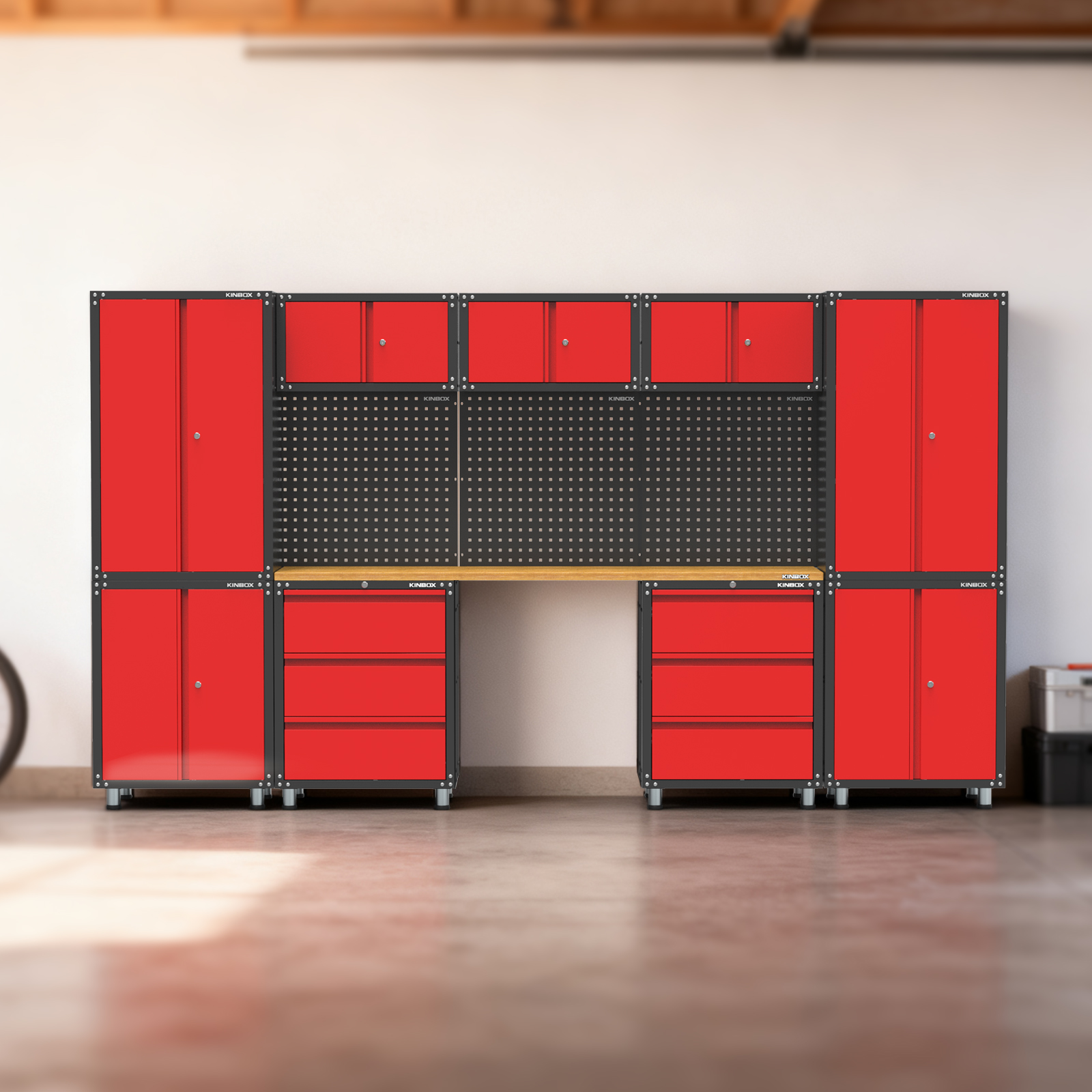
Surface protection is a big part of steel cabinet durability
Powder coating adds a tough protective layer
Galvanized or zinc-based protection can go a step further
Steel cabinets are durable because the joints can be durable too
Steel ages well in high-use environments
Maintenance is usually simpler with steel
Steel durability also makes long-term value easier to justify
Why some steel cabinets last much longer than others
Conclusion
FAQ
1. Is a steel garage storage cabinet stronger than a wooden one?
2. Does powder coating make a steel cabinet more durable?
3. Can a steel garage storage cabinet rust?
4. Why do steel shelves usually hold weight better over time?
5. Is a steel garage storage cabinet worth the higher upfront cost?



