
 English

Views: 0 Author: Site Editor Publish Time: 2026-04-27 Origin: Site


When buyers compare industrial storage products, they often focus first on appearance, drawer count, dimensions, or price. Those things do matter, of course. But in real workshop, factory, and maintenance environments, one factor deserves much more attention than it usually gets: load capacity. If an industrial Tool Cabinet cannot safely and reliably support the weight of the tools, parts, and daily-use equipment stored inside it, then even a well-designed cabinet can become a problem over time.
This is where a lot of purchasing decisions go wrong. A cabinet may look strong enough from the outside, and on the first day, it may seem perfectly fine. But industrial use is not about the first day. It is about repeated opening and closing, constant loading, occasional overloading, long-term wear, and the kind of rough, practical usage that happens in actual workplaces. A cabinet that works well in a light-duty environment may struggle in a workshop where technicians store socket sets, power tools, measuring tools, spare parts, heavy accessories, and metal components all in one place.
That is why load capacity should not be treated as a minor technical detail hidden somewhere in a product sheet. It is closely tied to safety, durability, workflow efficiency, and long-term value. A cabinet with appropriate load-bearing performance can help maintain smooth drawer movement, reduce structural stress, support better tool organization, and prevent the gradual breakdown that often happens when storage is pushed beyond what it was really built to handle.
In other words, load capacity is not just about how much weight a cabinet can hold on paper. It is about whether that cabinet can continue working properly in the environment where you need it most. For buyers in manufacturing plants, maintenance workshops, garages, industrial service areas, and technical facilities, this question deserves a serious look before any purchase is made.
This article explores why load capacity matters when purchasing an industrial Tool Cabinet, how it affects daily use, what risks come with underestimating it, and how businesses can choose a cabinet that truly matches the demands of the job.
At a basic level, load capacity refers to how much weight a cabinet, drawer, shelf, or overall storage unit can safely support. But in industrial applications, the meaning is a little broader than that. It is not only about maximum weight. It is also about how that weight is distributed, how often drawers are opened under load, how the frame responds to repeated stress, and whether the cabinet remains stable and functional over time.
For example, two cabinets may appear similar in size and layout, but they can perform very differently once loaded. One may handle heavy tools smoothly, while the other starts to show strain through sticking drawers, bending panels, poor balance, or weakened runners. That difference often comes down to material quality, structural design, slide performance, manufacturing precision, and the way the cabinet was engineered for actual usage conditions.
It also helps to understand that load capacity is not only an issue for very large or very heavy tools. In many workplaces, weight adds up gradually. A few metal hand tools here, a torque wrench there, a power tool battery pack, some spare components, and suddenly a drawer is carrying far more than people expect. This is especially common in industrial maintenance and repair settings where workers rely on dense, heavy-duty tool sets rather than light household tools.
That is why buyers should think about capacity in a practical way. The question is not simply, “Can this cabinet hold tools?” Almost any cabinet can do that. The better question is, “Can this Tool Cabinet hold the kind of tools we actually use, in the quantity we actually store, under the daily conditions we actually face?”
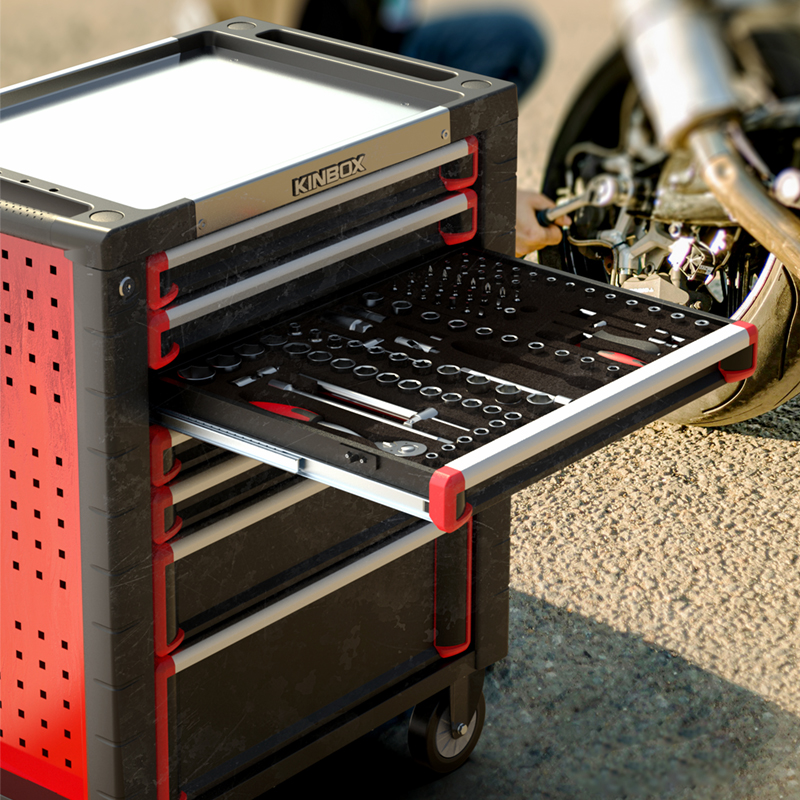
There are a few reasons load capacity gets less attention than it should. First, it is not always visible. Buyers can easily compare colors, sizes, drawer numbers, or surface finishes, but structural strength is harder to judge just by looking. Unless someone has experience with industrial storage, it is easy to assume that a steel cabinet is automatically heavy-duty enough. That assumption can be misleading.
Second, many buyers are under pressure to make practical purchasing decisions quickly. In that situation, capacity details can seem secondary compared with budget, lead time, or exterior design. But that short-term way of thinking often creates longer-term costs. A cabinet that is cheaper upfront but not strong enough for the real working load may require repair, replacement, or workarounds sooner than expected.
Another reason is that actual usage often changes after purchase. A cabinet may be bought for one purpose, then gradually take on more weight as teams add new tools, reorganize stations, or use drawers for mixed storage. It is not unusual for industrial cabinets to become more heavily loaded over time simply because they are useful and convenient. If capacity was already close to the limit at the time of purchase, that extra load can quickly become a problem.
And to be honest, some buyers just assume that if a cabinet is marketed for industrial use, it must automatically be suitable for demanding industrial loads. In practice, “industrial” can mean different things depending on the manufacturer, the design standard, and the intended application. That is exactly why load-bearing performance deserves direct attention rather than assumption.
Safety is one of the strongest reasons load capacity matters. When a Tool Cabinet is overloaded or poorly matched to the application, risks increase in ways that are not always obvious at first. Drawers may become harder to open and close smoothly. Components may shift unexpectedly. The cabinet may become front-heavy when multiple loaded drawers are opened. Structural fatigue can develop slowly and then show up at exactly the wrong moment.
In industrial environments, storage equipment is used repeatedly, often under time pressure. Workers are not going to treat a cabinet like a display piece. They will open it quickly, pull tools out, return items in a hurry, and sometimes load more into a drawer than the original plan intended. That is normal workplace behavior. A cabinet needs to handle that reality safely.
Cabinets with better load capacity are generally more stable under real working conditions. They are better suited to support dense tool storage without compromising drawer operation or overall balance. This is especially important where heavy-duty hand tools, maintenance tools, mechanical parts, or metal components are stored together.
Safety features such as anti-tipping design and locking systems also work best when the cabinet structure itself is strong enough for the load it carries. If the overall build quality is not aligned with the actual weight inside the cabinet, those features alone cannot fully solve the problem. A stable, reliable Tool Cabinet begins with sound load-bearing performance.
Efficiency is not usually the first thing people connect with load capacity, but the two are closely related. A cabinet that handles weight properly supports smoother workflow. A cabinet that does not can slow everything down in small but frustrating ways.
Think about a technician trying to retrieve a tool from an overloaded drawer that drags, sticks, or does not open cleanly. That delay may only take a few extra seconds, but in a busy workplace, those moments add up. If drawers do not feel stable under load, users may avoid storing heavy items where they logically belong and instead place them on benches, carts, or nearby surfaces. That creates clutter and undermines organization.
Load capacity also affects how confidently people use a cabinet. When storage feels solid, workers are more likely to rely on it properly. When it feels weak or unstable, they start creating workarounds. And once workarounds begin, efficiency drops. Tools get stored in inconsistent places, daily-use items end up outside the cabinet, and organization becomes harder to maintain.
In that sense, good load capacity supports not only physical storage, but also storage discipline. A durable industrial Tool Cabinet helps keep tools where they belong, which makes them easier to find, easier to return, and easier to manage in the flow of work.
One common purchasing mistake is underestimating how quickly weight accumulates inside a cabinet. Buyers may think in terms of individual tools rather than the combined load of a fully used drawer or cabinet. But in industrial settings, even ordinary-looking storage can become very heavy once it is fully stocked.
A drawer holding ratchets, sockets, spanners, pliers, hammers, measurement tools, and fastening tools may already carry a substantial load. Add power tools, batteries, specialty kits, or metal parts, and the weight rises even more. In some departments, drawers may also hold fixtures, fasteners, replacement components, or repair accessories that are compact but dense.
This is why cabinet selection should reflect realistic loading conditions, not ideal ones. It is better to think about the heaviest likely use case rather than the lightest planned use case. Industrial work rarely stays neatly within the original plan. If a cabinet is only strong enough for minimal loading, there is a good chance it will be pushed beyond that once real operations begin.
That does not mean every buyer should automatically choose the highest-capacity cabinet available. It means they should choose a Tool Cabinet with enough structural margin to handle both current use and the likely growth of storage demands over time.
When people talk about load capacity, they sometimes focus only on the cabinet as a whole. But drawer-level performance is just as important, and in many cases, even more important. After all, most daily interaction happens at the drawer level. If drawers cannot support their working load properly, the user experience declines quickly no matter how strong the outer frame looks.
Industrial drawers need to maintain smooth movement, alignment, and support under repeated loading. That depends on slide quality, drawer construction, and how evenly the load is expected to be distributed. A cabinet may have multiple drawers, but if only a few of them are used for the heaviest tools, those drawers must still perform reliably without sagging or resisting movement.
Buyers should also keep drawer purpose in mind. Shallower drawers may suit lighter hand tools or tray-based organization, while deeper drawers may be used for larger items, heavy accessories, or dense tool kits. Different drawer positions may experience different kinds of loading in practice. If those details are overlooked, the storage system may look good in theory but become inconvenient in real use.
A strong industrial Tool Cabinet should therefore be assessed not just by its external design, but by how well each storage area supports its intended purpose. Good cabinet design is not only about how much fits inside. It is about how well the structure supports what is stored inside, day after day.
If you want a cabinet to last, load capacity needs to be part of the buying decision from the beginning. Long-term durability is not simply about whether the cabinet is made of metal. It is about whether the structure, joints, runners, panels, and frame are all capable of handling repeated use under real weight.
Industrial storage is rarely treated gently. Drawers are opened quickly, tools are returned without ceremony, and cabinet surfaces may experience knocks, vibrations, and constant movement around the workspace. Under those conditions, even a modest mismatch between load and capacity can accelerate wear. What starts as slightly rough drawer movement can turn into more obvious functional issues later.
A cabinet with suitable load-bearing strength is more likely to keep its shape, maintain drawer alignment, and continue functioning properly after extended use. It is also more likely to preserve a professional appearance because the structure is less prone to visible distortion or stress-related issues.
From a purchasing perspective, this matters because durability directly affects value. A cheaper Tool Cabinet that struggles under industrial loads may cost less initially but prove more expensive over time through replacement needs, downtime, inconvenience, or reduced service life. Buyers who look beyond the initial price often find that stronger storage products offer better long-term economics.
When a cabinet is not strong enough for its real application, the consequences are often spread out rather than dramatic. That makes them easy to overlook, but they are still costly.
Under-capacity cabinets are more likely to wear out faster, especially at the drawer and slide level. If the storage system no longer performs smoothly, companies may need to repair, reinforce, or replace it sooner than planned.
Once drawers become difficult to use, workers start avoiding them. Heavy tools get left outside the cabinet, stored on benches, or moved to makeshift locations. Organization becomes inconsistent, and the cabinet no longer functions as a reliable storage system.
If tools are harder to access or return, small delays multiply. Workers may waste time dealing with drawer issues, moving items around, or searching for tools that no longer have a stable storage position.
Instability, poor balance, and overloaded drawers can create avoidable risks. Even if no serious incident occurs, the possibility of unsafe storage conditions is something businesses should take seriously.
A product that does not suit the working load is not truly a bargain. Buying the wrong cabinet once often costs more than buying the right one from the start.
Buyers do not need to overcomplicate the process, but they should ask practical questions before selecting an industrial Tool Cabinet. The first step is to review what will actually be stored. Will the cabinet hold mostly hand tools, or will it also store power tools, metal parts, or tool kits with substantial weight? Will it be used by one person with a consistent layout, or by multiple technicians in a busy shared environment?
It is also wise to think beyond the current moment. Storage needs often expand. A cabinet that seems adequate now may become cramped or overburdened later if departments grow, tool sets increase, or work processes change. Leaving some room in both space and weight capacity can help extend the usefulness of the cabinet.
Another smart step is to consider the balance between cabinet size and intended use. Larger cabinets often invite heavier loading simply because they offer more room. Buyers should not assume that spaciousness automatically means higher usable strength. What matters is whether the cabinet is engineered to perform well under the kind of load users will actually place inside it.
Finally, buyers should pay attention to the broader construction qualities that support load-bearing performance: material thickness, structural reinforcement, drawer slide quality, overall stability, and manufacturing consistency. A reliable industrial Tool Cabinet is usually the result of multiple design decisions working together, not just one headline specification.
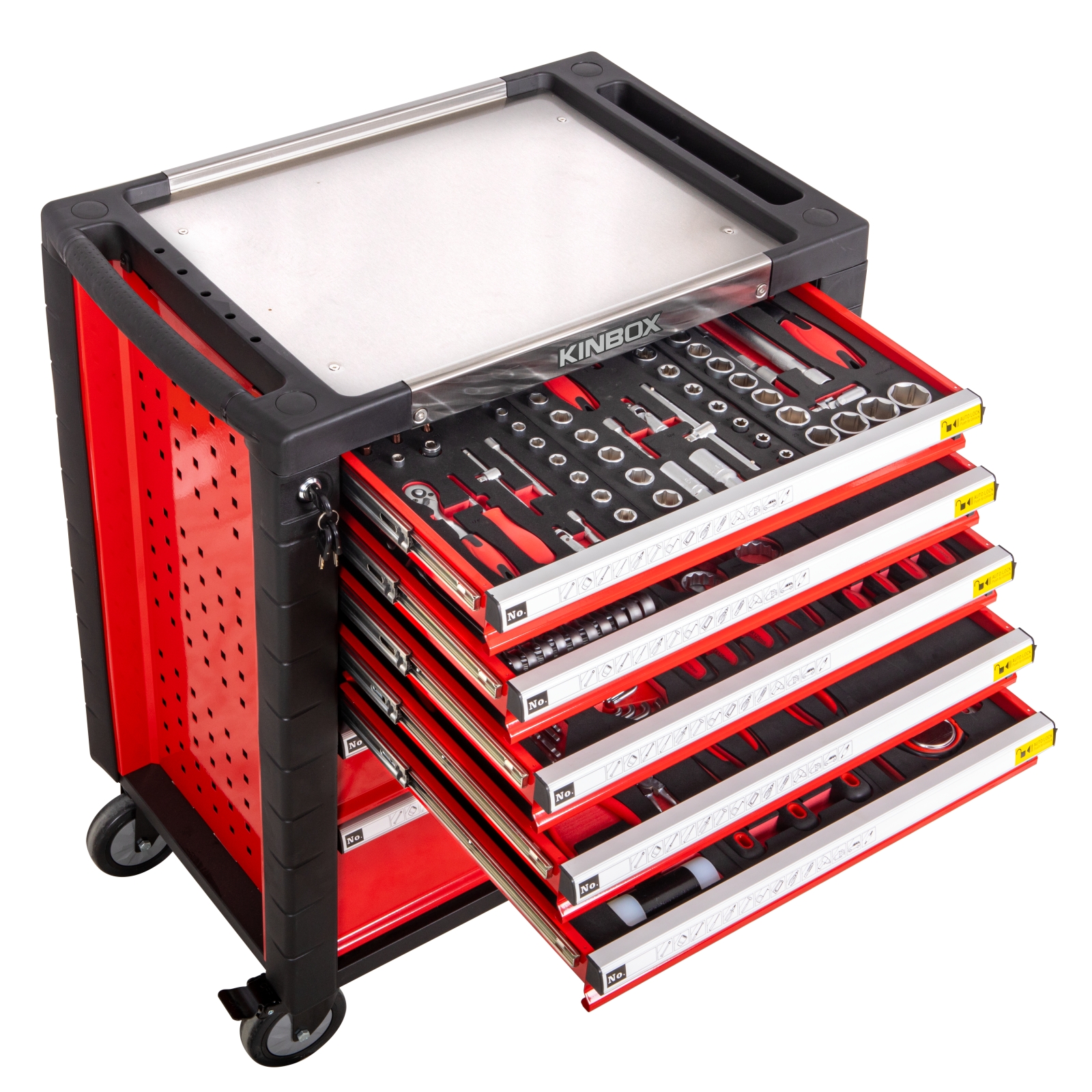
Not every industrial environment needs the same kind of cabinet, even if all of them are technically buying a Tool Cabinet. A maintenance team servicing heavy machinery has different storage demands from an assembly workstation using lighter precision tools. A garage-style service area may need mobile storage with strong drawer performance, while a fixed workshop station may prioritize dense static storage and long-term organization.
That is why buyers should match capacity to application rather than relying only on category labels. Two businesses may both need tool cabinets, but their actual working loads, movement patterns, and storage expectations may be completely different.
Application-based thinking also helps avoid overbuying or underbuying. Choosing the heaviest possible cabinet for a light-duty need may not be efficient, while choosing a basic cabinet for a demanding industrial setting usually creates problems later. The ideal choice is the one that fits the real operational requirement with enough confidence for long-term use.
In some cases, the best solution is not just a standard cabinet, but a cabinet that can be better matched to the intended storage layout. Customization options such as varied drawer configurations, tray systems, internal organization layouts, or accessory choices can improve how weight is distributed and how tools are stored.
This matters because capacity and organization work together. A well-organized drawer is easier to load sensibly than a cluttered one. Tool sets arranged in trays such as BMC, EVA, or EPS options can help stabilize storage and make it easier to manage tool weight more consistently. Drawers designed for specific tool groups also reduce the temptation to overload one area while leaving another underused.
For industrial buyers, customization can therefore do more than improve appearance or convenience. It can support practical load management, better workflow, and more reliable long-term cabinet performance.
Because load capacity depends on real engineering and manufacturing quality, choosing the right supplier matters. Buyers need more than a cabinet that looks professional in photos. They need a manufacturer that understands sheet metal processing, structural consistency, industrial usage conditions, and the importance of storage performance over time.
A reliable manufacturer is more likely to offer products that balance durability, usability, and organization in a way that fits actual work environments. That includes thoughtful drawer design, strong cabinet construction, professional finishing, and options for customization where needed. In industrial settings, those details matter because they shape how well a cabinet performs after months and years of use, not just during installation.
Load capacity matters when purchasing an industrial Tool Cabinet because it directly influences safety, durability, efficiency, and overall value. It affects whether drawers open smoothly under real weight, whether tools stay properly organized, whether the cabinet remains stable during daily use, and whether the storage system continues performing reliably over time. In industrial workspaces, where tools are often dense, heavy, and constantly in use, this is not a small detail. It is one of the key factors that separates a cabinet that simply looks strong from one that actually works strong.
For buyers, the smartest approach is to think practically: consider the real tools being stored, the likely total weight, the intensity of daily use, and the possibility that storage demands will grow over time. A cabinet with suitable capacity is not just a safer choice. It is also a more efficient and economical one in the long run.
For companies looking for dependable storage solutions, Kinbox offers meaningful advantages in this area. As a professional tool cabinet manufacturer established in 2013, Ningbo Kinbox Tools Technology Co., Ltd. specializes in iron and sheet metal product processing and provides tool cabinets, tool trolleys, tool carts, garage storage systems, and workbenches for a wide range of professional environments. With a workshop area of around 50,000 square meters, advanced sheet metal working capability, product versatility, customization support, and a focus on quality and service, Kinbox can help customers choose storage solutions that are not only practical in design, but also better suited for real industrial workloads.
Load capacity is important because it affects whether a Tool Cabinet can safely and reliably store the actual weight of tools, parts, and accessories used in daily work. Proper capacity supports safety, durability, and smoother operation over time.
An overloaded cabinet may develop hard-to-open drawers, structural stress, reduced stability, and faster wear. It can also lead to poor organization and create avoidable safety concerns in the workplace.
Both matter. Overall capacity affects structural stability, while drawer capacity affects daily usability. Since workers interact with drawers constantly, drawer performance under load is especially important in practical use.
Start by reviewing the actual tools and items you plan to store, including heavy hand tools, power tools, spare parts, and accessories. It is also wise to leave room for future growth rather than choosing a cabinet based only on current minimum needs.
Yes. Custom drawer layouts, tray systems, and internal organization can help distribute weight more effectively and keep storage more orderly. This can improve both usability and long-term cabinet performance.



