
 English

Views: 0 Author: Site Editor Publish Time: 2026-04-09 Origin: Site


At first, a tool cabinet can seem like a fairly simple product. It is a cabinet. It stores tools. If the size looks right and the finish looks decent, it is tempting to think the decision is mostly about price, color, and maybe how many drawers or shelves you get. But that impression usually fades the moment the cabinet enters real daily use. In an actual workshop, maintenance area, service room, or industrial support space, a tool cabinet is opened dozens of times a day, loaded with weight, exposed to dust, moved around, leaned on, cleaned, and expected to stay organized through all of it. That is why choosing a professional tool cabinet manufacturer matters more than people expect. The choice affects not just what the cabinet looks like when it arrives, but how it performs months and years later. Supplier quality management exists for exactly this reason: organizations need suppliers that consistently meet requirements rather than occasionally getting things right.
That manufacturer choice matters even more when you remember what the cabinet is really doing in the workspace. It is not just holding tools. It is supporting order, helping protect work surfaces, reducing clutter, and contributing to a safer, more predictable environment. Workplace rules are very clear that storage areas should be clean and orderly and that stored materials must not create hazards from instability, tripping, or accumulation. A cabinet that is well made supports those conditions. A cabinet that is poorly made usually undermines them sooner or later.
One of the most common buying mistakes is treating the cabinet as an isolated object instead of the end result of a manufacturing system. People see the exterior and make a judgment based on appearance. But appearance only tells part of the story. What really matters is what sits behind the product: how consistently materials are selected, how accurately parts are formed, how carefully surfaces are finished, how load-bearing components are designed, and how well quality is controlled before shipment.
That is why manufacturer choice matters from the beginning. A professional tool cabinet producer is not just supplying metal boxes. The manufacturer is responsible for turning design intent into a repeatable product. If that process is weak, problems usually show up in the same familiar places: uneven doors, rough drawer movement, weak shelf supports, poor finish adhesion, inconsistent dimensions, or cabinets that technically work but never feel truly solid. Quality management systems exist because consistency does not happen by accident. It comes from defined processes, measurement, correction, and continual improvement.
A lot of buyers focus on the first unit they receive. Professional buyers usually think one step further. They think about consistency across multiple units, repeat orders, long-term projects, or future expansions. That is where manufacturer choice becomes especially important. One good cabinet is useful. A supplier that can deliver the same quality, fit, and performance again and again is much more valuable.
This point matters because workspaces depend on repeatability. Organized systems stay organized more easily when storage dimensions, internal layouts, and operating quality remain consistent across cabinets. The broader logic is the same one behind structured workplace methods: sort, set in order, standardize, and sustain. If the product quality varies too much from batch to batch, standardization becomes harder. If the product quality is stable, the workspace becomes easier to manage at scale.
When people hear “consistency,” they sometimes think of paint color or cosmetic finish. In reality, repeatability affects far more practical things. It affects whether doors line up properly, whether shelves sit level, whether drawer slides feel uniform, whether holes line up during assembly, whether locks and latches engage correctly, and whether multiple cabinets can be placed together without looking or functioning unevenly.
In a workshop, these are not luxury concerns. They affect how easy the cabinet is to use and whether people trust it enough to keep using it properly. A storage system that feels slightly awkward is one people start working around. Once that happens, tools drift onto benches, backup stock gets stacked elsewhere, and the whole organizational value of the cabinet starts to fade. That is why consistency from the manufacturer matters more than many people realize at the start.
A professional tool cabinet often has to store dense, heavy, or frequently handled items: power tools, hardware boxes, measuring instruments, maintenance supplies, batteries, chargers, and backup components. That means the structure matters. Not just in a theoretical engineering sense, but in a very practical, everyday sense. The cabinet has to resist sagging, racking, loosening, and general wear under real conditions.
Manufacturer choice matters here because structural reliability is not something you can judge perfectly from a product photo. The real differences often come from decisions the buyer does not immediately see: how the frame is reinforced, how shelf supports are designed, how joints are made, how load is distributed, and whether the product was built around real workshop use rather than showroom assumptions. The reason supplier quality management is treated seriously in professional settings is that products and services need to conform to pre-established requirements, not just look acceptable on the surface.
This is a point people often miss. Structural quality does not only affect durability. It affects organization. A shelf that stays level keeps bins and tools stable. Doors that stay aligned keep access easy. A cabinet that does not wobble or distort is more pleasant to use, so people are more likely to put things back properly. In other words, better manufacturing quality supports better storage habits.
That matters because orderly storage is not merely cosmetic. Stored materials are supposed to remain stable and secure, and storage areas are supposed to stay free from hazardous accumulation. A poorly built cabinet can quietly work against those goals by making the storage system less trustworthy and less convenient. A well-built cabinet supports them every day without drawing attention to itself.
A cabinet’s finish is easy to dismiss until it starts failing. But in a working environment, surface treatment does a lot of heavy lifting. It affects corrosion resistance, ease of cleaning, scratch visibility, and how quickly the cabinet starts looking tired. Workshops and service spaces are not gentle environments. Dust settles, hands are dirty, parts rub against surfaces, and humidity can fluctuate. A cabinet that looks fine initially but degrades quickly can make the entire room feel older and less controlled than it actually is.
This is another reason manufacturer choice matters. Surface finishing is not just a decorative step. It is part of product performance. Barrier coatings protect steel by isolating it from the environment, and if that barrier stays intact, corrosion risk is reduced. Powder-coated products are also widely promoted for resistance to impact, moisture, chemicals, abrasion, fading, and other wear. So when buyers choose a professional tool cabinet manufacturer, they are also choosing the seriousness of the finishing process behind the product.
There is a big difference between a cabinet that is used and a cabinet that looks worn out too soon. In professional spaces, that difference matters. Storage that still looks clean and intact tends to be respected and maintained. Storage that chips, scratches, or corrodes quickly often gets treated like a temporary object, even if it was not meant to be one.
That is why a professional manufacturer’s control over pretreatment, coating application, curing, and final inspection matters in such a practical way. The better the finish system, the longer the cabinet can keep doing its job without turning the room into something that feels neglected. And once a workspace starts looking neglected, pleasantness and discipline usually slip with it.
A good tool cabinet is not just a storage unit. It is part of a workspace layout. It affects how tools are grouped, how often people bend or reach, how clear the bench stays, and how easy the room is to reset after a task. That is why the best manufacturer choice is rarely just about who can fabricate a cabinet. It is about who can supply a cabinet that actually fits the way the space is used.
This matters because proper storage placement and accessibility have ergonomic consequences. Guidance for manual material handling recommends keeping materials off the floor when possible, placing frequently used items in better access zones, and reducing awkward lifts and reaches. A manufacturer that understands real working conditions is more likely to provide cabinet layouts, shelf options, or configurations that support those goals rather than work against them.
In some spaces, standard sizing is enough. In many others, it is not. Different departments store different mixes of tools. Some need more shelf height, some need deeper storage, some need lockable sections, some need heavy items low and fast-moving items at mid-height. If the manufacturer can only provide a rigid standard option, the customer often ends up adjusting the workflow around the cabinet instead of the cabinet around the workflow.
That is one more reason manufacturer choice matters. Flexibility at the factory level usually leads to better fit on the customer side. And a better fit does not just improve storage capacity. It improves usability, which is what ultimately determines whether the cabinet helps the room stay organized or simply becomes one more object in it. Standardization and “set in order” work best when the storage solution actually supports the categories and habits of the job.
There is also a less visible side to the decision: risk reduction. Choosing a professional tool cabinet manufacturer lowers the chance of unpleasant surprises. Those surprises can take many forms. A cabinet may arrive with inconsistent finish, weak packaging, missing hardware, unclear assembly logic, poor fit, or specifications that were technically promised but not consistently delivered. The direct cost is frustrating enough. The indirect cost—delays, rework, replacement, lost trust, and disruption to the workspace—is usually worse.
This is why supplier quality management is taken seriously in professional procurement. It is in an organization’s best interest to make sure suppliers conform to pre-established requirements and can be monitored or audited at regular intervals. Put simply, strong supplier systems help buyers get closer to what they were actually promised. That principle applies to industrial equipment, fabricated parts, and yes, something as seemingly simple as a tool cabinet.
A cabinet purchase is not always finished the moment the goods leave the factory. Questions come up. Layout details need to be confirmed. Small revisions may be necessary. Packaging, hardware, installation details, or replacement components may become important later. This is where manufacturer choice becomes more than a production issue. It becomes a communication issue.
A professional tool cabinet manufacturer is usually better positioned to handle these practical needs because the company’s systems are not only about making a product, but also about meeting customer requirements consistently and improving through feedback. Quality management principles put strong emphasis on customer focus and continual improvement for a reason: good products and good customer experience are connected. Buyers feel that difference most clearly when something needs to be clarified or solved, not when everything is perfect on the first day.
This matters especially in commercial orders or workshop setups that operate on a schedule. If questions or corrections take too long, the cabinet becomes a delay instead of a solution. A professional manufacturer helps protect the timeline by making communication smoother and responsibilities clearer. Even when the cabinet itself is fine, good support can be the difference between a project that stays on track and one that starts collecting avoidable friction.
That is another reason the choice is important. The buyer is not only choosing a product. The buyer is choosing how much confidence they can have in the process around the product. In real projects, that confidence has real value.
Price matters. Of course it does. But when buyers focus only on the lowest upfront number, they often ignore the way costs show up later. If the cabinet wears quickly, performs poorly, arrives inconsistently, or forces users into inefficient storage habits, the “cheap” decision can get expensive through replacement, rework, lost time, and daily irritation.
A more professional tool cabinet manufacturer usually brings value in a less flashy but more durable way: better consistency, better fit, better finish, better usability, and better support. Quality management guidance repeatedly frames this around meeting requirements consistently and improving performance over time. That logic applies well here. What the buyer is really paying for is not just metal and hardware. It is reduced uncertainty.
A cabinet affects the room every day. It influences clutter, access, safety, and how easy it is to keep work areas orderly. OSHA requirements about clean, orderly workspaces and hazard-free storage are not theoretical ideals; they describe the kind of environment a good cabinet should help support. So when the manufacturer choice is weak, the consequences do not stop at the cabinet itself. They spill into the whole workspace.
In the end, the title question becomes simpler than it first appears. Why is a professional tool cabinet manufacturer choice important? Because the manufacturer determines whether the cabinet will be consistent, durable, usable, and reliable enough to support the workspace the way it is supposed to. That decision affects structure, finish, organization, ergonomics, repeatability, communication, and long-term value. Once you look at it that way, the choice is clearly not just about who can make a cabinet. It is about who can deliver a storage solution you can keep depending on.
And that is exactly why the final decision should not be rushed or reduced to appearance alone. A tool cabinet is part of the daily operating environment. The manufacturer behind it matters because the daily operating environment matters. Quality systems, orderly storage principles, and ergonomic guidance all point in the same direction: better systems create better outcomes. The right manufacturing partner is part of that system.
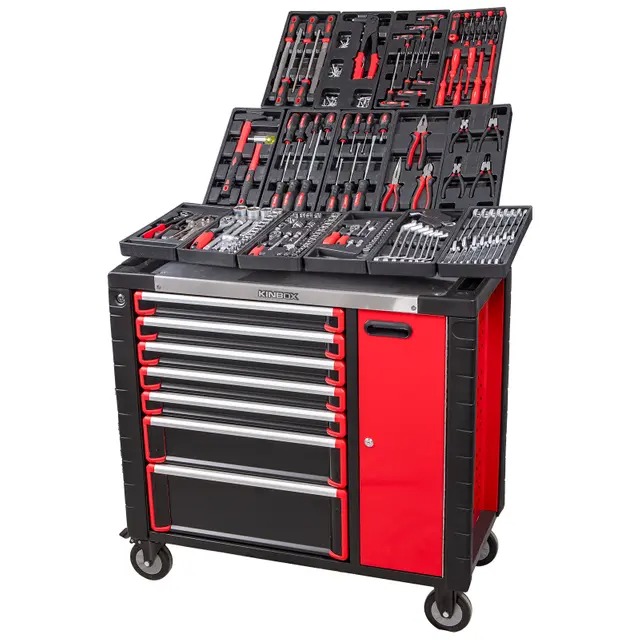
Choosing a professional tool cabinet manufacturer is important because the cabinet is not just a product sitting in the corner of a room. It is part of how the room functions every single day. The right manufacturer helps ensure better consistency, stronger structure, more reliable finishing, more practical layouts, and a smoother process from specification to delivery. That leads to storage that is easier to trust, easier to use, and easier to keep organized over time. For buyers looking for a reliable long-term partner, Kinbox Tools brings real value with professional tool cabinet solutions designed for workshops, service areas, and industrial spaces. With a focus on durable construction, practical storage design, dependable quality, and flexible support, Kinbox Tools helps customers build storage systems that truly work in daily use and continue performing over the long term.
Because appearance only shows part of the story. The manufacturer affects process control, consistency, fit, finish, support, and how reliably the product meets requirements over time. Supplier quality management exists precisely because similar-looking products can perform very differently once real quality systems are involved.
The most important things are usually consistency, structural quality, finish quality, communication, and the ability to meet actual workspace requirements. Those factors often matter more in long-term use than price alone because they influence both product performance and project reliability.
Yes. A well-made tool cabinet can help keep tools and supplies stored in a more orderly, stable, and accessible way, which supports cleaner work areas and safer storage practices. Storage that stays reliable is much easier to integrate into a workspace that must remain clean, orderly, and free from avoidable hazards.
In many projects, yes. Different workspaces store different mixes of tools and supplies, and storage works better when it fits the workflow. A cabinet that matches access patterns and item sizes is easier to keep organized and easier on the body to use.
Because product value is not limited to the moment of shipment. Clear support, fast answers, and a customer-focused process help resolve details, protect project timing, and reduce risk if anything needs clarification or adjustment later. Quality management principles put strong emphasis on customer focus and continual improvement for exactly this reason.



